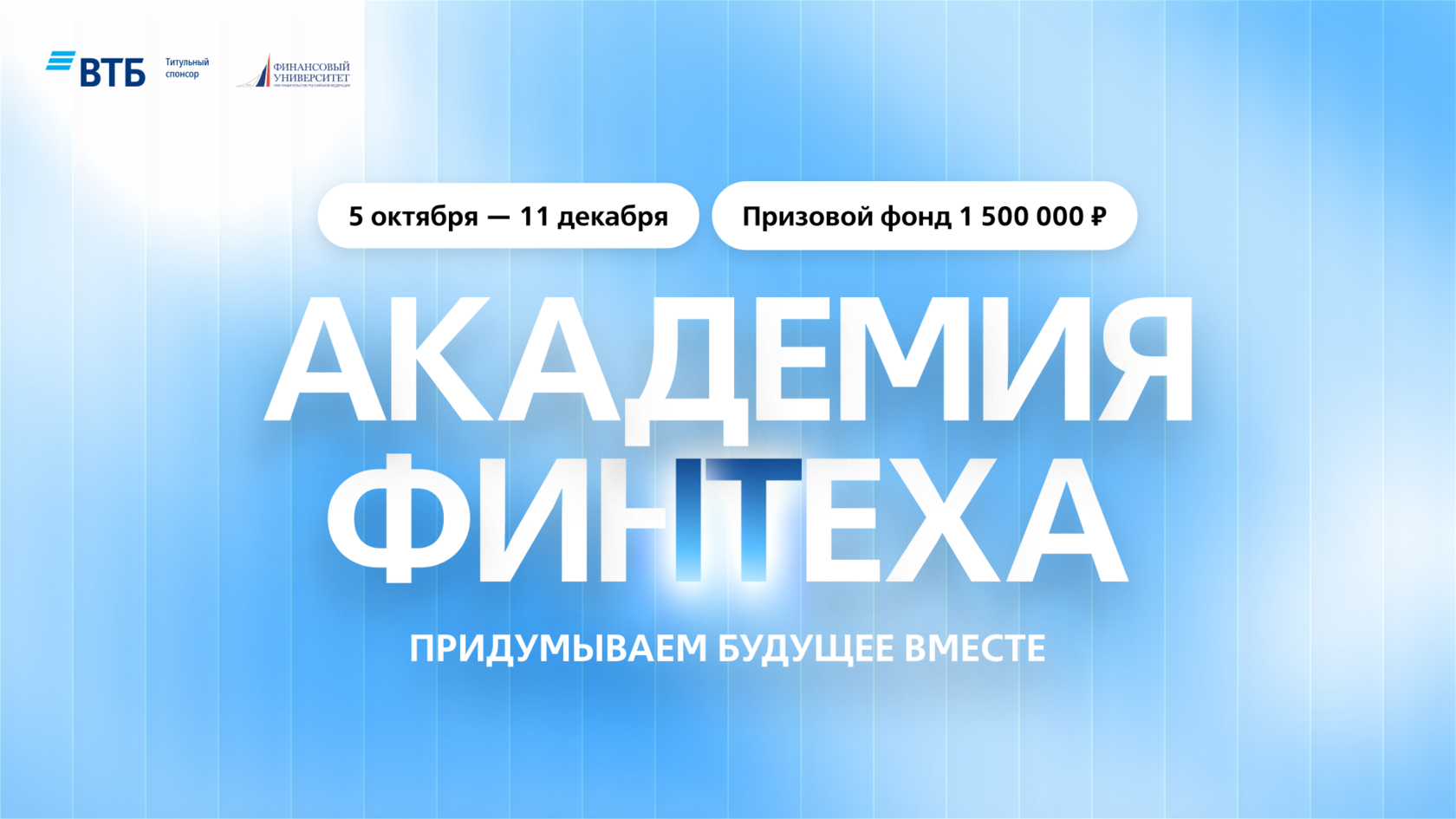
VTB and the Financial University under the Government of the Russian Federation have opened the second season of the all-Russian competition for student fintech projects, 'Fintech Academy 2026.' From October 5 to December 11, teams of students and postgraduates from Russian universities will refine their ready-made MVPs and prototypes into solutions for the real business challenges of the bank and the university across two tracks. The prize fund is 1,500,000 rubles for six winning teams, and the best projects will be selected for the Financial University's Business Incubator and may proceed to a pilot at VTB. Registration closes on October 11 at 23:59 Moscow time.

What Happened
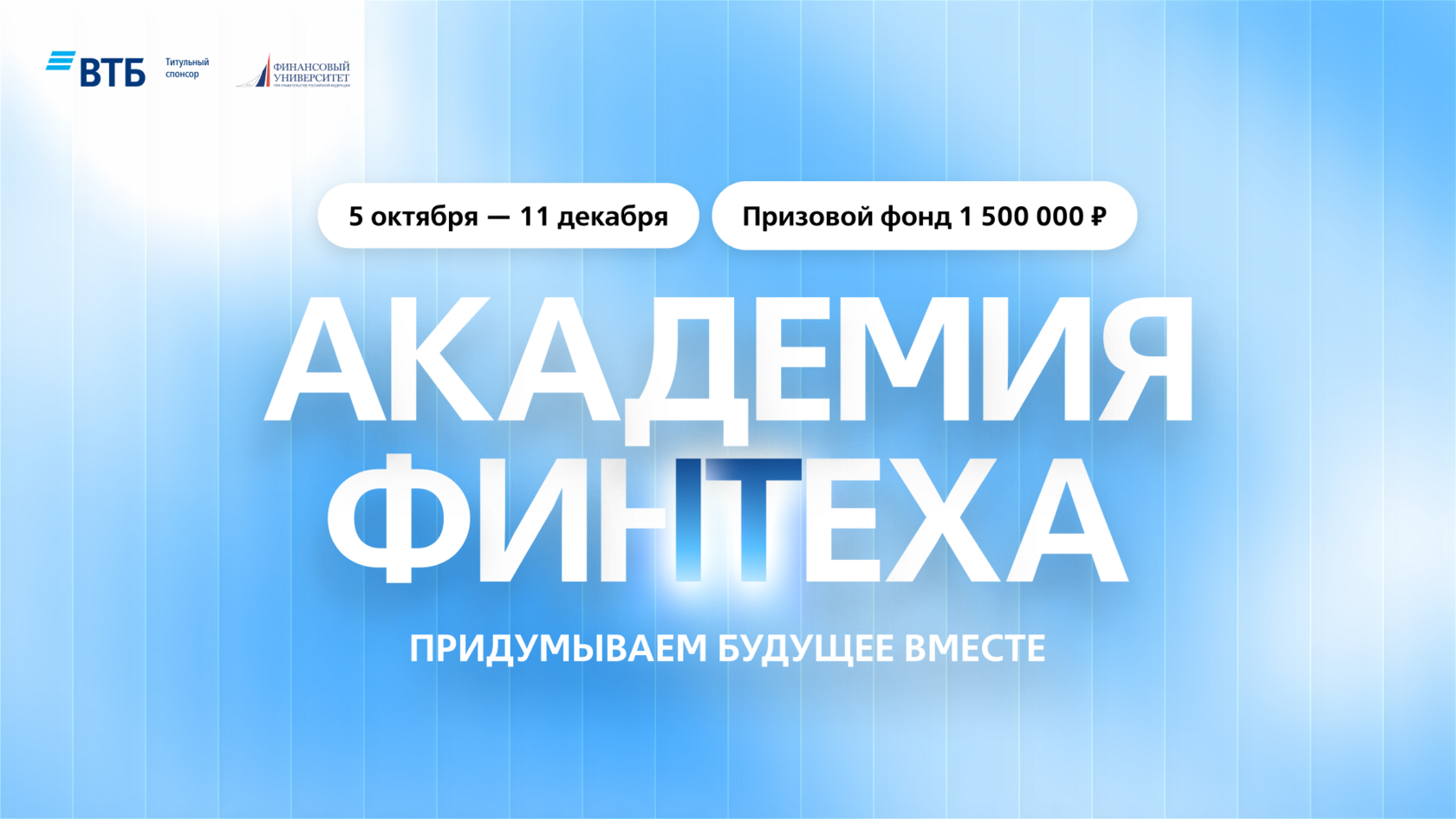
VTB, together with the Financial University under the Government of the Russian Federation, has launched the all-Russian competition for student fintech projects, 'Fintech Academy 2026.' From October 5 to December 11, teams of students and postgraduates from Russian universities aged 18+ will refine their ready-made MVPs and prototypes to address real business challenges across two tracks: 'Fintech Without Borders: The Bank of the Future' by VTB and 'Efficiency 360' by the Financial University. The prize fund is 1,500,000 rubles for six winning teams, with 350,000, 250,000, and 150,000 rubles distributed in each track. The format is online sprints: the first solution must be submitted by November 1, followed by pitches on November 10–15, and the semifinals and finals on December 11 in Moscow. Registration is open until October 11, with a deadline of 23:59 Moscow time.
Context
This is the second iteration of the program: according to the organizers, the previous season attracted over 700 participants, and the prize fund has grown from 1.2 to 1.5 million rubles. The mechanics go beyond prize placements: the best projects are selected for the Financial University's Business Incubator and gain the opportunity to pilot their solutions at VTB. By the organizers' design, this is not a one-off prize competition but a sustainable channel for transferring student fintech developments into the banking sector — a path from MVP to corporate pilot that would typically take an early-stage startup months of enterprise sales. The event has no scientific component: the announcement mentions no model, method, or metrics, so the verifiable part here is purely industrial — the launch, dates, tracks, and prize fund, which are confirmed by the competition's official website and a Rambler note.
Why This Matters for the Industry
The main signal for the industry is the declared demand: VTB's track focuses on retail and corporate scenarios and anti-fraud, while the Financial University's track focuses on automating internal processes and decision-making services. This is a de facto open list of applied areas where the bank is ready to invest in selection and pilots — information that product teams usually have to obtain through lengthy corporate sales. For ML engineers and early-stage teams, the value lies less in the prize fund and more in a legitimate entry point through the 'MVP — Business Incubator — Pilot at one of the country's two largest banks' funnel. Judging by the selection mechanics, business impact and product readiness carry more weight than the correctness of ML methodology, and a second cycle with a growing fund normalizes the practice of a bank taking a solution from the academic environment directly into a pilot. If the 2026 season repeats last year's model, corporate competitions risk becoming a standard entry channel for student teams into Russian fintech, with success criteria shifting from technical rigor to business metrics.
Why This Matters for Users
The practical side for readers: students and postgraduates from Russian universities aged 18+ can participate, either solo with a team-building process or in a team of two to five people. The stack and specialization are formally not important — even a non-fintech project is suitable if it can be adapted to the financial sector. The entry window is narrow: registration at reg.fintechacademy.ru/register closes on October 11 at 23:59 Moscow time, and the next hard milestone is submitting the first sprint solution by November 1, meaning teams with a working MVP have about three weeks to adapt. A reasonable course of action: choose a case that fits the framework of one of the two tracks, lock in a product snapshot and team composition, then build a minimal but honest pipeline — data collection, inference, and a simple quality metric. The hard external deadline is inherently useful, and participation provides resume cases and, based on past seasons' mechanics, a chance to reach a bank pilot and receive an offer through the hiring funnel.
What Is Still Unknown / Limitations
All qualitative promises — expert support, the chance to pilot a solution at a bank — remain marketing statements by the organizers: the announcement was distributed as paid promotion with erid markup, and there is no independent data on past seasons in open materials. It is known that over 700 people participated last year, but the number of teams that made it to the Business Incubator and the number of pilots that actually reached production at VTB have not been disclosed. The technical quality of participants' solutions is not publicly verified or published — reproducibility is not a criterion here. Detailed requirements for solutions and evaluation criteria for the stages do not follow from the announcement and should be clarified in the regulations on the competition's official website.
Sources
- Fintech Academy — official website of the VTB and Financial University competition
- Rambler — note on the launch of 'Fintech Academy 2026,' 01.10.2026
Author
Look at AI, editorial team