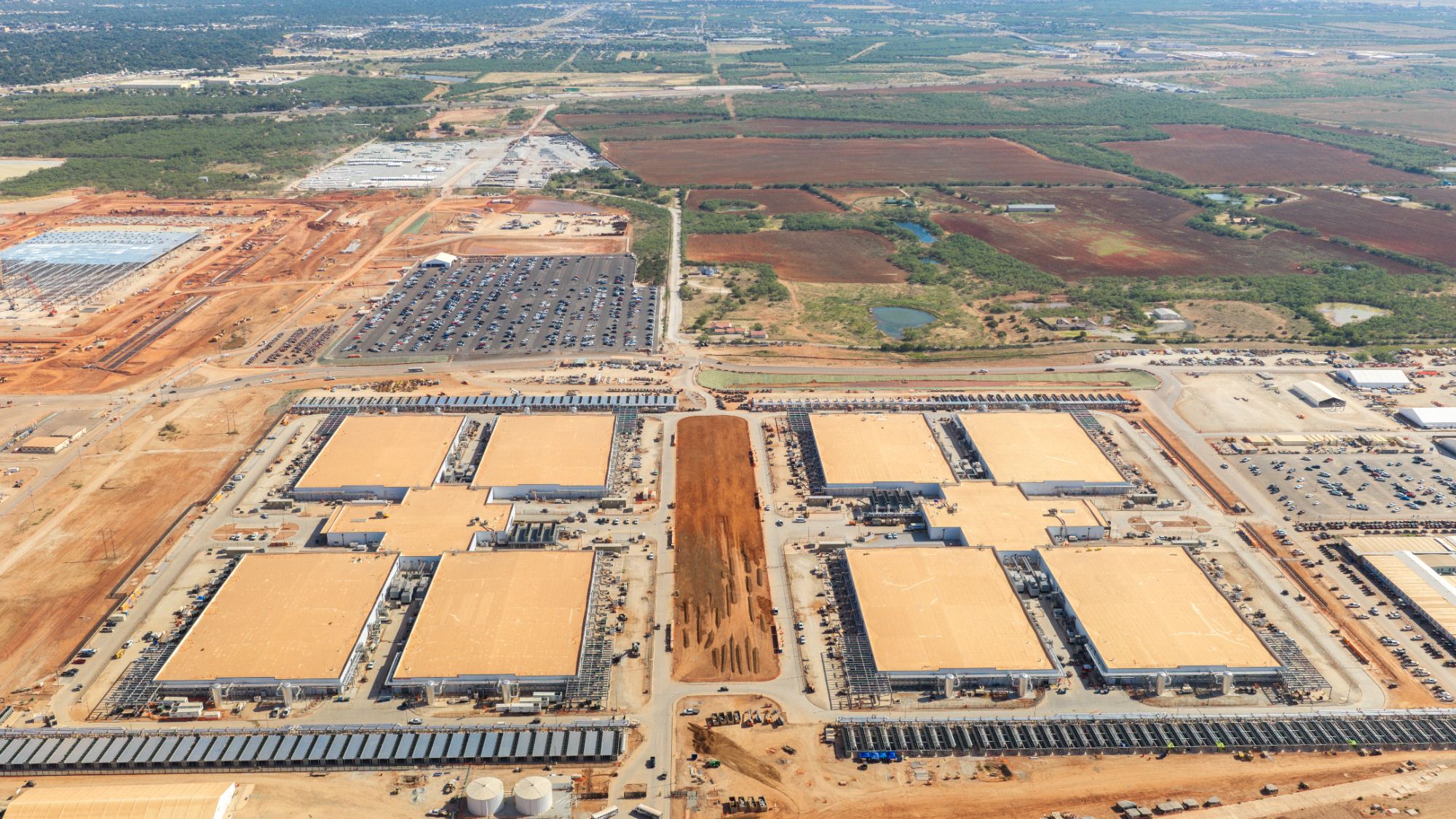
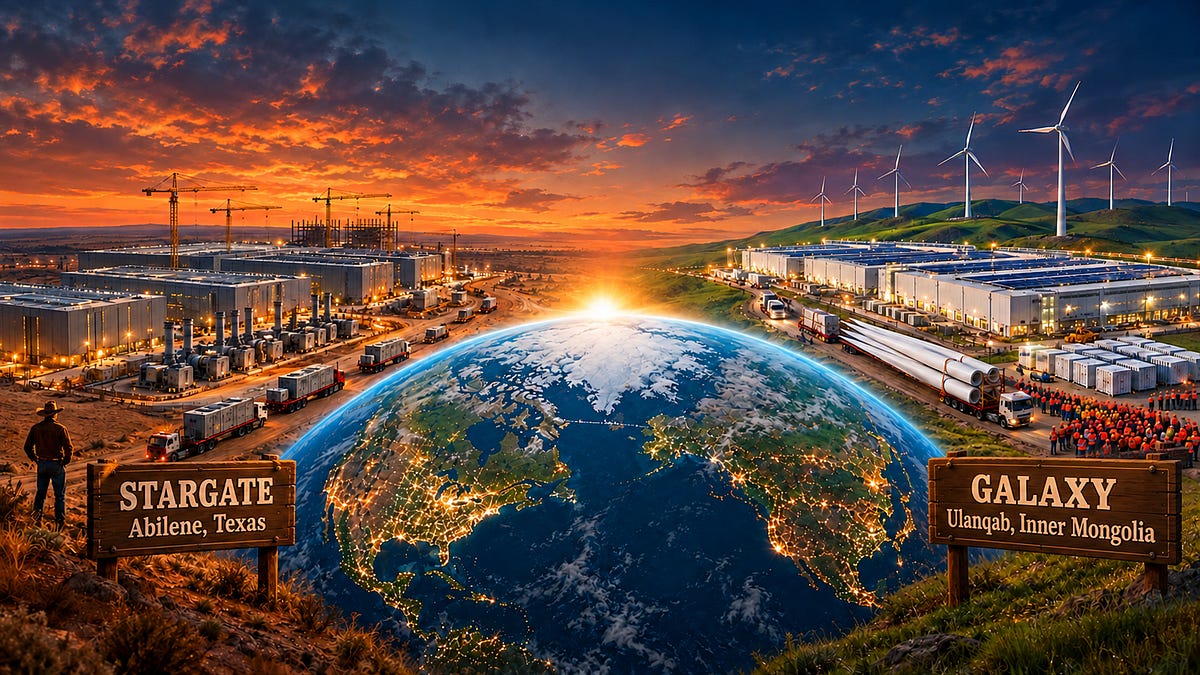
Envision Group has built the first phase of the Galaxy AI data center campus in Ulanqab (Inner Mongolia): 120 MW of IT capacity in less than a year, with construction costs estimated by SemiAnalysis to be roughly one-fifth of comparable projects in the US. By the end of 2027, the campus is expected to reach up to 800 MW, which is electrically comparable to the Stargate campus in Abilene, currently under construction for OpenAI. The project is distinguished by Envision’s own energy system: wind farms, battery storage, and a working pilot of an 800-volt DC network.
What happened
The first phase of the Galaxy AI data center campus in Ulanqab was commissioned in less than a year: 120 MW of IT capacity, built at an estimated cost of roughly one-fifth of a comparable project in the US, according to SemiAnalysis. The stated plan is to bring the campus to 800 MW of IT capacity by the end of 2027. Envision Group covers its own power supply: two wind farms with a combined capacity of 420 MW, located approximately 80 km apart, are expected to cover more than 60% of the needs of the first two phases, while 4-hour battery storage is supplied by the Envision AESC division. A pilot 800-volt DC network is already operating in one 5 MW hall: solid-state transformers (SST) convert 10 kV AC directly to 800 V DC for racks, eliminating intermediate stages—low-voltage transformers, UPS, and rectifiers. Fewer conversion stages mean fewer losses and points of failure in the power chain.
Context
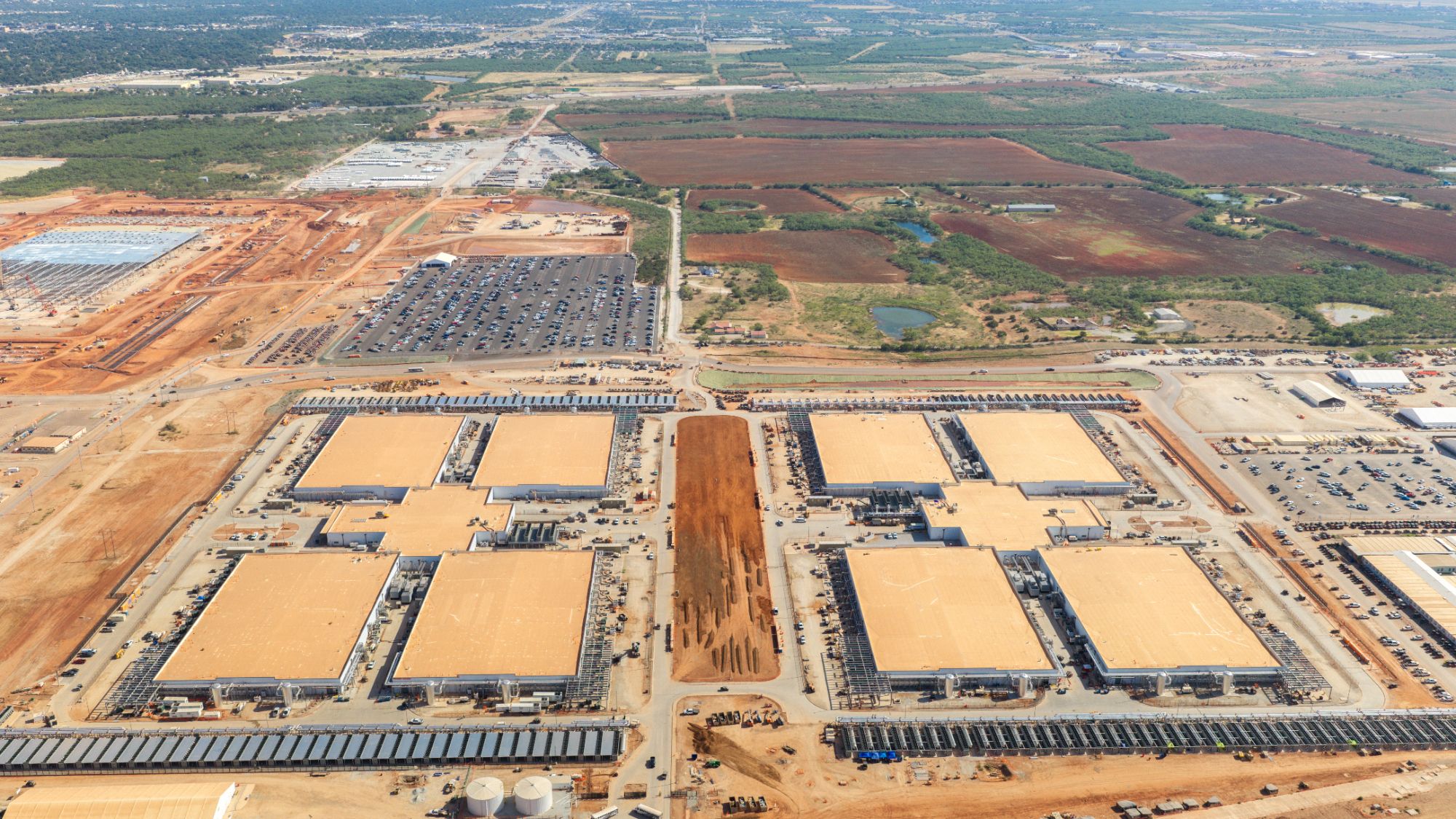
The point of comparison is the Stargate campus in Abilene, Texas, which is being built for OpenAI and is designed for approximately 820 MW of critical IT load. The power architecture also has its own logic: 800V DC is the same direction Nvidia is promoting for future high-density AI racks of the Kyber class with a load of around 600 kW per rack, making the pilot running in Ulanqab interesting far beyond a single project. The region as a whole is turning into a cluster of similar constructions: ByteDance, according to CHOSUNBIZ, plans to build a large AI campus in Inner Mongolia by 2028. Key figures for Galaxy were published in the SemiAnalysis report “We Visited China's Stargate in Inner Mongolia,” prepared following a site visit; Tom's Hardware is recounting this report.
Why this matters for the industry
The speed and low cost of the project are explained by vertical integration: Envision itself manufactures wind turbines, batteries, and substations and deploys DC distribution, rather than assembling the campus from systems by dozens of external contractors. This is a systemic integration result, not a breakthrough in a single component, and it weakens the economic argument that “gigawatt AI campuses are only built in the US”: the already-built, not just announced, 120 MW at five times lower cost makes the American model like Stargate vulnerable in terms of capex. For the vendor ecosystem of high-voltage DC (SST, switching, racks), the live 5 MW hall is a real reference of operability, obtained earlier than many expected: the transition to 800V DC for high-density racks is confirmed in production, not in the lab. For teams planning compute budgets, this is a signal: the assumption that “compute will be in shortage forever” should be reconsidered, and a scenario where “energy and construction become cheaper faster than hardware” should be kept in the roadmap.
Why this matters for users
For readers today, nothing practical changes: the campus does not provide APIs, prices, or benchmarks. The value of the news is primarily illustrative—it shows how the industry is solving the main bottleneck of AI infrastructure, electricity: in the US, gas turbine deliveries have been pushed to 2030, and the Chinese response to such a shortage is its own wind farms, batteries, and DC network instead of connecting to scarce generation. In the future, if the 800 MW is really filled with accelerators by the end of 2027, China will have a large internal inference base with significantly lower capex per megawatt, which will ultimately put downward pressure on global inference and training prices.
What is still unknown / limitations
Key figures—timeline, cost, energy configuration—come from a single independent analytical source, the SemiAnalysis report with a site visit; Tom's Hardware is recounting it, and there are no independent measurements yet. The “Stargate rival” frame is a comparison of electrical power, 800 MW of IT capacity versus approximately 820 MW of critical IT load, not computing capability: without data on which accelerators will be placed in the racks, the word “rival” refers to construction, not models. There is no data on utilization, delays, and token prices, actual efficiency of the SST chain and PUE, and the stated share of more than 60% of energy from wind plus batteries has not yet been confirmed under real loads. Finally, China’s access to advanced Nvidia chips is limited by export sanctions, so buildings and watts alone do not translate into available AI compute.
Sources
- Tom's Hardware — China builds massive 800-megawatt AI data center campus to rival US Stargate project
- SemiAnalysis — We Visited China's Stargate in Inner Mongolia
- CHOSUNBIZ — ByteDance targets massive Inner Mongolia AI data center build by 2028
Author
Look at AI, editorial team