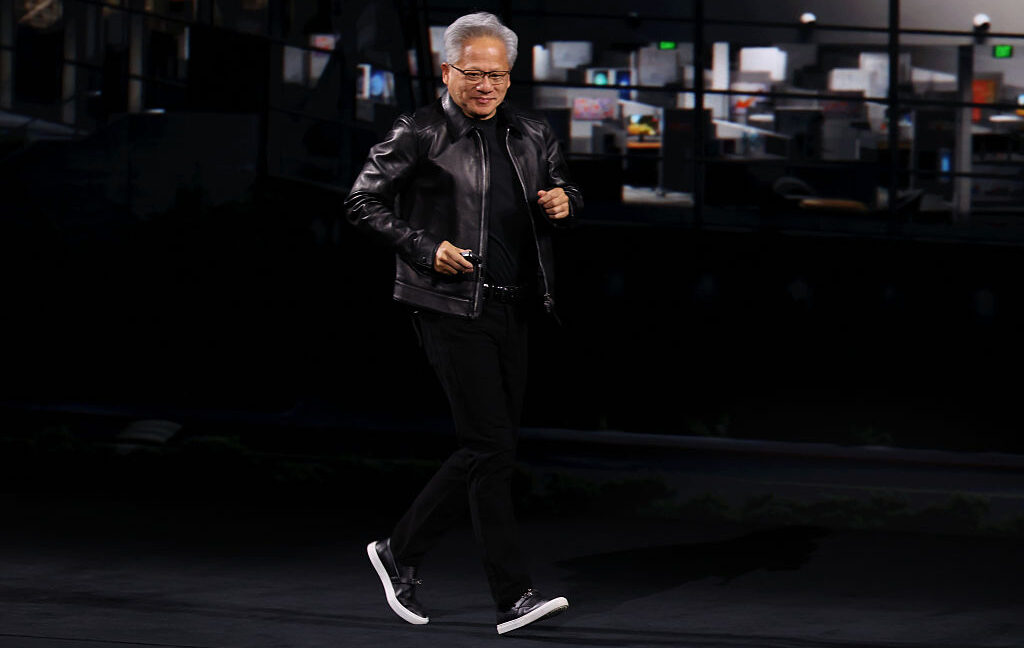
NVIDIA's board of directors unanimously reinstated the company's founder, Jensen Huang, to the positions of President, CEO, and Board Director on November 23, 2026. The decision was made 11 days after his resignation, and the company's stock rose by approximately 30% on the day of his return, adding about $1 trillion to its market capitalization.


What happened
According to the official release, the board received input from senior US government representatives and stated that Huang's return does not pose a threat to national security. The investigation by the board's independent committee is ongoing. Colette Kress, who served as acting CEO, retains her position as Chief Financial Officer. According to Yahoo Finance, NVDA shares rose by approximately 30% to $164.88 by 9:55 AM Eastern Time, adding about $1 trillion to the market capitalization—the largest single-day surge in the company's history. The S&P 500 and Nasdaq also recovered their losses.
Context
Huang's resignation occurred 11 days ago amid scandals related to alleged foreign intelligence interest and export control violations. The reinstatement took place against the backdrop of public support from Trump and statements that Huang "did nothing wrong." New oversight bodies have been created within the company—the National Security and Export Control Committee—and a search for a Chief Compliance Officer is underway. Hearings are scheduled in the US Congress on December 1 and 3, 2026.
Why this matters for the industry
NVIDIA is the largest supplier of GPUs for training and inference of AI models. Huang's return removes the main uncertainty in the compute supply chain: investors and customers, including OpenAI and hyperscalers, receive a signal that the company's strategy regarding chips and export policy remains intact. The GPU roadmap and export strategy are unlikely to be revised, which reduces the risk of rescheduling training and procurement for AI companies. The new oversight bodies should reduce regulatory risks for the entire industry.
Why this matters for users
For readers, this is a rare case where political intervention directly changes the course of a major tech company. The practical effect is unblocking: teams that had postponed decisions on GPU procurement or AI infrastructure scaling due to uncertainty surrounding NVIDIA's leadership can return to planning. However, the outcome of the investigation and the Congressional hearings on December 1 and 3, 2026, will determine export restrictions on chips, GPU prices, and the availability of AI infrastructure. If export restrictions are tightened, GPU prices and delivery times will increase.
What is still unknown / limitations
The investigation by the board's independent committee is ongoing, and its results are currently unknown. The Congressional hearings on December 1 and 3, 2026, have not yet taken place, and their outcome could change export restrictions on chips. It is unknown whether the work of the National Security and Export Control Committee and the appointment of a Chief Compliance Officer will lead to a tightening or maintenance of the current regime. The market reaction in the form of a 30% stock increase reflects investors' assessment of supply risks, not technical changes: no model, benchmark, API, or driver has changed.
Sources
- NVIDIA Board Reinstates Jensen Huang as President, CEO and Board Director (official press release)
- Nvidia reinstates Jensen Huang as CEO: Live updates — CNN Business
- Jensen Huang reinstated as Nvidia CEO, board chair — Ars Technica
Author
Look at AI, editorial team