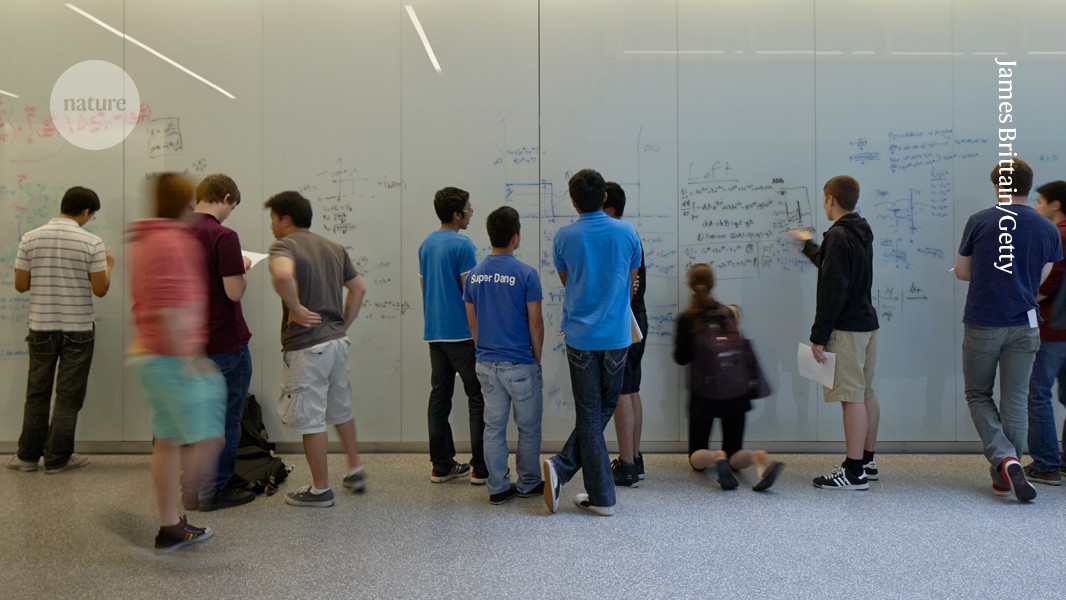
On November 20, 2026, Anthropic mathematician Levent Alpöge stated that he found a proof of the Riemann Hypothesis and its generalization to Dirichlet L-functions together with the LLM Claude. On the same day, news emerged of a manuscript for an independent human proof of the same result, and neither of the two claims has yet been verified by the community.


What happened
Levent Alpöge, an Anthropic mathematician on leave from Harvard, stated that he found a proof of the Riemann Hypothesis and its generalization to Dirichlet L-functions in collaboration with the LLM Claude. The claim is supported by a 4-page sketch and code in the Lean language, which, according to Andrew Sutherland (MIT), compiles, is reproducible by the Lean kernel, and passes the independent checker nanoda. The Lean code and PDF are publicly available on Alpöge's website. On the same day, Ravi Vakil (Stanford) published an "urgent announcement" regarding a manuscript of a human proof of the same result by Alessandro Maria Masullo (Stanford PhD, 2020, advisor Brian Conrad).
Context
The Riemann Hypothesis is one of the seven Clay Institute Millennium Prize Problems with a $1 million prize. Alpöge's statement came one day before the 200th anniversary of Riemann's birth and against the backdrop of Anthropic's IPO with an initial valuation of approximately $1.5 trillion. The public tracker stateofproof.org records the status of the claim as "claimed" rather than "verified." Alexey Krol added a humorous comment in his post about the "million" for academics versus the average Anthropic employee option worth approximately $40 million.
Why this matters for the industry
This is the first case where a claimed proof of a Clay Millennium Prize Problem is supported by a machine-checkable artifact: a Lean formalization that compiles and is verified by an independent checker. The claim was made by an Anthropic mathematician using Claude as a co-author within the research process, rather than as an autonomous model run. If verification is successful, this will set a precedent for the application of LLMs to open mathematical problems, validate the "LLM-agent + formal verifier" pattern as a verifiable pipeline, and accelerate the formalization of mathematics in general. For Anthropic, the event serves as a strong marketing asset against the backdrop of the IPO.
Why this matters for users
Verification status can be tracked on the stateofproof.org tracker, and the Lean code and PDF proof are available on Alpöge's website. The post is associated with the tool Elsa — a plugin for Claude that compiles videos from ready-made recordings via MCP connectors (Runway, ElevenLabs, HeyGen, Descript, etc.) and exports the result to CapCut; it is free within Claude Pro, with paid video generations costing from $1 to $12 per minute.
What is currently unknown / limitations
Neither of the two claimed proofs has yet been verified by the community at large, and "machine-checkable" is not equal to "proven." The formal artifact is a 4-page sketch and Lean code without a full manuscript and external review procedure. The proof generation pipeline has not been published as an API or a reproducible artifact with cost and latency metrics. The coincidence of two independent claims for the same problem on the same day may indicate that the result has "matured," or that verification criteria have not yet been defined.
Sources
Author
Look at AI, editorial team