
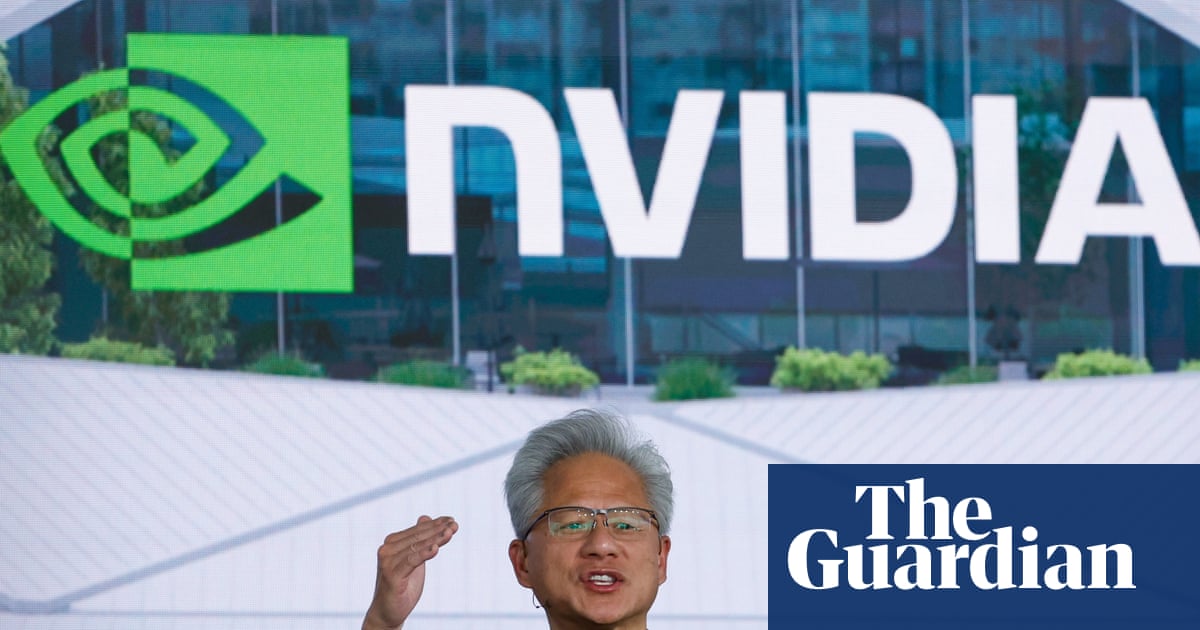
On November 12, 2026, Jensen Huang, who founded NVIDIA in 1993 and led it for over 33 years, stepped down as CEO amid a scandal involving alleged extramarital affairs and espionage suspicions. The company transitioned to interim leadership under CFO Colette Kress, with a new board of directors headed by Harvey Jones, while NVIDIA shares fell by approximately 13% at the market open. Hours earlier, a popular post on X predicted that Huang could only be removed by gaining control of the board of directors, explaining this by his unique stance on open models and chip sales to China. The coincidence of the scenario with reality turned the opinion into a sensation, but it is now important to distinguish confirmed facts from the post author's interpretations.


What happened
On November 11, 2026, The Guardian reported that NVIDIA hired a leading American law firm to investigate Jensen Huang's personal relationships. The following day, Huang stepped down as CEO: the scandal involved alleged extramarital affairs, including, according to press reports, a relationship with Alice Huang, described as a suspected Chinese agent, and was accompanied by espionage suspicions. The company transitioned to the management of interim CEO Colette Kress, previously serving as CFO, under a new board of directors chaired by Harvey Jones; a permanent successor has not been named. The market reacted instantly: a 13% drop at the market open and a loss of approximately $180 billion in market capitalization in one day. However, the company's operational base has not changed: existing contracts, GPU deliveries, the CUDA ecosystem, and service obligations are operating as usual.
Context
NVIDIA was founded in 1993, and Huang led it for over 33 years, remaining the largest individual shareholder with a stake of approximately 3.6–3.8%. The company plays a central role in the US-China AI race: its accelerators are essential for training models at OpenAI, Anthropic, and other leading labs, so the change in management affects not just one corporation but the computational foundation of the entire industry. A popular post by Aimar Haddadi (@AdvicebyAimar), published on X on November 12, 2026, and gathering 1,099 likes and 125 retweets, claimed that Huang, unlike most leading US labs, did not oppose competition from open models or the sale of his chips to China, and that in July, according to the same post, he defended open weights in a letter titled "Open Weights and American Leadership in AI." The author believed that the "only way to slow the growth" of open models was to nationalize NVIDIA or remove Huang from leadership and gain control of the board of directors, and the text appeared hours before the actual resignation.
Why this matters for the industry
For the industry, this is the largest personnel shift in the AI hardware sector: the key compute provider is under interim leadership, and a permanent CEO has not been chosen. Several strategic constants depend on the new leadership: GPU export restriction policy for China, the position on open models, and likely the pace of the roadmap for new accelerators. Contractors are already factoring an uncertainty premium into compute negotiations, so major contracts in this window will come down to bargaining over price and terms. For teams whose products rely on a single vendor's compute, it is reasonable to conduct a free dependency audit right now: which functions will stop working if the provider changes, whether fallback inference routing is configured, and if there is a backup provider. The main window for observation is the selection of a permanent CEO: the candidates listed in the post—Tim Cook, Rene Haas, Lisa Su, and Colette Kress herself—imply different vectors, from a specialized semiconductor executive to an outsider to the industry. If NVIDIA maintains its course, it will remain the basic computational infrastructure of the industry, but if there is a shift toward a closed position on open weights or strict export restrictions, the cost of compute and the value of neutral layers like routing, cost control, and self-hosting open weights will increase.
Why this matters for users
AI service users do not need to do anything in the coming days: prices, cloud compute availability, and the software stack have not changed, and model training and inference are proceeding as usual. The consequences will reach products later and indirectly: if the new leadership revises GPU export restrictions for China, delivery times and prices will change, which will be reflected in the cost of compute and the terms of use for AI services. If the position on open models shifts, the open weights ecosystem, which allows running modern systems on own equipment without intermediaries, is at risk. The main lesson for the reader is that a personal scandal and the geopolitical sensitivity of a single compute provider can rewrite the plans of the entire industry in one day, so dependence on a single infrastructure vendor should be considered when planning any product. It is reasonable to watch two signals: the appointment of a permanent CEO and the first public statements from NVIDIA's new leadership.
What is still unknown / limitations
The motive to "push closed models through a leadership change" exists only in the text of the @AdvicebyAimar post: there is no methodology or confirming documents for it, and the publication hours before the resignation may turn out to be a retrospective fitting of the plot to the event, rather than proven causality. The press confirms Huang's departure, the company-ordered investigation, and the stock plunge, but the results of the law firm's investigation, the real motives of the board of directors, and the name of the permanent successor remain unknown. Huang's public position on open weights, including the July letter "Open Weights and American Leadership in AI," is known from the post's retelling and requires verification against primary documents: it does not follow from published materials that it determined NVIDIA's corporate strategy. Finally, the stock plunge demonstrates only the market's premium for predictability, while the technical continuity of the compute base relies on stable mechanisms: the CUDA ecosystem, the established base, and existing contracts, so conclusions about an immediate change in course are premature.
Sources
- Jensen Huang resigns as Nvidia CEO after alleged affairs — The Guardian
- Nvidia hires leading US law firm to investigate Jensen Huang's relationship — The Guardian
- Jensen Huang dreamed up Nvidia at a Denny's. The spy scandal threatens decades of his life's work — CNN
Author
Look at AI, editorial team