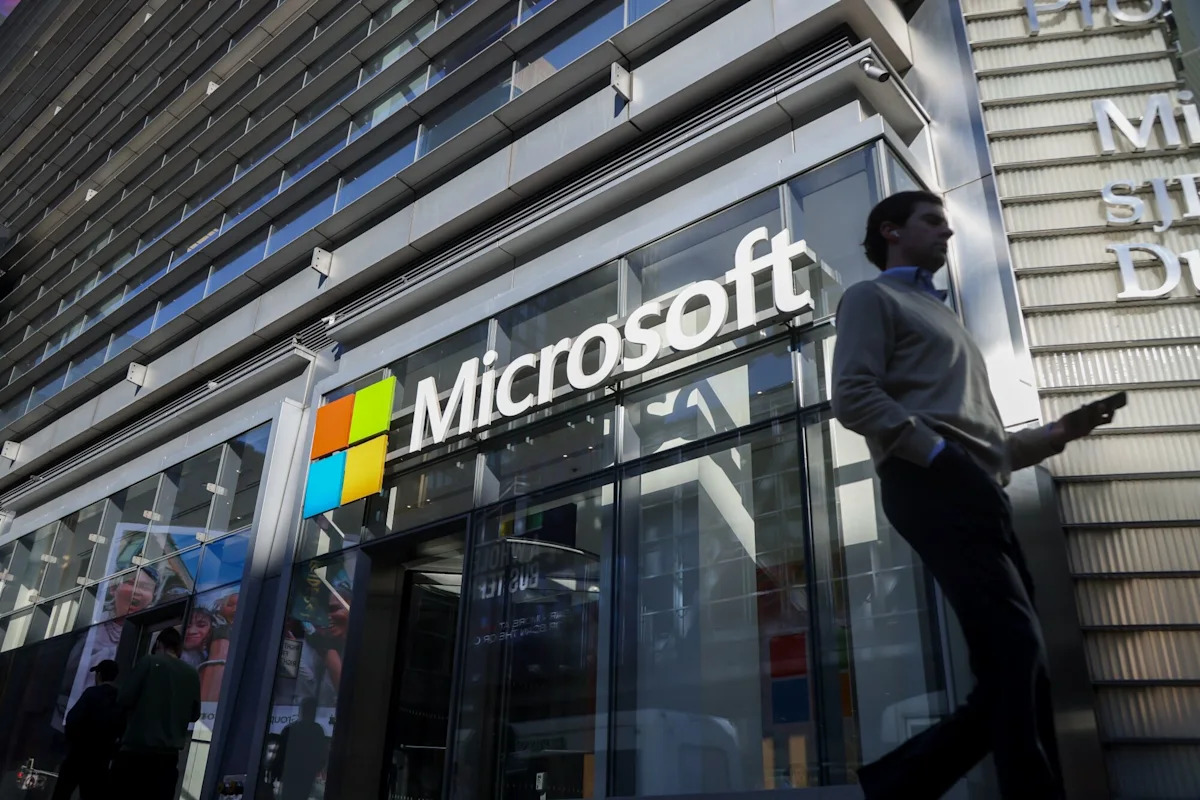
Microsoft has declined to renew its 2023 agreement to lease AI computing capacity from Oracle and has already partially disconnected the leased servers. Bloomberg News reported this on November 6, 2026, citing sources familiar with the situation, noting that the termination is part of a broader review of Microsoft's obligations exceeding $80 billion to third-party cloud providers. This is not corporate drama, but economics: leased hardware is becoming obsolete faster than multi-year contracts can be recouped, and even the largest customer is no longer willing to pay for it.

What happened
Bloomberg News reported on November 6, 2026, citing sources familiar with the situation, that Microsoft has declined to renew the 2023 agreement to lease AI computing capacity from Oracle. The reason for the decision is that the leased servers were running on previous-generation Nvidia chips that no longer meet Microsoft's requirements, and the company has been gradually shutting down these leased capacities in recent months. The termination is part of a broader review of Microsoft's obligations totaling over $80 billion for leases from third-party cloud providers CoreWeave, Nscale, and Nebius, from which management has grown weary due to high prices and delays. Oracle responded by stating that demand for its AI infrastructure, including older chips, remains high. Following the publication, Oracle's shares fell by approximately 3–4%.
Context
The 2023 agreement emerged in an era when GPU scarcity was an unconditional argument, and leasing from third-party cloud providers became a standard way for hyperscalers to quickly scale up computing in parallel with their own construction. Such multi-year deals were calculated on the unchanged utility of a single generation of hardware, but Nvidia updates chip generations quickly, and the leased fleet loses relevance before the contract term ends. Oracle's position in this structure is particularly vulnerable due to revenue concentration: the company relies on large clients like OpenAI and Meta, so the refusal of even one of them to renew a lease significantly impacts its data center utilization plans. As a result, the market has received a rare precedent in terms of candor: contracts signed during a wave of speculative demand are being tested by actual operation and equipment depreciation, rather than promises made at the start.
Why this matters for the industry
For the industry, Microsoft's decision is a marker of a phase shift: the AI computing market is moving from capturing capacity at any cost to controlling costs, reliability, and hardware relevance. The largest lessee is demonstratively reviewing its portfolio of lease obligations and refusing obsolete equipment even when the provider is willing to renew the contract, which increases pressure on Oracle and "neoclouds." Bargaining power is shifting to lessees, and requirements for providers are becoming stricter: chip generation, price, and delivery deadlines are now scrutinized as carefully as the availability of capacity. Financially, the pressure has fallen on Oracle, whose aggressive data center construction is already driving free cash flow negative, and whose credit rating has been downgraded to near-junk levels. Microsoft's own burdens are not disappearing but are being transferred, so this is about changing suppliers and cost structures, not about the disappearance of demand for computing. Further negotiations on prices and stricter terms, as well as a slowdown in new lease deals, are likely, although this is a scenario assessment rather than a confirmed fact.
Why this matters for users
There is no direct effect for AI service users: this concerns corporate contracts at the hyperscaler level, not developer access, so tariffs and products will not change immediately. Those who lease GPUs themselves or build products on third-party capacity should review their procurement logic: chip generation and contract exit terms should be considered as carefully as price and availability, and dependence on a single provider should be reduced through provider abstraction in architecture and monitoring of availability and delays to transfer workloads without stopping the product. Over the next few months, a scenario is possible where released capacity and the general portfolio review will increase the supply of previous-generation GPUs for lease and create price pressure in this segment—a window for independent teams with limited budgets. The main lesson for readers following cloud companies: obsolete hardware depreciates quickly, and a provider whose revenue relies on one or two large clients carries a financial risk visible in its stock price.
What is currently unknown / limitations
Key facts rely on Bloomberg News reporting citing anonymous sources, and Oracle's public position diverges from the described picture, so the conflict between the statements and the behavior of the largest customer has not yet been resolved. The conclusion that the threshold for hardware suitability has shifted to the current Nvidia generation is based on the decision of a single customer and is vulnerable to generalization: Microsoft is an extreme case with unique requirements for training frontier models, while for a broad class of inference workloads, previous-generation chips remain a viable option. The exact volumes and schedule for shutting down leased servers, the share of released capacity, their further fate, and the financial terms on which the parties are parting ways remain unknown.
Sources
- Bloomberg: Microsoft Is Winding Down Oracle Deal to Rent AI Cloud Capacity
- Bloomberg via Yahoo Finance: Microsoft Is Winding Down Oracle Deal to Rent AI Cloud Capacity
Author
Look at AI, editorial team