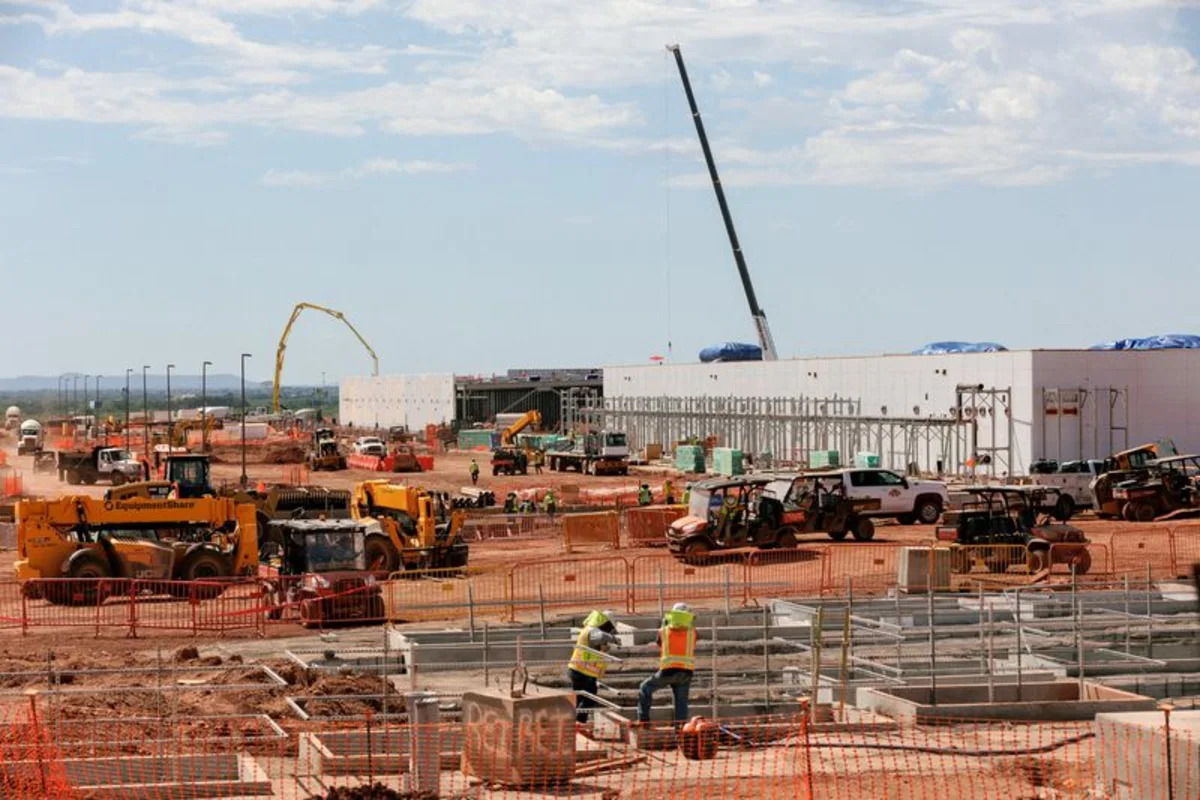
Following US midterm elections that resulted in widespread rejection of data center projects, OpenAI is shifting negotiations for new sites to a public mode: the company is dropping non-disclosure agreements (NDAs) with officials and promising to reveal construction plans to residents—ranging from traffic to noise and lighting. The calculation is that openness and job creation will convince voters and new state authorities better than closed-door negotiations. The success of this strategy will determine the timelines for the next expansion of AI infrastructure in the US.


What Happened
The direct trigger for the campaign was the results of the US midterm elections. According to Ballotpedia, of 41 votes related to data centers, all but one concluded against construction. Simultaneously, Democrats won gubernatorial elections in Texas, Georgia, and Ohio, promising to pause the issuance of new permits. OpenAI’s response followed immediately after the elections and consists of three parts. Procedural: when discussing future sites with government officials, the company no longer uses NDAs. Public: residents gain access to construction plans, including impacts on traffic, noise, and lighting. Economic: data centers are presented not as a one-time construction project, but as a source of permanent employment, because the equipment inside them is updated every 3–5 years. An illustration of this is the facility in southern Ohio, which is expected to create 2,500 long-term jobs with an average salary of $80,000 per year. The campaign is represented by Chris Lehane, OpenAI’s head of global affairs.
Context
Behind this news lies a shift in what is holding back the growth of computing power. For a long time, the bottlenecks were considered to be chips and electricity; now, consent from local communities has been added, which has been formalized into a sustained political factor through votes and elections, rather than scattered protests. The perception problem is old: residents learned about data centers too late and saw them as a “black box in a meadow”—a closed facility with no visible benefit to the area. OpenAI’s bet is to replace the closed approval model with an open one, with pre-disclosed consequences for daily life, and to remove some objections before they turn into a vote against.
Why This Matters for the Industry
For the industry, permitting issues now stand on par with chips and electricity as a bottleneck in AI infrastructure construction. If the promised pauses in three states are implemented, the timelines for the next generation of clusters will shift to the right, delaying the release schedules of new models for all leading developers, not just OpenAI. The market has already partially re-evaluated the risk: stocks of data center operators and energy companies have come under pressure. If the “transparency instead of NDA” model is adopted by other operators, the fight for “social permission” to build may become an industry standard, and the ability to conduct open negotiations with communities may become a protected competency of large labs. A practical step for product-building companies right now is to check how much their unit economics depend on a single computing provider and a single geography, and to plan a backup for potential timeline shifts.
Why This Matters for Users
For the reader, the main takeaway is that the availability and pricing of AI services depend not only on chips and electricity, but also on local votes and gubernatorial decisions. In states where new authorities have promised a pause, no quick new sites should be expected in the near future, so the supply of computing power may grow more slowly. On the other hand: if OpenAI’s campaign convinces voters, construction in areas where it is currently under threat will accelerate. There is a direct benefit for residents of areas near future sites: plans for traffic, noise, and lighting will reach them before decisions are made, not after.
What Is Still Unknown / Limitations
The campaign was launched immediately after the elections and currently amounts to statements: no disclosed documents for a specific site have been released yet, so the drop of NDAs and open plans need to be verified against actual publications. The methodology linking the equipment update cycle to permanent employment and salary levels at the Ohio facility has not been published, so the economic argument remains a marketing claim without verifiable calculations. The promises by the new governors of Texas, Georgia, and Ohio to pause permit issuance are pre-election commitments, and it is unknown in what form and for how long they will be implemented. Finally, discussions about potential price increases for inference and tightening of API limits are extrapolations from the premise of a power shortage, not data from sources.
Sources
- OpenAI kicks off charm offensive to change voters' view of data centers — Reuters
- OpenAI kicks off charm offensive to change voters' view of data centers — Yahoo Finance (Reuters)
- OpenAI kicks off charm offensive to change voters' view of data centres — The Straits Times
Author
Look at AI, editorial team