The open-source Construct pipeline has reached version 1.0.0: the release was finalized on October 27, 2026, under the Apache-2.0 license. The scheme is simple — an AI agent, which can be any MCP client, Claude Code, or Hermes with an OpenAI-compatible endpoint, examines a real object and describes it with a text “scene,” i.e., data rather than code: dimensions in meters, parts, assembly order, and joints. A deterministic engine converts this scene into an animated hologram in a single construct.html file, which opens in any browser and works offline. The key feature of version 1.0 is export to glTF 2.0 (.glb) and OBJ, a Blender 4.2+ add-on, and game-ready export, validated in Godot 4.7.2 and passing the Khronos glTF Validator without errors.
What happened
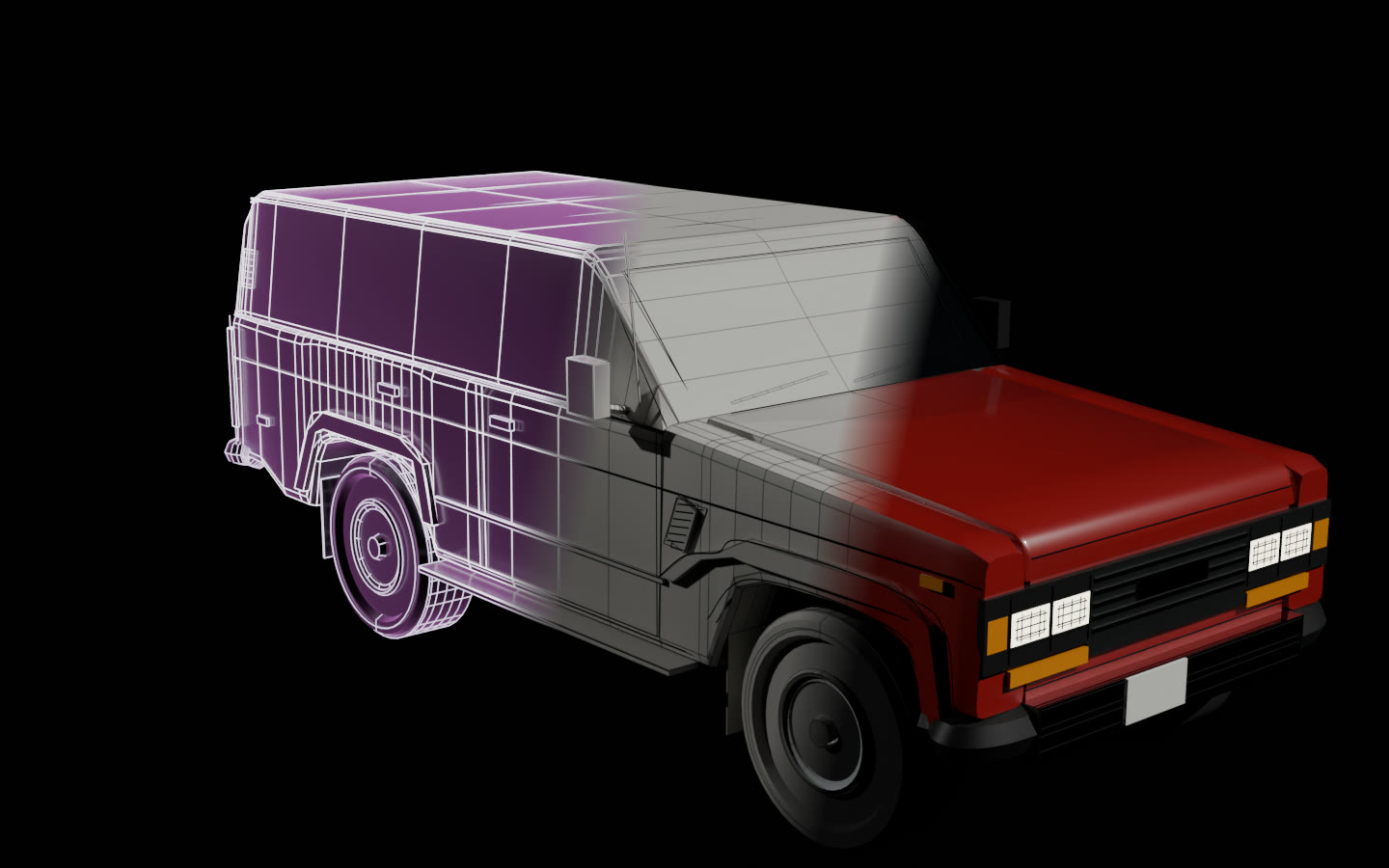
The pipeline works in three steps: the agent is tasked with studying the object, it gathers facts and reference photos, and then writes a declarative “scene” description — data, not code, where dimensions in meters, a list of parts, assembly order, and joints are fixed. Next, a separate engine comes into play, which builds geometry from this scene and assembles an animated hologram in a single construct.html file — it opens in the browser and does not require a network. Release 1.0 introduced export to glTF 2.0 (.glb) and OBJ with named parts, materials, and working joints, which have open/idle animations defined, as well as a Blender 4.2+ add-on, distributed under GPL-3.0. Game-ready export has been validated in Godot 4.7.2 and passes the Khronos glTF Validator without errors.
Context
Construct is not a new generative model or a benchmark, but an implementation of the “agent describes — deterministic engine builds” architecture. The model is only responsible for the declarative scene-data: rendering, validation, and export happen without it, using the standard Python library, and there are no API keys inside the engine. Each fact in the scene has a reliability label — verified, user-defined, inferred, or decorative — so the origin of the geometry can be traced. To extract quality, a masterpiece mode is provided: an independent LLM-based critic blindly compares versions and stops when improvements cease, with an explicit limit of 12 rounds or 2 hours. By the author's design, this is a portable alternative to native text-to-3D generators: a structured text layer that can be checked and validated, rather than a black box from which a finished mesh is retrieved without explanations.
Why this matters for the industry
The main industry bet is output portability: the same text scene, without rework, goes to Blender, Godot, Unity, Unreal, or the web, so the agent's output stops being an artifact of an isolated demo and becomes a standard 3D asset. The project meets pipeline criteria, not just visualization: for the Land Cruiser FJ62, the --merge flag reduces the number of draw calls from approximately 300 to 27, and glass, chrome, and wood are implemented through standard glTF extensions. For teams, this is a ready-made product template — the agent outputs a scene, deterministic code guarantees geometry — and a signal of the devaluation of block-outs, props, previsualization, and educational 3D models to the level of an agent subscription. Today, this is a niche tool for previsualization and props, not a replacement for asset production; researchers will find the cloneable architecture reference useful for setting up their own ablations.
Why this matters for users
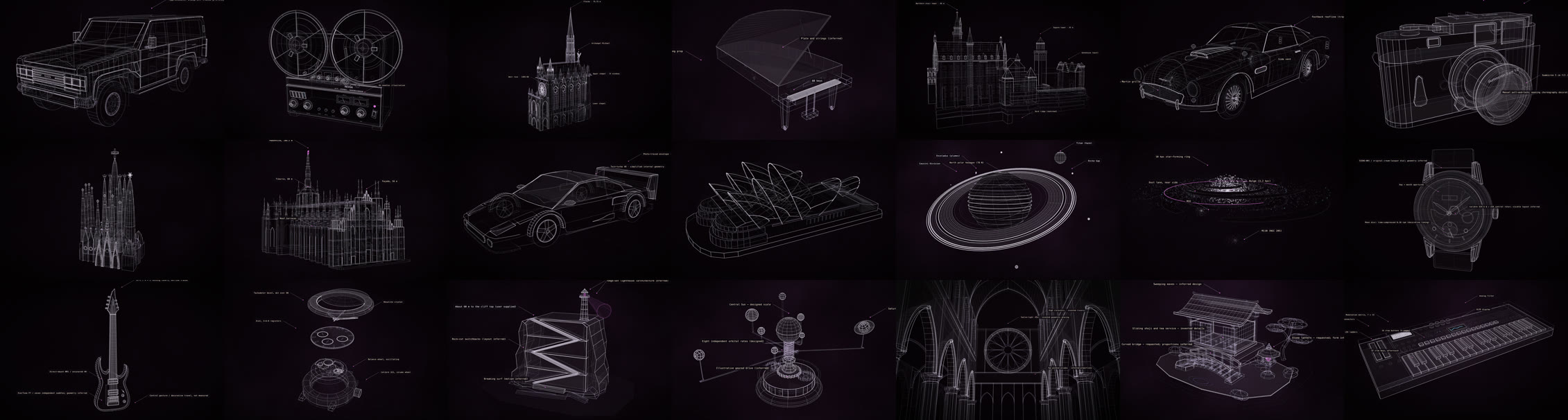
You can try it today: just clone github.com/rtmandreyev/construct, connect an existing agent, and ask, for example, “make a construct of a Leica M3” or “masterpiece Sydney Opera House.” The output is an interactive hologram in construct.html: the scene can be rotated with the mouse (drag), the assembly can be repeated (R key), the origin of each part can be viewed (P key), and the model can be exported to glTF. For Blender users, the add-on provides Build, Open, and Light-Metal controls to continue working in a familiar editor. The project gallery already has 21 finished objects — Land Cruiser FJ62, James Webb, Revox A77, Arturia MiniFreak, and others — which sets realistic expectations for what agents can already do. There is also a film mode, where the assembly is synchronized with music. The cost of the experiment is near zero: one evening and an agent subscription.
What is still unknown / limitations
Only format compliance can be verified here: passing the Khronos glTF Validator, working in Godot 4.7.2, and a controlled number of draw calls — but not the quality of the geometry, which depends entirely on the specific LLM and is not controlled or benchmarked in any way. The evidence base for quality is effectively reduced to the single FJ62 case; no data is provided on photorealism, proportion accuracy, or topology quality. The reliability labels are assigned by the agent itself, their criteria are not formalized, so this is not an independent verification. The masterpiece mode is described procedurally — a blindly comparing critic, a limit of 12 rounds or 2 hours — but without published metrics, this is not a measured evaluation. It is also unknown how well the scene quality transfers to objects outside the gallery, and long-term bets depend on the progress of native text-to-3D generators, which may close this niche directly.
Sources
- Construct — rtmandreyev/construct repository on GitHub
- Construct — release notes for 1.0.0
- Construct — official site with examples and feature descriptions
Author
Look at AI, editorial team