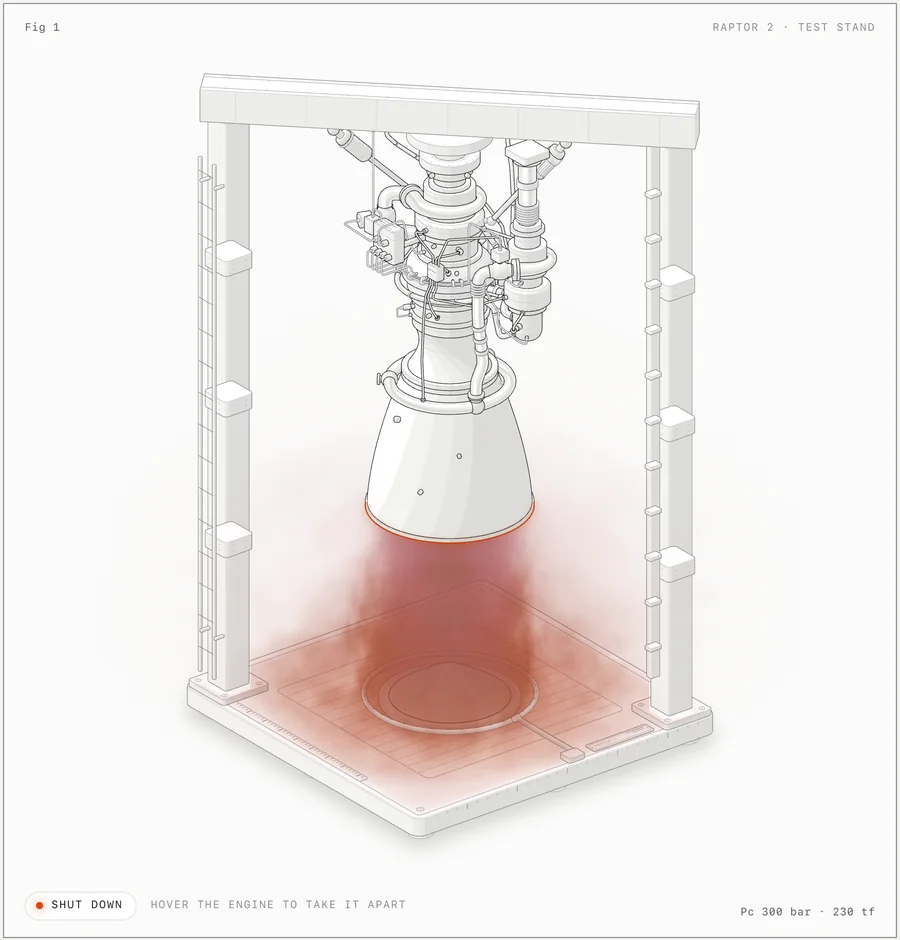
The channel «Faktosborka» (GreenNeuralRobots) showed how Claude, using the open Anatomy skill, built an interactive isometric diagram that visually explains how a model's context window "forgets" old information. The Anatomy skill (MIT, repository wheresryan22/anatomy) turns a text description into interactive "machines" on SVG and WebGL; the demo was built by a single agent in about an hour.

What happened
Inside the demo, the context window is depicted as an isometric scene: a workbench, a stack of books, and a glass frame, where the "volumes" inside the frame are what the model sees right now, while everything that has fallen out is no longer accessible to it. As the mouse moves, old books fly out of the frame, and the loss of old content stops being an abstraction. The Anatomy skill used by the agent was presented on October 10, 2026, and from a single text description, it outputs an interactive isometric "machine" on SVG/WebGL. The project repository also publishes other examples, including the Raptor 2 test stand.
Context
Anatomy is not a new model or a training method, but a skill: a package of instructions in SKILL.md format that guides the agent during generation. The main difference from familiar image generation is that the result remains code: SVG geometry with an audit of part intersections, WebGL shaders, and a description of interactivity, and such an artifact renders deterministically. There is no increase in the model's basic capabilities here: the same Claude can write SVG and WebGL even without the skill, so Anatomy works as prompt engineering at the package level — it fixes the style, iteration structure, and self-checks. This is a leap in open methodology, not in the model. It is also noteworthy that the skill, created to explain technical concepts, in the «Faktosborka» demo explained the structure of the model's own memory.
Why this matters for the industry
For the industry, this confirms a pattern: skills in SKILL.md format turn LLMs from image generators into generators of live, editable artifacts, and explanatory visualization becomes part of documentation and onboarding, rather than a one-off illustration. For now, this is a tool for pilots, not for production: a realistic scenario is the asynchronous generation of 10–20 explanatory diagrams for internal documents or articles with manual verification of the result. For founders, the Anatomy story is a signal of distribution and commoditization: the open skill under the MIT license rapidly gained popularity in a matter of days in October, and the pattern itself is easily copied, meaning this is a feature within other platforms, not a moat for a separate startup. In the six-month horizon, similar skills for other domains are expected — process diagrams, network topologies, dataset visualization — and the first informal quality comparisons between models using the same skills; if geometry auditing becomes a standardized metric, the industry will have a measurable basis for evaluating which model better generates such artifacts.
Why this matters for users
The skill can be installed with a single command npx skills add wheresryan22/anatomy -g in Claude Code, OpenCode, Codex, or Antigravity, after which it is enough to ask the agent to draw the desired concept — from a rate limiter to a CDN cache — as an interactive isometric machine. The MIT license allows anyone to reproduce the «Faktosborka» demo and independently verify the project's claims. The minimum viable scenario is to insert a ready-made artifact into a README, training material, or internal guides, where instead of a static image, the reader gets a live diagram they can interact with. For a non-specialist, such a version explains faster than a long paragraph of text.
What is still unknown / limitations
Popularity data does not match: the post text mentioned 15.5k stars in ten days, the summary said 21.4k, and CellCog counted 4,103 stars and 323 forks by October 12; such a spread is typical for rapidly hyped projects and in itself reduces trust in the numbers. Reproducibility has not been published: the "about an hour" timeframe is a single observation from the channel with a #promo tag, without data on the number of sessions, failure rate, and quality stability across different concepts. The project currently has no price per figure, latency metrics, or SLA, so the economics will have to be measured independently. The skill only draws machines and tools, not people or maps, and works "slowly on purpose": one figure requires a long agent session. Finally, strong generalizations like "a new UX pattern where dynamics carry meaning" currently rely on a single demo and remain an interpretation, not a verified result.
Sources
- wheresryan22/anatomy — GitHub repository of the skill (MIT license)
- Anatomy · A skill for Claude Code — official skill website
- Anatomy: The Claude Skill That Draws Machines in Code — CellCog analysis
Author
Look at AI, editorial team