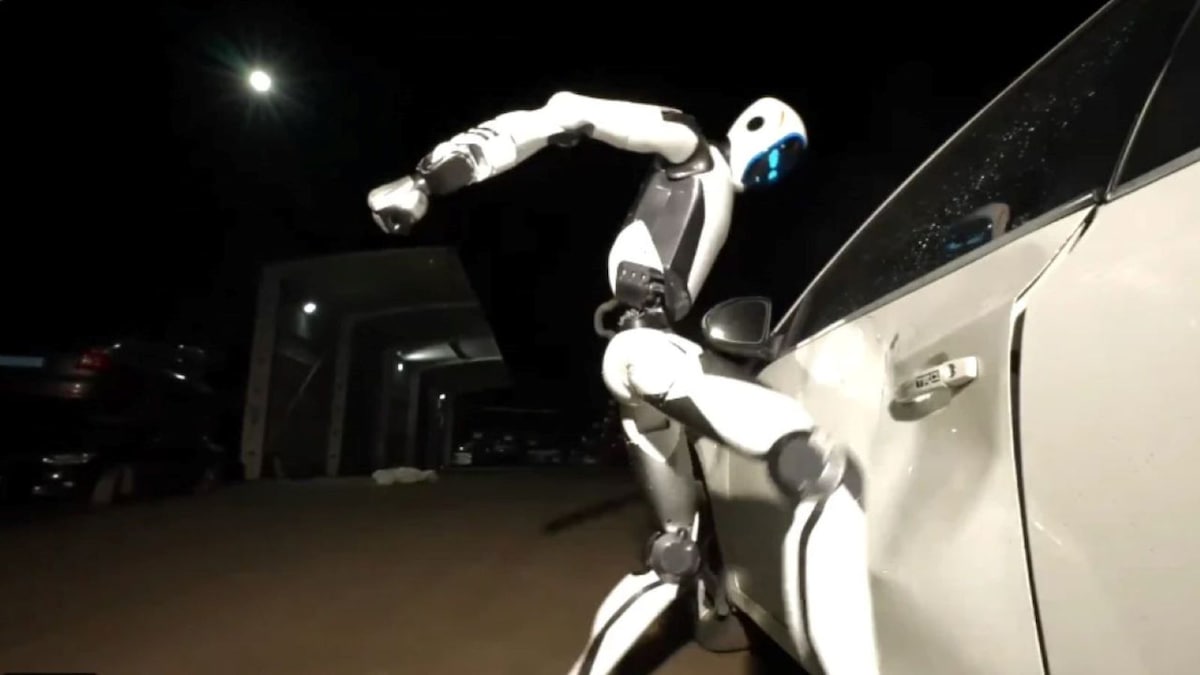
Unitree Robotics published the Kung Fu Legend Guardian promotional video on X on October 21, 2026, featuring the new H2-X humanoid playing a bodyguard in a scene styled like an action movie. According to on-screen data in the video, the platform, which is approximately 1.8 m tall and weighs about 70 kg with 31 actuated joints, can stand for up to eight hours, but this is standing time, not active working time. Until a price, sales date, and supply channels are announced, the H2-X remains a showcase of the H2 platform's capabilities, and the company has not disclosed the level of robot autonomy in the stunts shown.

What happened
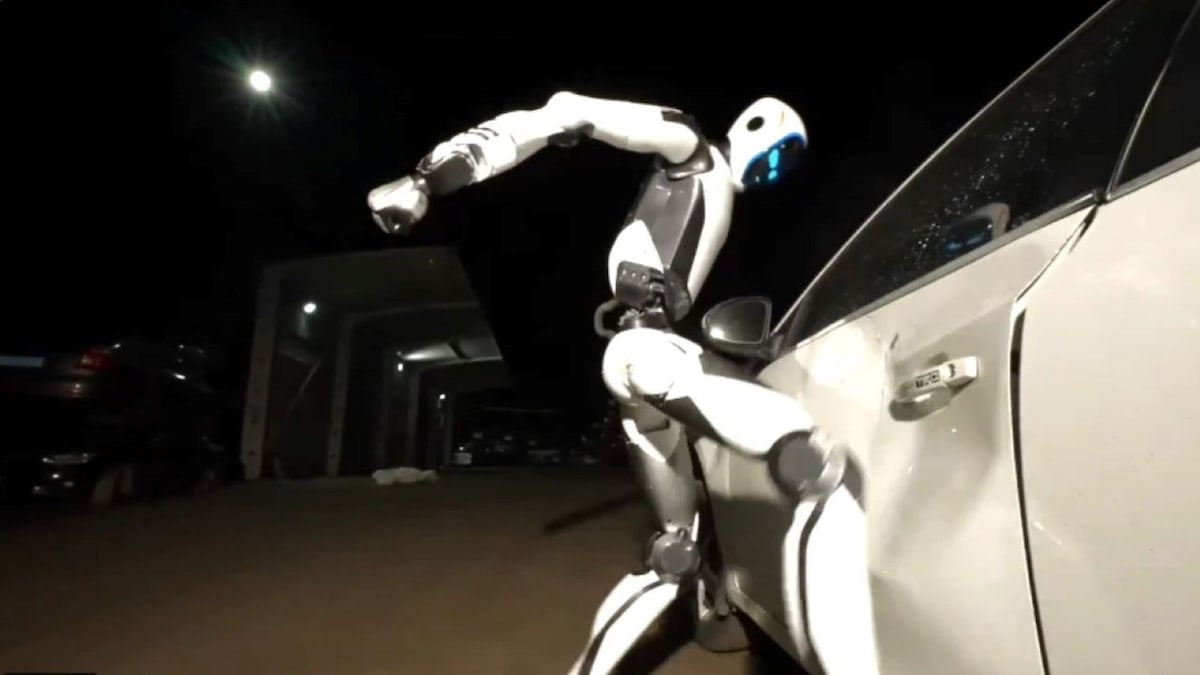
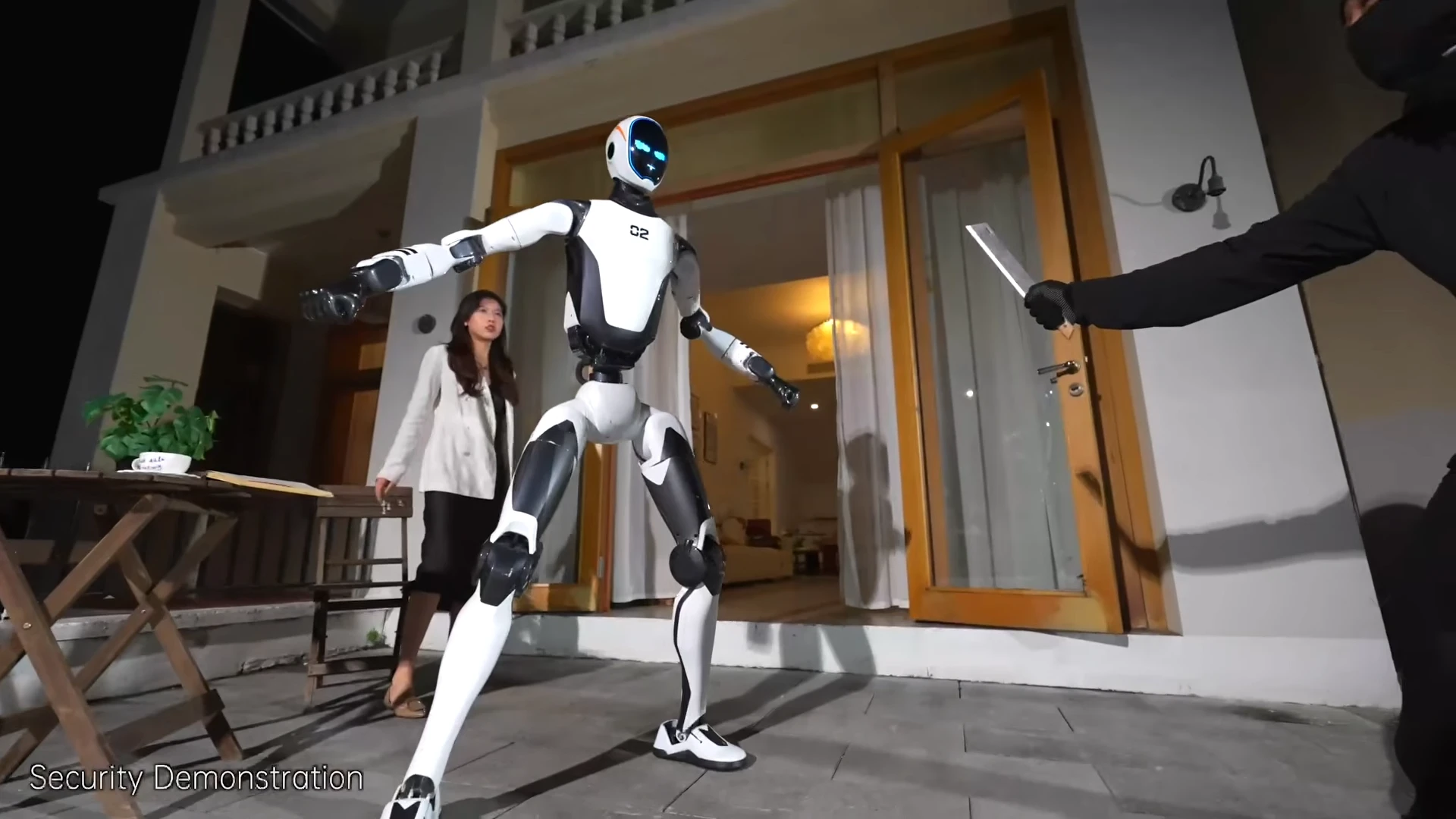
On October 21, 2026, Unitree Robotics posted a video of the new H2-X humanoid on X titled Kung Fu Legend Guardian. In the staged scene, the robot punches and kicks car doors, jumps from a four-meter platform, performs a somersault, stands between a person and an armed assailant, and lifts the front of a car to save a mannequin. The H2-X is a variant of the H2 platform: approximately 1.8 m tall, weighing about 70 kg, with 31 actuated joints. The stated maximum autonomy is about eight hours, but, as indicated on the video screen, this is standing time, not active working time. Simultaneously, Unitree warns to maintain a distance of 2–3 meters from the robot and not to repeat the stunts shown. The company has not announced a price, sales date, or supply channels; the release of the video was noted by CNBC TV18 and Humanoids Daily.
Context
The video continues the genre of staged demonstrations used by humanoid manufacturers to showcase the physical capabilities of their platforms: this is advertising material, not a technical publication. Notably, Unitree itself publicly describes the commercialization of humanoids as being in an early stage, effectively marking its own product as immature. The H2-X serves as a marketing bridge between the showcase display of the H2 platform and a hypothetical future market for "humanoid bodyguards and rescuers," which currently exists only in the advertising narrative.
Why this matters for the industry
For the industry, the signal lies in positioning: Unitree is directing humanoid marketing toward security and rescue, not just warehouse logistics, and setting a narrative for a physical agent against which competitors will now be compared. The bar for promotional spectacle is rising, and the continuation of the race of staged demonstrations among humanoid manufacturers appears likely. There are no grounds for product evaluations or procurement today: the H2-X has no commercial form or announced developer access, and work can only be done with the chassis and drive specifications. A real test will only be possible if Unitree opens sales or an SDK, at which point it will be possible to measure duty cycle under load, thermal conditions, documentation availability, and control loop latency for the first time. Until then, any humanoid pilots in security will remain demonstrations, not deployments.
Why this matters for users
The video provides readers with a clear lesson in calibrating expectations: if the footage is authentic, the scenes show the level of drives and whole-body control, i.e., Unitree's hardware competence, but say nothing about progress in the robot's ability to act and decide independently. For robotics and reinforcement learning engineers, this is an example of the gap between spectacular stunts and proven autonomy. For those looking at equipment for security or rescue tasks, there is currently nothing to rely on: there is no data on full-shift operation or machine behavior near people. The manufacturer itself asks people not to approach the robot closely, which should be remembered by visitors to exhibitions and open demonstrations.
What is currently unknown / limitations
The main gap is the level of robot autonomy: it is unknown whether the scenes were performed autonomously, by a recorded program, or under operator control, and since neither the Unitree post nor media reports contain methodology or metrics, the video confirms almost nothing as technical evidence—maximum dynamics and hardware durability, assuming the authenticity of the footage. Conclusions about a new product category in security and rescue are based on a single promotional video and remain a roadmap hypothesis, not increasing the evidence base for the platform's capabilities. Predictions about independent autonomy benchmarks, reproducible pilots, and price benchmarks on a six-month and two-year horizon are speculative: everything depends on the disclosure of the scene control mode and the opening of sales or an SDK.
Sources
- Unitree Robotics — official post on X: Introducing H2-X Kung Fu Legend Guardian
- CNBC TV18 — Part Kung Fu legend, part bodyguard: Meet Unitree's new humanoid robot | Watch
- Humanoids Daily — Unitree's H2-X Flips Off Cars in New Kung Fu «Guardian» Video
Author
Look at AI, editorial team