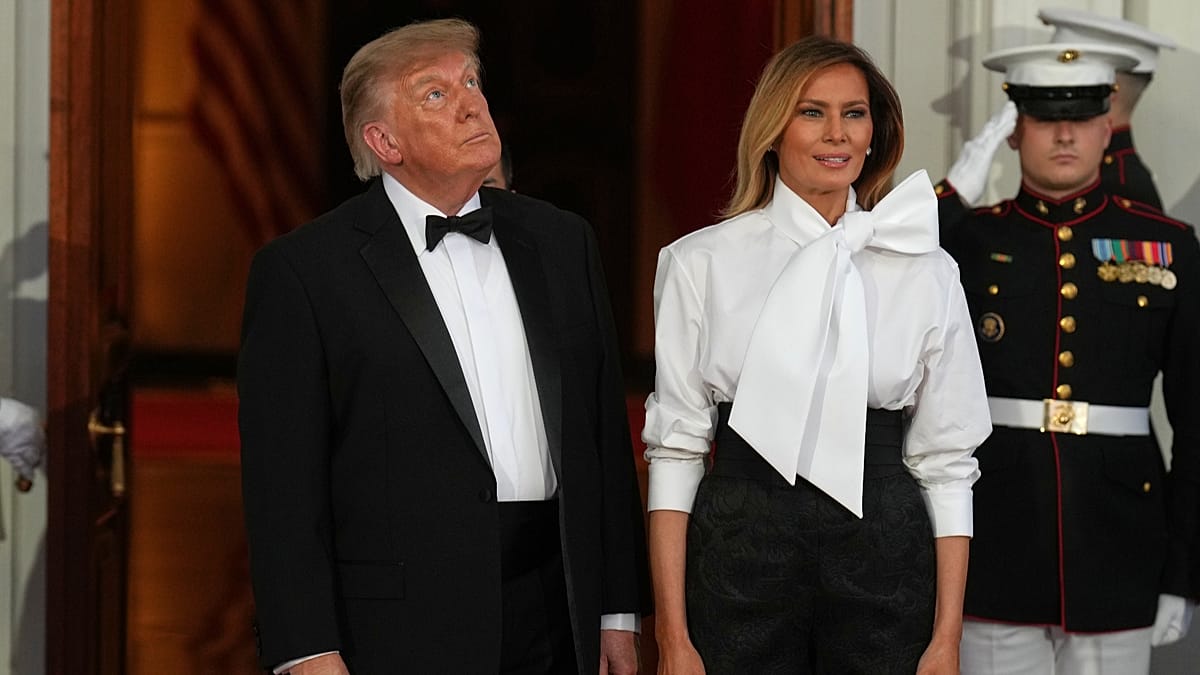
On September 29, at the UN General Assembly, US President Donald Trump announced that artificial intelligence in the US would be called 'superintelligence' (Super Intelligence, SI) because the previous name, in his words, 'sounds fake.' The new abbreviation SI coincided with Slovenia's national domain zone .si, and registrar Register.si records an average of 3,700 new registrations per day compared to about 3,500 for all of August. On the same day, Trump signed the executive order 'Inaugurating the Era of Super Intelligence,' directing executive branch agencies to use SI instead of AI.
What happened
On the same day, he signed the executive order 'Inaugurating the Era of Super Intelligence': executive branch agencies must, to the extent permitted by law, use Super Intelligence and SI instead of Artificial Intelligence and AI in correspondence, public materials, websites, and reports, while existing regulatory acts, contracts, and historical documents do not need to be changed. The President's Science and Technology Advisor was tasked with submitting a bill with a federal definition of 'superintelligence' within 60 days. Meanwhile, Slovenian registrar Register.si, according to its representative Klara Herman, records 'strong but stable' growth in applications: an average of 3,700 new .si domains are registered per day, comparable to the volume for all of August, when there were about 3,500. By September 29, the zone had over 220,000 domains for Slovenia's population of about 2.1 million people, and the registrar urges trademark, slogan, and company name owners not to delay registering matching domains.
Context
The rush arose from a letter coincidence: .si is Slovenia's national domain zone, and the English abbreviation Super Intelligence exactly matched it. A similar scenario has already occurred in the industry: Montenegro's national domain .me became a standard for personal links thanks to the English word 'me,' and Telegram even uses it in addresses like t.me. The legal basis has not shifted: the current federal definition of artificial intelligence is recorded in 15 U.S.C. § 9401(3), and during the transition period 'superintelligence' legally refers to the same technologies as this definition. From the perspective of technical evidence, this is a rebrand, not a scientific event: the executive order and the statement from the UN podium contain no new architecture, training method, or reproducible measurements of new capabilities. The term 'superintelligence' has no benchmark, evaluation protocol, or capability threshold — without operationalization, it is unfalsifiable and is currently a political-marketing construct, not a scientific category.
Why this matters for the industry
For the industry, the effect is currently administrative, not technical: no models, APIs, inference, cost, or latency have changed, and no product has become more powerful or cheaper. The real work today is for teams tied to US federal structures: mass replacement of AI with Super Intelligence and SI in interfaces, websites, documentation, and reports, as well as adding SI to tags, search, and internal monitoring. The key fork is the announced bill with a federal definition: if the wording remains a reference to the current definition, the rebrand will be cosmetic; if an independent definition appears, it will become the normative basis for future US AI laws and regulations, and products can already be built on the updated glossary — automatic documentation compliance checks, terminology layers, system classification. The market mechanism is also notable: a political statement was instantly converted into measurable demand for another country's national domain zone, a rare clean case of observed market response to political rhetoric.
Why this matters for users
Those with a trademark, brand, slogan, or project with 'SI' in the name should secure the matching .si domain as soon as possible — at the current registration pace, notable names are going quickly, and secondary market prices and queues for good addresses will almost certainly rise. For other readers, the renaming does not provide anything everyday: services and models remain the same, and the AI sign will change to SI primarily on US government websites. When the bill on the federal definition is published, it is worth reading: the wording will show whether this was just a name change or the beginning of a new wave of AI regulation in the US.
What is still unknown / limitations
Domain statistics are not a pure measurement: data comes from one registrar (Register.si) according to its representative, and the wording 'strong but stable' is a promotional framing. The comparison mixes a daily rate (3,700) and a monthly rate (3,500), so estimates like 'more than 30 times growth' cannot be considered strict. The content of the bill on the federal definition of 'superintelligence' has not yet been published, so it is unknown whether it will refer to the current statutory definition or expand and replace it. The term itself remains unoperationalized: no benchmark, evaluation protocol, or capability threshold is attached to it. Finally, nothing is known about the structure of new registrations: how many are real brands versus speculators, and whether other domain zones are observing a similar effect.
Sources
- Euronews — Trump's AI rebrand sparks unexpected rush for Slovenian .si domains
- The White House — executive order 'Inaugurating the Era of Super Intelligence' (signed 29.09.2026)
- Cornell Legal Information Institute — 15 U.S. Code § 9401 (Definitions)
Author
Look at AI, editorial team