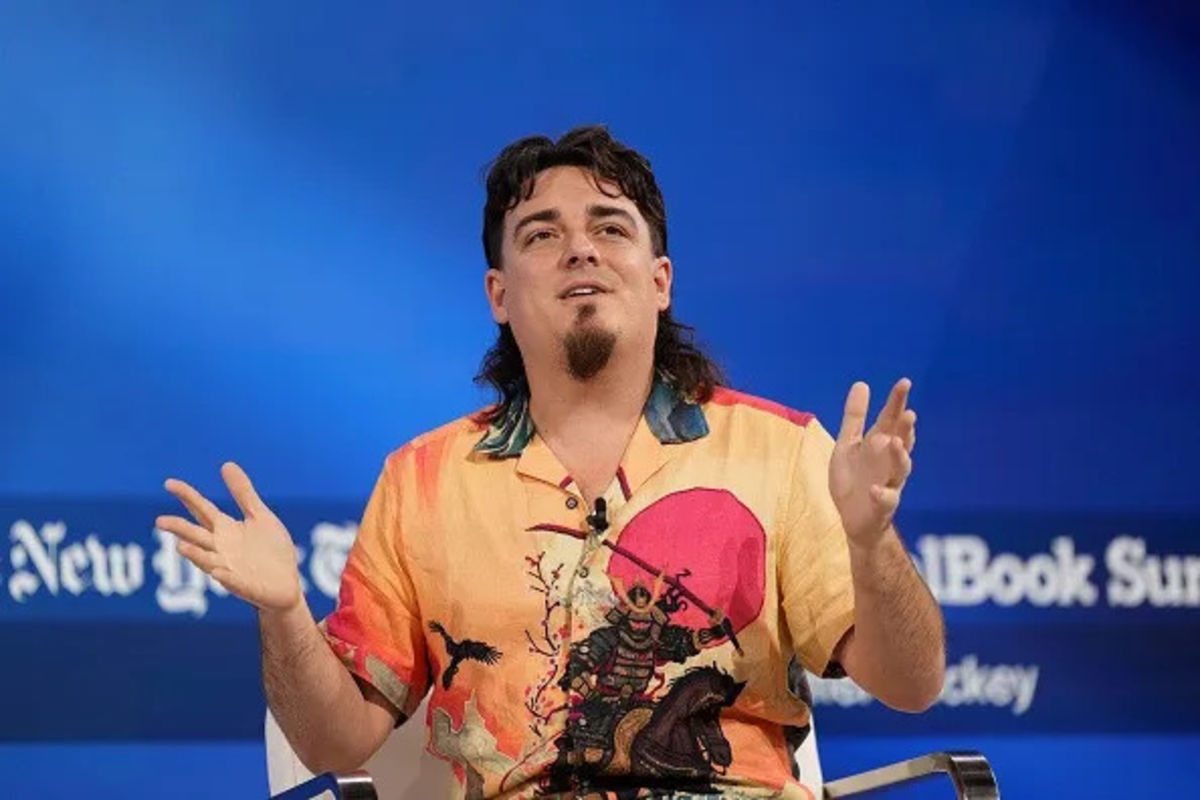
Palmer Luckey, co-founder of Anduril Industries and Oculus, stated at The New York Times DealBook Summit on November 18, 2026, that AI-powered cyberattacks are becoming more sophisticated faster than outdated defensive infrastructure can adapt, urging organizations to accelerate the modernization of their security systems.
What happened
Speaking at the DealBook Summit, Luckey noted that attackers are rapidly applying new AI tools to create exploits, while outdated infrastructure fails to implement corresponding defensive technologies in time. According to him, US adversaries, including North Korea, are benefiting from this gap for both strategic and financial purposes. Luckey emphasized that in the long term, the advantage will go to those who effectively apply AI for defense, and he called on organizations to accelerate the modernization of their defensive systems.
Context
The statement was made at The New York Times DealBook Summit, a business summit by The New York Times dedicated to technology and business. Luckey is known as the co-founder of Anduril Industries, a defense technology company, and Oculus, a virtual reality developer. His speech does not describe a specific incident or new tool: it is a public warning about the structural gap between the speed of attack and the speed of defense in a situation where AI is being used by both sides.
Why this matters for the industry
For the industry, the speech served as a public justification for accelerated procurement of defensive AI: defensive pipelines for detection, triage, and automated response are becoming a critical part of production infrastructure. Startups are getting a window to position themselves in reducing the gap between attack speed and defense, while security software vendors are getting an argument for adding AI agents that automate incident response, from detection to orchestrating countermeasures through existing APIs.
Why this matters for users
For readers working with corporate or government systems, the key takeaway is that AI attacks are becoming faster and more sophisticated, and organizations that do not accelerate the adoption of AI in defense risk becoming vulnerable. For technical specialists, this is a signal to invest in modern defensive tools and AI-based threat monitoring, including auditing current detection systems for latency, inference cost per event stream, and the protection of the ML components themselves from attacks.
What is currently unknown / limitations
The material does not contain measured data: specific models or agents used by attackers, classes of affected vulnerabilities, the frequency of successful attacks, or efficiency metrics are not specified. The assertion that attacks are evolving faster than defenses remains an evaluative thesis by the speaker, and the mention of North Korea as a beneficiary is not supported in the sources by specific incidents or attack reports.
Sources
Author
Look at AI, editorial team