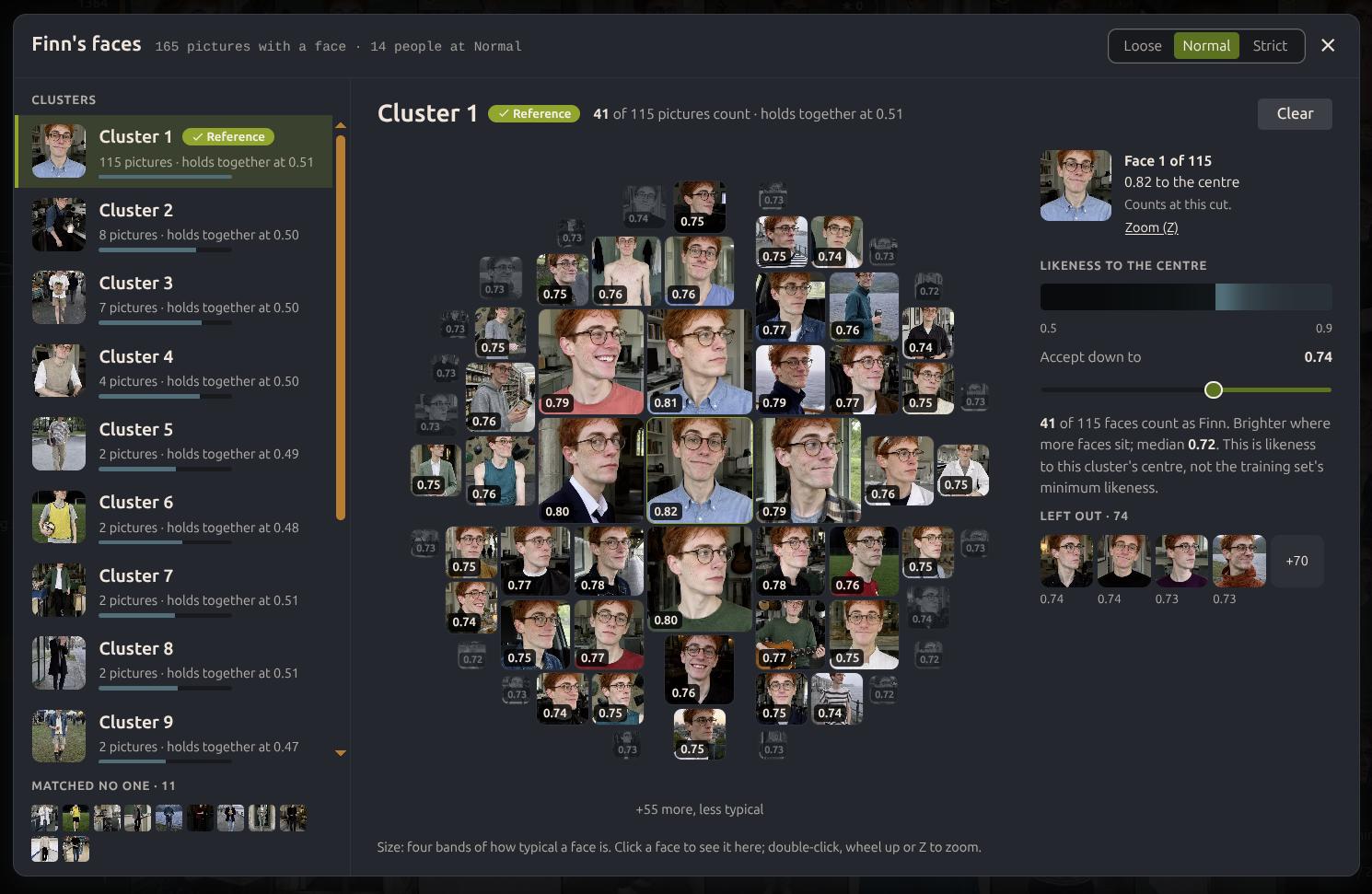
The open-source desktop application PixlStash has been updated to version 2.0, transforming from an image manager into a complete personalization tool. It automatically groups faces by similarity, builds training datasets from these clusters, and initiates LoRA training on a local GPU via AI-toolkit. The resulting model is automatically attached to the character and becomes available in ComfyUI through custom nodes. The main v2.0.0 release was published on November 10, 2026, with a bug-fix version v2.0.1 following on November 16. The application is free, distributed with open source code, and runs on Windows and Linux; a macOS build is announced but not yet ready.
What happened
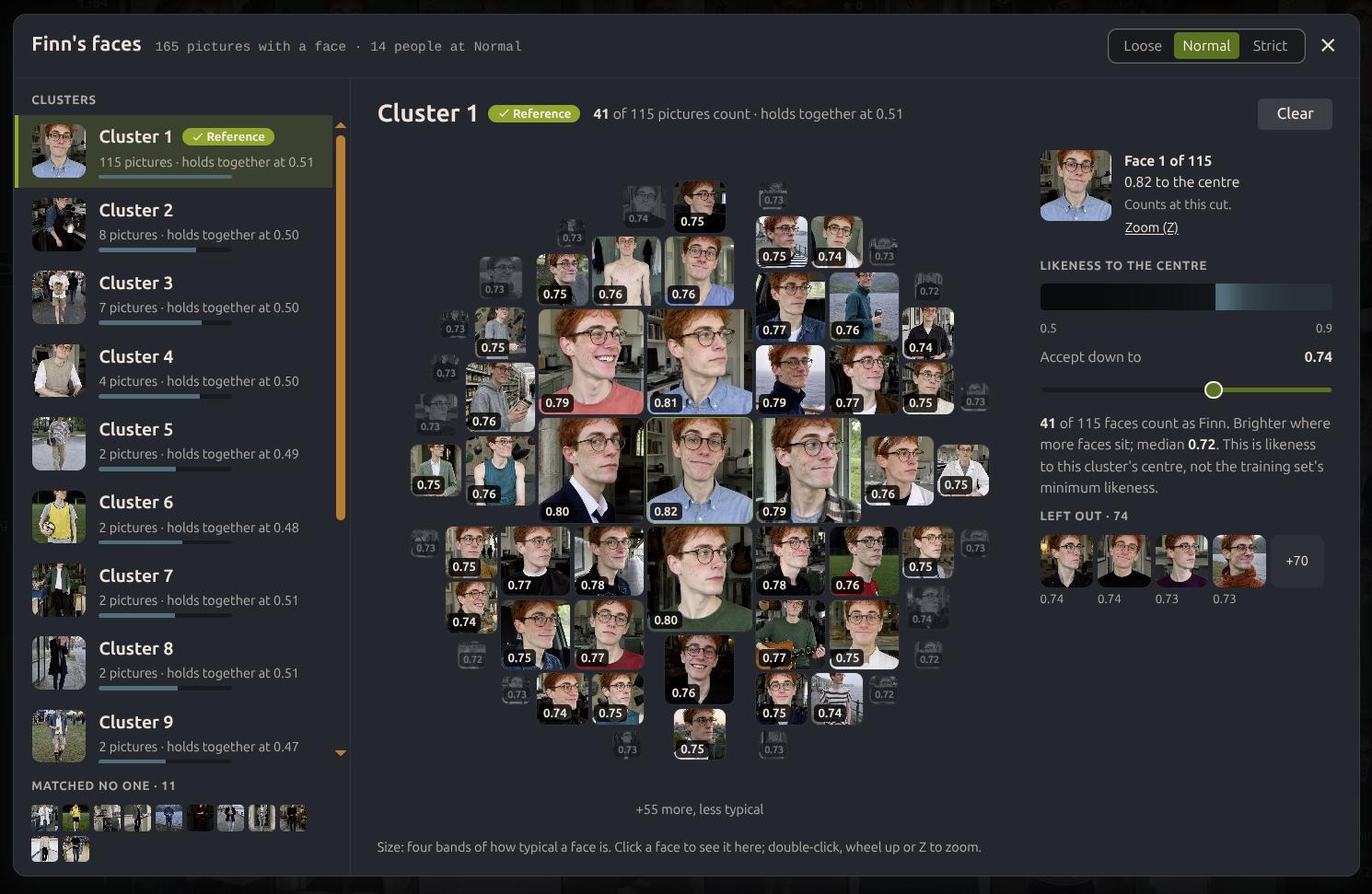
The main PixlStash 2.0 release (v2.0.0) took place on November 10, 2026, followed by a corrective release v2.0.1 on November 16. The new version integrates the entire personalization pipeline into the application. Photos in the library are automatically grouped by face similarity—a feature called face likeness clusters—and these clusters serve as a ready-made foundation for character training datasets. Training is launched directly from the application: the built-in module uses AI-toolkit and operates on a local GPU. Upon completion, the resulting LoRA is automatically attached to the corresponding character in the library and appears in ComfyUI via custom nodes, eliminating the need for manual file transfer. The release also features ready-made schemas, including Krea 2, MOSS-Image, Flux.2 Klein 9B, and Qwen Image Edit 2.1. The application functions both as a standard desktop app and as a headless server with a web interface.
Context
Previously, local personalization pipelines were assembled manually: dataset frames had to be selected from folders, training environments configured separately, and trained LoRAs copied into ComfyUI workflows. PixlStash 2.0 does not offer a new training method; its novelty lies in the engineering assembly of existing components into a single tool. The key move is that the formation of training data becomes a byproduct of normal library management: photos accumulate, faces are grouped automatically, and preparing a dataset for a character ceases to be a separate stage. This is part of a broader trend toward consolidating personalization pipelines, where the library, training, and inference stop being a set of disparate utilities, and a character begins to exist in the application as an entity with an attached model.
Why this matters for the industry
For teams and developers on local AI stacks, the release signifies the commoditization of personalization: the "gather dataset — train — integrate into workflow" chain is now available in a free open-source tool, lowering the barrier to entry from an engineering project to an evening of configuration. This reduces the value of manual data curation as a separate paid service and sets a new benchmark for creative asset managers: "library plus training plus inference" bundles may become an expected standard, prompting competing applications to add similar integrations and extensions. While there are no new research methods here, a convenient platform and data source for experiments on automatic curation of training sets emerges. A risk-mitigating factor is that the project is effectively held together by one active maintainer, and rapid changes in ComfyUI and AI-toolkit require constant compatibility support.
Why this matters for users
The practical benefit goes to those who train LoRAs on their own photos or characters. Selecting training data is reduced to reviewing and confirming automatic face clusters instead of sifting through folders. Training runs on your own GPU without separate environment setup, and the result is immediately picked up in ComfyUI without manual file copying. Users can work on Windows or Linux, including a headless server option with a web interface, which is convenient if the GPU is on a separate machine. There is no cost for the tool itself, but hardware requirements remain: you need your own GPU, and ComfyUI and AI-toolkit act as dependencies, meaning all computations will run on your hardware.
What is still unknown / limitations
The face clustering algorithm is not disclosed: there are no accuracy metrics or analysis of edge cases, such as visually similar faces of different people or the same person under different lighting, ages, or angles. There are also no benchmarks for the quality of LoRAs trained on auto-generated datasets compared to traditionally curated ones—the claim of a more robust model remains a plausible but unverified assumption. The phrase "almost free" describes the cost of forming clusters as a byproduct of library management, not the quality of the resulting datasets. A macOS build has not yet been released, despite announced platform support. Finally, the author's recommendation to call Qwen Image Edit 2.1 the best model is a subjective assessment without a comparison protocol, although ready-made schemas for several base models provide material for such a test.
Sources
Author
Look at AI, editorial team