
Canberra-based AI company Trellis Data (founder Michael Gately) has opened access to its sovereign language model, Agentaus 1, with 220 billion parameters. According to the company, it scores 84.4% on MMLU-Pro and ranks 43rd globally among foundational models. The model operates exclusively on Australian infrastructure, and the creators promise that user data does not leave the country. You can try Agentaus 1 now at agentaus.com.au.

What happened
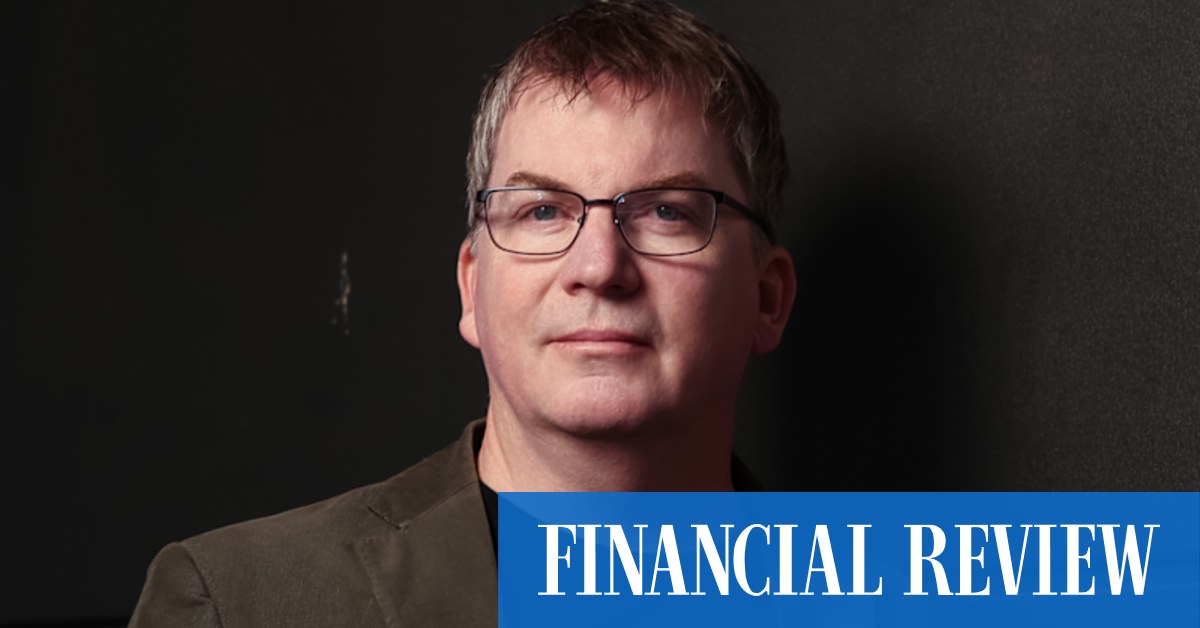
The launch was formalized in an official press release from Trellis Data dated November 10, 2026, and from day one, the model operates as a ready-made service, not just a press statement. Pricing has been fully disclosed: Standard subscriptions at 24 AUD and Professional at 107 AUD per month, API access at 1.70 AUD per 1 million input tokens and 6.70 AUD per 1 million output tokens, and air-gapped deployment without internet connection is available for organizations. The developer claims ISO/IEC 27001:2022 certification and compliance with Essential 8 ML2 requirements. According to the creators, user data is never used for training, and remote chat is permanently destroyed. The only disclosed technical specification is that the new model is approximately 50% larger than Trellis Data's previous development. The information wave has been significant: founder Michael Gately's post on X on November 17 gathered 1.3 million views and 1,740 likes, and The Australian Financial Review (Paul Smith, Senior Technology Correspondent) published an article titled "Australia has a new AI model that wants to challenge Anthropic."
Context
The event marks Australia's transition from a consumer of foreign AI to a producer: a national model of comparable scale is being released to its own market for the first time and can be deployed in a sovereign cloud, locally, or in a fully isolated environment without internet for the government and defense sectors. According to The Australian Financial Review, less than $10 million in external investment has been put into Trellis Data—against this backdrop, the notable fact is not just the release itself, but that a national model was created for tens of millions of dollars, rather than the billions spent by frontier laboratories. The press release presents Agentaus 1 as "near-frontier," however, the self-claimed global rank corresponds to the middle of the rating table: it is more honest to read the positioning as "a worthy national level" rather than proximity to industry leaders. Meanwhile, the segment of sovereign models has formed a separate niche with a working economy: a national model as a service with transparent pricing and an isolation option—while large laboratories focus on universal cloud products.
Why this matters for the industry
For the industry, the format is important: a national large model is immediately sold as a working API with public prices in AUD—this is a benchmark for how much it actually costs to create and operate a sovereign alternative to universal cloud services. Builders get a rare class of capabilities—building agents and automations for regulated clients who cannot build solutions on large laboratory APIs due to the requirement to process data within the country. The practical value for developers depends on a specific technical detail: API compatibility with popular agent frameworks via tool calling patterns; if confirmed, integrations and wrappers, including local products for the government sector, are expected to appear around the sovereign service. An open question is unit economics: whether the company can sustain the inference economics for a model of this size at a national price. The answer will show whether the "national model as a service" format is a reproducible template for mid-sized countries or a local exception.
Why this matters for users
The model can be tried for free at agentaus.com.au today: registration for a free start, comparing API prices with current expenses, and running your own tests on your data is the path from interest to a first pilot, which takes days, not months. Direct benefit will be received by those for whom it is critical to work with a model on data that cannot be sent to foreign clouds: for example, document management for organizations with strict information processing requirements. For other users, Agentaus 1 is useful as a benchmark for comparing sovereign and cloud AI platforms: it is rare for a national alternative to cloud giants to publish such a transparent price list. The creators' assurances about the irreversible deletion of correspondence should be verified in your own pilot, and it is reasonable to postpone the transfer of production loads: the right first step is your own evals on your own data.
What is still unknown / limitations
Key metrics are not confirmed by independent verification: the 84.4% on MMLU-Pro and 43rd rank are claimed by the company itself, there is no run in a public leaderboard, the evaluation setup (few-shot, harness) and data contamination control are not described, and MMLU-Pro is a knowledge benchmark prone to saturation, which says little about real agentic and coding capabilities. The architecture (dense or MoE), base model, training data composition, compute budget, and context window are not disclosed; it is unknown whether the model was trained from scratch. A plausible hypothesis that, given the claimed investment level, the base was open weights with continued pre-training or distillation, requires verification: if the base is someone else's open-weight models, part of the sovereign narrative about an "own model" will need clarification. Commercial promises are also not yet supported: latency, SLA, fine-tuning conditions, and audit of claims about non-transfer of data remain without independent confirmation, so the discrepancy between the marketing frame of "near-frontier" and the claimed middle of the rating has not yet been disputed or refuted.
Sources
- Trellis Data Press Release: Launch of near-frontier sovereign AI model – Agentaus 1 (Company Newsroom)
- The Australian Financial Review — Paul Smith: Australia has a new AI model that wants to challenge Anthropic
- Michael Gately (X): "We built Australia's own AI model, and today it's open to the world" — post about the launch of Agentaus 1
- Hacker News: discussion of the Agentaus 1 launch
Author
Look at AI, editorial team