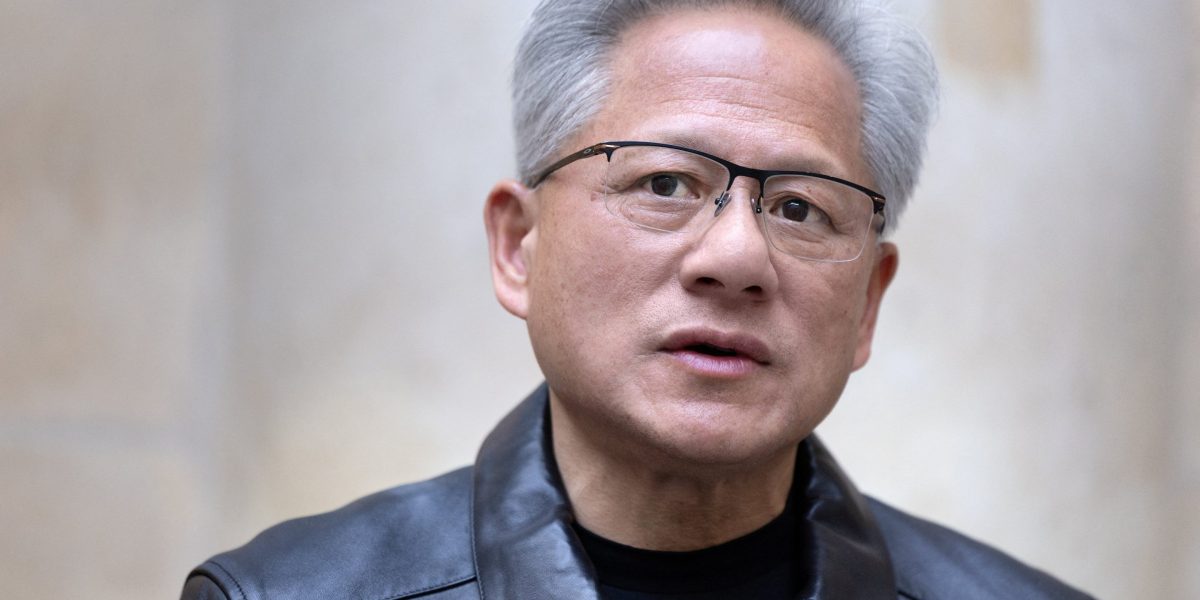
According to the Wall Street Journal, Nvidia's board of directors is preparing to oust the company's CEO and co-founder, Jensen Huang (63): a meeting to decide his fate could take place as early as Wednesday, November 11. The move follows reports of two extramarital affairs—one with a woman whom U.S. intelligence reportedly considers a Chinese agent, and another with an Nvidia executive who reports directly to Huang. Amid the publications, the board has already announced an independent investigation, and the market has reacted with a sharp drop in share prices.
What Happened
The starting point is November 8: Nvidia's board of directors announced an independent investigation after reports that Huang had become a target of foreign intelligence. The investigation is being led by a committee of independent directors with the law firm Wachtell, Lipton, Rosen & Katz, under the direction of Joon Kim, former Acting U.S. Attorney for the Southern District of New York. Subsequently, The New York Times reported on Huang's relationship with Kimberly Powell, the company's Vice President of Healthcare, who reports directly to him. According to Fortune, Huang acknowledged the relationship in a letter to Nvidia employees. The market reacted quickly: shares fell approximately 7–8% in after-hours trading, and the company's market capitalization has lost hundreds of billions of dollars since the scandal began.
Context
The scale of the situation is defined by who Huang is to Nvidia and the industry: the company's co-founder and the chief architect of its dominance in the AI graphics accelerator market, a central figure in the global AI market. Nvidia's management is built around him personally: a flat structure with approximately 60 direct reports, with no Chief Operating Officer, no Board Chair, and no approved succession plan; among possible interim figures mentioned in the media is CFO Colette Kress. A separate layer of the story is national security: publications link the leader's personal life to U.S. intelligence interests and chip export issues to China, turning a corporate crisis into an element of the geopolitical agenda.
Why This Matters for the Industry
For the AI industry, the key risk lies not in the individual, but in the management architecture: a structure built around one person is vulnerable in long development and contract execution cycles for AI hardware, regardless of the outcome of the specific investigation. The market has already begun to price in a "Nvidia without the founder" scenario: Citi, Bernstein, and Oppenheimer are downgrading stock ratings, and market capitalization volatility sets the tone for budget cycles and supply negotiations. If the ouster is confirmed, a period of interim leadership, formalization of the structure, and a shift in priorities toward executing current contracts are likely, while strategic decisions and research bets may slow down; this is a scenario interpretation, not an established fact. Operationally, nothing has changed yet: there are no confirmed changes in GPU production, supply, or the software stack, and the events affect models, benchmarks, and research programs only indirectly—through timeline uncertainty.
Why This Matters for Users
For readers following the AI sector or working with Nvidia hardware, it is important to distinguish between levels. Directly, the hardware, CUDA, and active contracts continue to work as before: there are no confirmed changes in production, supply, or software. The uncertainty, however, impacts the financial backdrop: stock volatility affects anyone whose investments or budgets depend on Nvidia, and the timelines for long-term AI infrastructure purchases may become less predictable. The practical action is to note the calendar: the company's quarterly report is scheduled for November 17, and the results of the independent investigation are expected within four to six weeks; these points will clarify the fate of the leadership and the succession question.
What Is Still Unknown / Limitations
Several fundamental caveats apply. The Wall Street Journal report on the preparation of the ouster has not yet been confirmed by the company or the board of directors: the report is based on the publication's sources. The claim that U.S. intelligence considers Huang's partner a Chinese agent is cited only from media reports and is currently unverified. The investigation timeline and the candidate for interim leadership are estimates and scenarios, not official decisions. Finally, the drop in share prices reflects uncertainty in management, but it is not evidence of a change in the quality of Nvidia's hardware, software stack, or research position: these are different claims, and one cannot substitute for the other.
Sources
- Statement From NVIDIA Board of Directors (NVIDIA Newsroom)
- Report: Nvidia preparing to oust CEO Jensen Huang after affair with woman U.S. officials deemed a Chinese spy (Fortune)
- Jensen Huang Said to Have Had Relationship With Nvidia Executive Who Reports to Him (The New York Times)
Author
Look at AI, editorial team