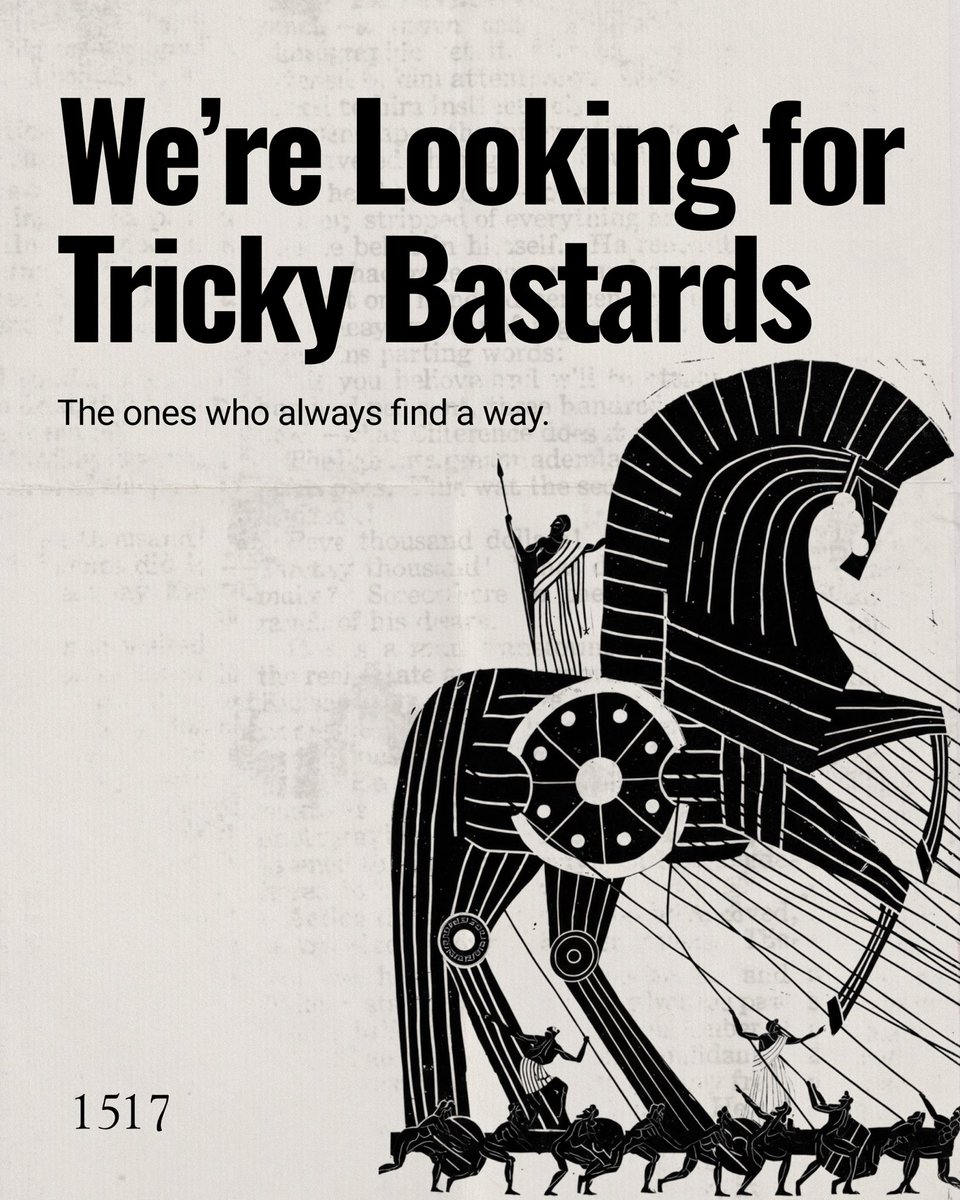
Venture investor Paul Klay, affiliated with Begin Capital, published a list on X of the "best founder traits for those about to fundraise"—ranging from childhood trauma and stubbornness to speed and technical talent. The list is based on an analysis of more than 10,000 Thiel Fellowship applications conducted by 1517 Fund and generated significant audience engagement. The key takeaway is that the investor openly articulated how startup evaluation works at the earliest stage: before a product or metrics exist, investors look at the founder's character and pace. However, this reflects the preferences of two specific institutions rather than a proven selection methodology.

What Happened
On November 8, 2026, Paul Klay (@PaulKlayVC, Begin Capital) published a post titled "best character traits for founders who are about to fundraise." It lists six traits: childhood trauma, stubbornness, heretical thinking, neurodivergence (ADHD and ASD), speed, and technical talent. According to the author, these traits provide the sustained long-term motivation and pace necessary to build a billion-dollar company. The post is formatted as a quote of a November 7 publication by 1517 Fund, and the Russian-language channel @alexkrol translated it for its audience. The reach was notable: in the first 24 hours, Klay's post collected 331 likes and 26 replies, while the fund's publication received 872 likes.
Context
1517 Fund is not an anonymous joke: it is run by Michael Gibson and Danielle Strachman, former curators of the Thiel Fellowship—a Peter Thiel project that sends young people into entrepreneurship instead of university. After reviewing more than 10,000 applications, the fund's partners formulated a non-standard portrait of a "great founder" and described their search as looking for "sneaky bastards who always find a way out." This background reveals a broader pre-seed practice: when a team lacks traction, revenue, or metrics, investors have nothing to measure the future by except the founder themselves, making character and pace filters effectively replace product evaluation. This fork is most visible in AI startups: teams of two to three engineers compete with corporations, and the bet on the person versus the bet on the presentation becomes the central question of early funding.
Why This Matters for the Industry
For the industry, the main signal is the transparency of the selection pipeline: a pre-seed investor publicly acknowledges that they are not looking for "balanced" entrepreneurs, but for people with pronounced traits, demonstrating this on the scale of 10,000 reviewed applications. Of the six named traits, only two are operationally testable—speed and technical talent—because both are visible in observable artifacts: release frequency and time from idea to working demo. If the founder-first framework becomes established, the standardization of "founder artifacts" in pre-seed processes is likely: diligence templates based on public footprints, tools aggregating commits, demos, and changelogs, and explicit requirements to "show pace." The downside is gaming the criteria: if applications start tailoring themselves to the list, for example through a "correct" story about trauma or neurodivergence, the signal for selectors will become blurred, like an eval on which they have trained.
Why This Matters for Users
For those preparing a Thiel Fellowship application or entering a pre-seed round, the list provides a direct answer to what is looked at first: character and pace, not the presentation. From this follows a practical action available without writing a single line of code: increase the frequency of public releases and prepare a live demo, because a founder demonstrating real pace and defending a non-standard thesis wins over a polished deck at the first conversation stage. The original thread can be read on X directly from Klay's post. However, the list cannot be turned into a checklist: 1517 Fund itself emphasizes that "this is not a personality test," meaning the absence of "trauma" or a diagnosis is not a minus, and the presence of items guarantees nothing. This is an honest description of specific investors' tastes, not a success instruction.
What Is Unknown / Limitations
Methodology is absent here: the sources contain no metrics or tracked outcomes, so the link "these traits → billion dollars" is an investor opinion, not a research result. The sample of more than 10,000 applications is self-selected, without a control group or tracking of participants' fates, creating room for systematic survivorship and confirmation biases. None of the six traits is operationally defined, and no metric is named for any of them, meaning the evaluation is not reproducible. Finally, the tastes of only two institutions—Paul Klay and 1517 Fund—are confirmed, and there is currently no basis to generalize them to the entire pre-seed sector; it is also unclear whether the discussion will evolve into formalized selection methodologies or remain a viral founder typology.
Sources
- Paul Klay (@PaulKlayVC, Begin Capital): post "best character traits for founders who are about to fundraise"
- 1517 Fund (@1517fund): publication "after reviewing 10,000+ Thiel Fellowship applications"
Author
Look at AI, editorial team