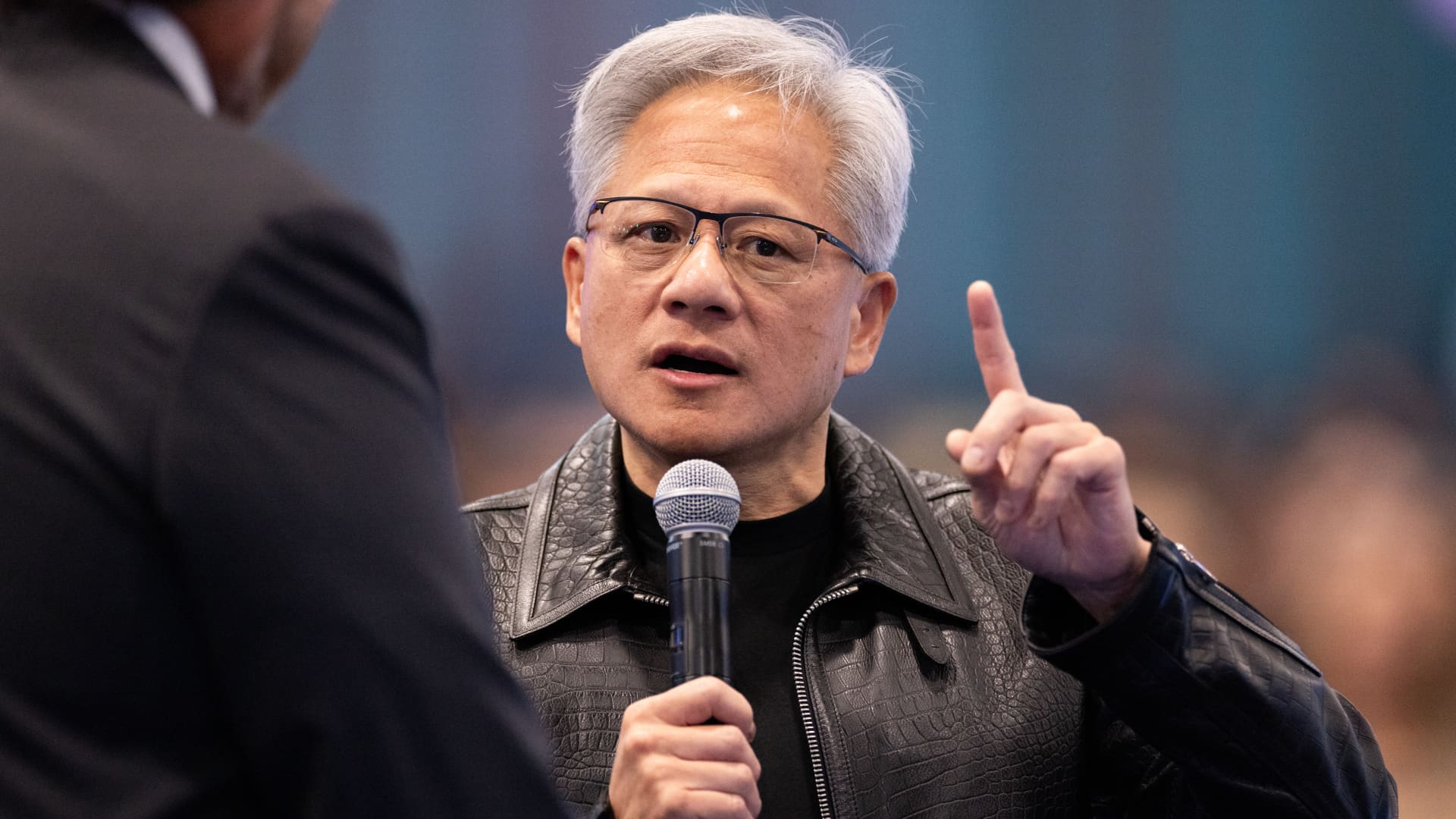
NVIDIA CEO Jensen Huang admitted to an affair with his wife Lori in a personal letter to employees on November 8, 2026, apologizing and stating there were "no excuses" for his actions. According to The New York Times, his close associate is Alice Huang (Huang Le), a former top executive at Singapore-based Megaspeed, whom US intelligence agencies consider an agent of the Ministry of State Security (MSS) of China. The NVIDIA board launched an independent investigation on the same day to determine if the company's CEO was the target of a foreign intelligence operation. China called the accusations "pure slander," while Donald Trump publicly defended Huang.


What happened
On Sunday, November 8, 2026, Jensen Huang sent a personal letter to NVIDIA employees in which he admitted to an affair with his wife Lori and asked for forgiveness, emphasizing that there were no excuses for his actions. On the same day, the company's board of directors launched an independent investigation involving independent directors and outside counsel to determine if Huang was the target of a foreign intelligence operation. The catalyst was Alice Huang (Huang Le), a former top executive at Singapore-based Megaspeed, whom The New York Times reports, citing US intelligence agencies, is considered an agent of the Ministry of State Security (MSS) of China. The reaction was swift: the Chinese side called the accusations "pure slander," and Donald Trump publicly defended Huang. Meanwhile, the US Congress requested a closed briefing on the situation.
Context
Megaspeed is one of NVIDIA's largest customers in Southeast Asia: over two years, the company purchased NVIDIA accelerators worth more than $4.8 billion, and in October 2025, it was already under investigation for circumventing US export restrictions. The scale gives the story weight: NVIDIA is the world's largest AI company with a market capitalization of over $5 trillion, and Huang himself was the main lobbyist for easing the ban on selling advanced chips to China. Therefore, the question of his connections is not a social drama but a test of a person whose position largely determined the availability of advanced GPUs for the Chinese market.
Why this matters for the industry
For the AI industry, the main risk is concentrated in export policy: the main proponent of easing restrictions on chip sales to China has found himself at the center of a foreign influence investigation, and the board's investigation, along with the Congressional request, makes the rules for supplying advanced GPUs significantly less predictable. Analysts warn of risks to NVIDIA's stock and company strategy if the investigation confirms data leaks. If it is found that chips were diverted through unauthorized channels, the industry can expect enhanced checks on resellers in third countries and a stricter approval regime for deals involving advanced accelerators—gray procurement paths for compute will narrow, and procurement cycles will lengthen. If no evidence of influence is found, the story will likely boil down to reputational turbulence without changes to the rules. In any scenario, practice is moving toward formalized end-user verification of accelerators and reseller audits as a standard part of supply chains.
Why this matters for users
For readers and developers, there are no direct changes today: APIs, prices, drivers, CUDA, and NVIDIA's service levels remain the same, and working services and GPU availability have not been affected. The significance of the story for users is that the personal drama of the head of a key AI infrastructure provider has become intertwined with US national security, and the outcome of the investigation will determine who defines the policy for supplying advanced chips. The practical observation calendar: NVIDIA's quarterly earnings report on November 17, the closed briefing in Congress on November 18, and the progress of the independent investigation—these points will show whether Huang will retain his position as CEO. For those holding NVIDIA stock or building products on its hardware, the coming days are a window of heightened volatility, where any news about chips should be verified against primary sources rather than aggregators.
What is currently unknown / limitations
Key claims in the story are not yet supported by published evidence: the version of Alice Huang as an MSS agent relies on a single line of reporting from The New York Times, which is being distributed by CNBC, CBS, and ABC, so it should be reported with the caveat "according to media reports" rather than as a fact. The results of the board's investigation are unknown: it is unclear whether data leaks or unauthorized chip outflows will be confirmed, and what personnel decisions NVIDIA will make regarding Huang. It is also unknown whether the situation will affect export rules. Details of the closed briefing may remain classified, so part of the picture will likely not be disclosed. Until results are received, all accusations should be considered assumptions.
Sources
- Nvidia investigates CEO Jensen Huang's relationship with alleged Chinese spy — CNBC
- Nvidia investigates CEO Jensen Huang amid allegations he was target of Chinese intelligence effort — CBS News
- How Nvidia came to investigate CEO Jensen Huang's affair with suspected Chinese spy — ABC News
Author
Look at AI, editorial team