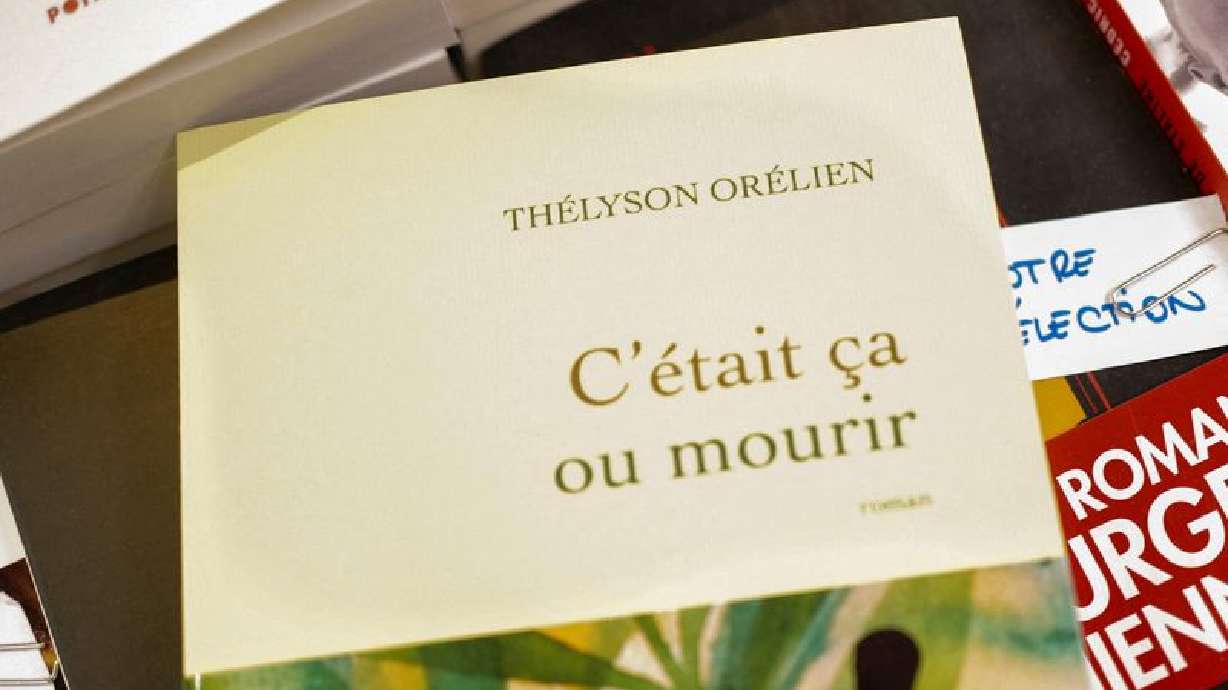
Canadian publisher Les Éditions du Boréal terminated its contract with Haitian-Canadian writer Thélyson Orélien after an external review of drafts for his novel 'C'était ça ou mourir' found AI markers in the document metadata. The novel had previously been removed from the Goncourt Prize shortlist following a claim by an anonymous account citing the Pangram detector, although other detectors indicated human authorship. Orélien denies creating the prose with generative AI. The case demonstrated that in publishing, when detector results are contradictory, the decisive artifact was not the text assessment but the metadata of working files.


What happened
On October 21, 2026, publisher Les Éditions du Boréal terminated its contract with Haitian-Canadian writer Thélyson Orélien. The basis was an external review of drafts for his debut novel 'C'était ça ou mourir', during which AI markers were found in the document metadata. The publisher declined to reissue the book and to publish the author's future works. This decision followed a scandal surrounding the prize: on September 25, 2026, the Goncourt Academy removed the novel from the shortlist after a statement by anonymous X account 'Balance ton Claude' claiming that the Pangram detector showed a 100% probability of machine origin. Other detectors, however, gave the opposite result, indicating human authorship.
Context
The book's position at the time of the scandal was unique: 'C'était ça ou mourir' had already been awarded prizes, and translation rights had been sold in more than 20 countries, so the decisions of the prize and the publisher affected its reputation and sales worldwide. Orélien denied the involvement of generative AI in creating the prose from the beginning, explaining that he began writing the book in late 2017, before the emergence of ChatGPT, and used AI tools only for historical research. The evidence in this case is heterogeneous and poorly aligned. The anonymous author of the statements about Pangram's final verdict did not disclose the methodology, and the detector's assessment contradicted the findings of other tools. Draft metadata is file origin forensics, not text classification: AI markers can appear from legitimate secondary use of tools, such as historical research, and may be lost or distorted during format conversion, so their interpretation without a marker taxonomy and data on the frequency of such traces remains arbitrary.
Why this matters for the industry
For the publishing industry, the case became a precedent showing the limits of current authorship verification: both the prize and the publisher reacted to a detector report and a one-time external review of drafts without having an accepted technical standard, and even after awarding prizes and selling rights in more than 20 countries, they could not establish the exact scale of AI use. Publishers and prizes are now forced to verify authorship using ad hoc and contradictory signals and to resolve disputed cases manually, inventing their own process each time. For detector vendors, this is a reputational stress test: the discrepancy between Pangram's and competitors' findings became public, and the next step will likely be pressure to publish accuracy metrics, false positive rates, and undergo audits. A practical shift is expected from content detection to document provenance—versioning, file hashes, tool logs, and declarative forms—with the prospect of text origin standards similar to C2PA.
Why this matters for users
For readers and authors, the case is a clear lesson that an AI detector's output is not conclusive evidence: in this case, tools directly contradicted each other, and a 'clean' check result has almost no weight and does not rehabilitate the author. Detectors historically give more false positives on atypical text, and stylistically marked prose by a non-native author is exactly such a case. Authors should treat working files and drafts as a vulnerable area: they became the decisive artifact in the contract termination and prize exclusion. For readers, the story adds caution to loud stories about 'AI books': behind them are complex technical and legal issues that cannot be solved with a single detector screenshot.
What is currently unknown / limitations
The exact scale of AI use in working on the novel has not been established by an independent review: the publisher's position relies on its own conclusions from metadata and external review, while the author's position remains opposite. The report on Pangram's 100% assessment was distributed by an anonymous account without a published methodology, and the conflict with other detectors remains unresolved. The taxonomy of 'AI markers' in metadata and statistics on how often legitimate secondary use of tools leaves such traces or erases them during format conversion have not been published. The author's claim that he began writing the book in late 2017 is in principle verifiable by document version history forensics, but such an audit was not conducted or its results were not published, and this is the main gap in the case materials. Forecasts about future editorial protocols and provenance standards are interpretations, not established facts.
Sources
- The Guardian — article on Boréal and Orélien contract termination
- KSL.com — on the publisher linking the book to AI
- The Guardian — on the novel's removal from the Goncourt list
- MSN — summary article on Boréal's decision
Author
Look at AI, editorial team