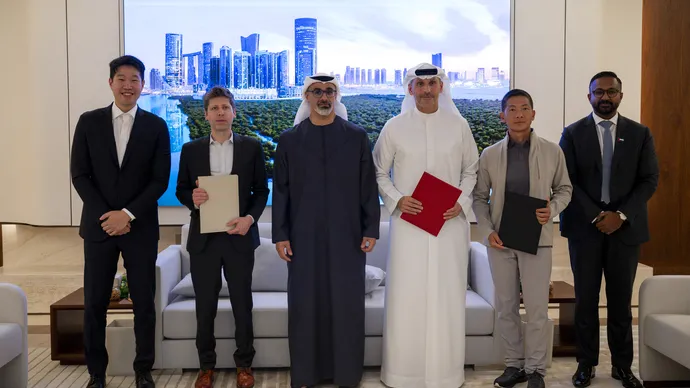
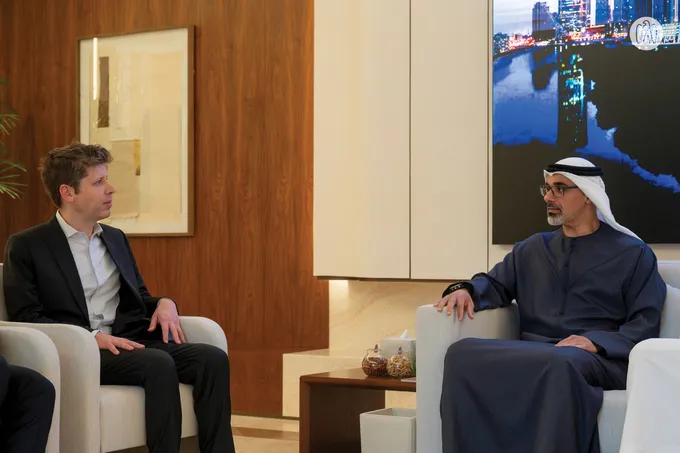
On November 2, 2026, Abu Dhabi Crown Prince Sheikh Khalid bin Mohamed bin Zayed and OpenAI CEO Sam Altman signed four agreements, the central one being the launch of the 'world's first AI-native Machine-Readable Government': the emirate's government regulations are being converted into a machine-readable format, and model inference is taking place in UAE data centers. In parallel, starting in December, OpenAI is combining ChatGPT and Codex limits into a unified token balance for Plus, Pro, and Business plans. Anthropic has added a ban on reselling access to Claude to its Usage Policy, Google Antigravity has launched a Plugin Marketplace, and Meituan has introduced the LongCat-2.5 model with a claimed score of 88.4 on Terminal Bench v2.1.
What happened
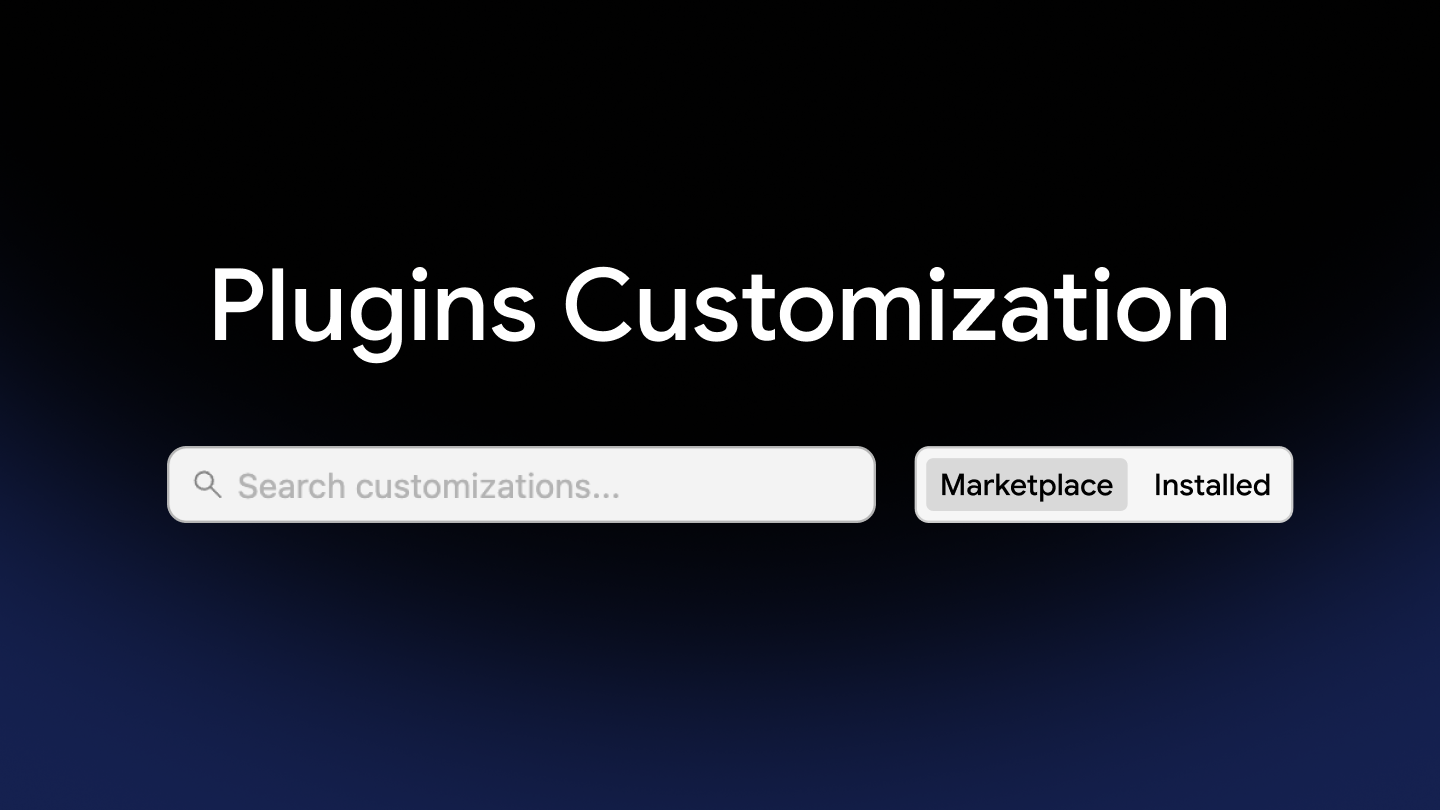
On November 2, 2026, Abu Dhabi Crown Prince Sheikh Khalid bin Mohamed bin Zayed and OpenAI CEO Sam Altman signed four agreements. The first is the launch of the 'world's first AI-native Machine-Readable Government' involving DGE and ADAFSA: the pilot covers food import checks, where the model compares the application with regulations and prepares a preliminary conclusion, while the final decision is made by an official; inference is performed on GPUs in UAE data centers. The second agreement makes ADNOC, in partnership with G42 through the Inception42 project, OpenAI's first energy client. The third concerns a contract with Mubadala for investment analysis, and the fourth is a five-year Inception42 contract for the public sector, business, and education. Separately, OpenAI announced that starting in December, ChatGPT and Codex limits on Plus, Pro, and Business plans will be combined into a unified token balance, with Instant chats not counting toward usage. Anthropic has added a ban on reselling and proxying access to Claude through consumer subscriptions and on the use of stolen or fraudulent payment methods to its Usage Policy. Google Antigravity launched a Plugin Marketplace allowing plugin installation from the desktop application or CLI, and Meituan introduced the LongCat-2.5 model: a rare MoE architecture with approximately 48 billion active parameters out of 1.6 trillion, a claimed score of 88.4 on Terminal Bench v2.1, and free access at longcat.ai/chat and via API; the model does not have open weights.
Context
The agreements with OpenAI establish the pattern of an AI-native Machine-Readable Government: regulatory requirements exist not only as texts for humans but also as machine-readable data, which the model uses to compare specific applications and issue a preliminary conclusion with a reference to the norm; the final word remains with a human, and computations are kept within the country for data residency. This is not a new model capability, but an engineering combination of regulatory data, local inference, and human-in-the-loop, which Abu Dhabi has packaged for the first time into a set of four contracts—from a food regulator to the energy sector and a sovereign fund. The subscription market mechanics are changing: ChatGPT and Codex limits previously existed separately, but now the plan transforms from a set of fixed quotas into a token budget, where usage is determined by the selected model and task complexity. Anthropic's ban formalizes the company's position against the gray economy of cheap access to Claude through others' subscriptions, while the Plugin Marketplace continues the trajectory of agentic tools, where distribution through marketplaces becomes a growth channel. The appearance of LongCat-2.5 fits the industry line of extreme sparsity: approximately three percent of active parameters per token with multimodality—a notable data point for MoE scaling research, if architectural details are ever published.
Why this matters for the industry
For builders, the Abu Dhabi package is a ready-made template for a sovereign AI program: if the DGE/ADAFSA pilot withstands the load and demonstrates measurable quality of checks, vendors will see demand for regulatory assistants, migration of government regulations to machine-readable formats, and in-country inference deployment, meaning work for automation studios, RAG platforms, and integrators with data residency expertise. The deal with ADNOC through Inception42 marks OpenAI's entry into the energy sector as a separate vertical, while the five-year contract for the public sector, business, and education turns a one-time collaboration into a long-term infrastructure connection. The unified token balance changes the unit economics for those building products on Plus, Pro, and Business: operation costs are now calculated in tokens rather than messages, so load on the unified limit must be planned in advance. The Plugin Marketplace opens a distribution shelf for agentic plugins, where tools are released from the desktop application and CLI. Anthropic's ban removes the legal basis for business models built on proxying others' consumer subscriptions to Claude. If independent replications confirm the LongCat-2.5 result, the position of Chinese labs in agentic coding tasks will strengthen, and extreme-sparse MoE with single-digit percentages of active parameters will approach the status of a default design for frontier models.
Why this matters for users
Available right now: LongCat-2.5 can be tried for free at longcat.ai/chat and via API, and plugins in the Plugin Marketplace can be installed from the Google Antigravity desktop application or CLI. Those working in ChatGPT and Codex on Plus, Pro, or Business should get used to monitoring usage in Settings → Usage before the December transition: the unified balance will be spent on both chats and Codex, Instant chats are not deducted, and upon reaching the limit, users will have the option to buy credits or upgrade their plan. Users of gray schemes for cheap access to Claude through others' subscriptions should assume that such services will cease to exist after the update to Anthropic's Usage Policy. For companies importing food products into Abu Dhabi, the DGE/ADAFSA pilot means the appearance of preliminary conclusions prepared by a model based on machine-readable regulations, while the final decision remains with the official.
What is currently unknown / limitations
The phrase 'world's first AI-native Machine-Readable Government' is a press release statement, not a verifiable claim: there are no published quality metrics for preliminary conclusions or the methodology of the DGE/ADAFSA pilot. For LongCat-2.5, there is no technical report, open weights, or description of the harness, including scaffolding, retries, and sampling, so the claimed result of 88.4 on Terminal Bench v2.1 cannot be reproduced by third parties; the result is placed exactly between GPT-5.5 with 83.2 and Claude Opus 5 with 89.1 in a selection of three models, which allows for selective vendor reporting. Beyond the phrase 'starting in December,' details of the timeline for transitioning to a unified token balance have not been disclosed. The composition of the Plugin Marketplace shelf, detailed terms of the contract with Mubadala, and the five-year Inception42 contract are not described in open materials.
Sources
- Khaled bin Mohamed bin Zayed meets Sam Altman and witnesses signing of agreements with OpenAI (Abu Dhabi Media Office)
- Understanding ChatGPT and Codex usage limits (OpenAI Help Center)
- Anthropic Usage Policy (AUP)
Author
Look at AI, editorial team