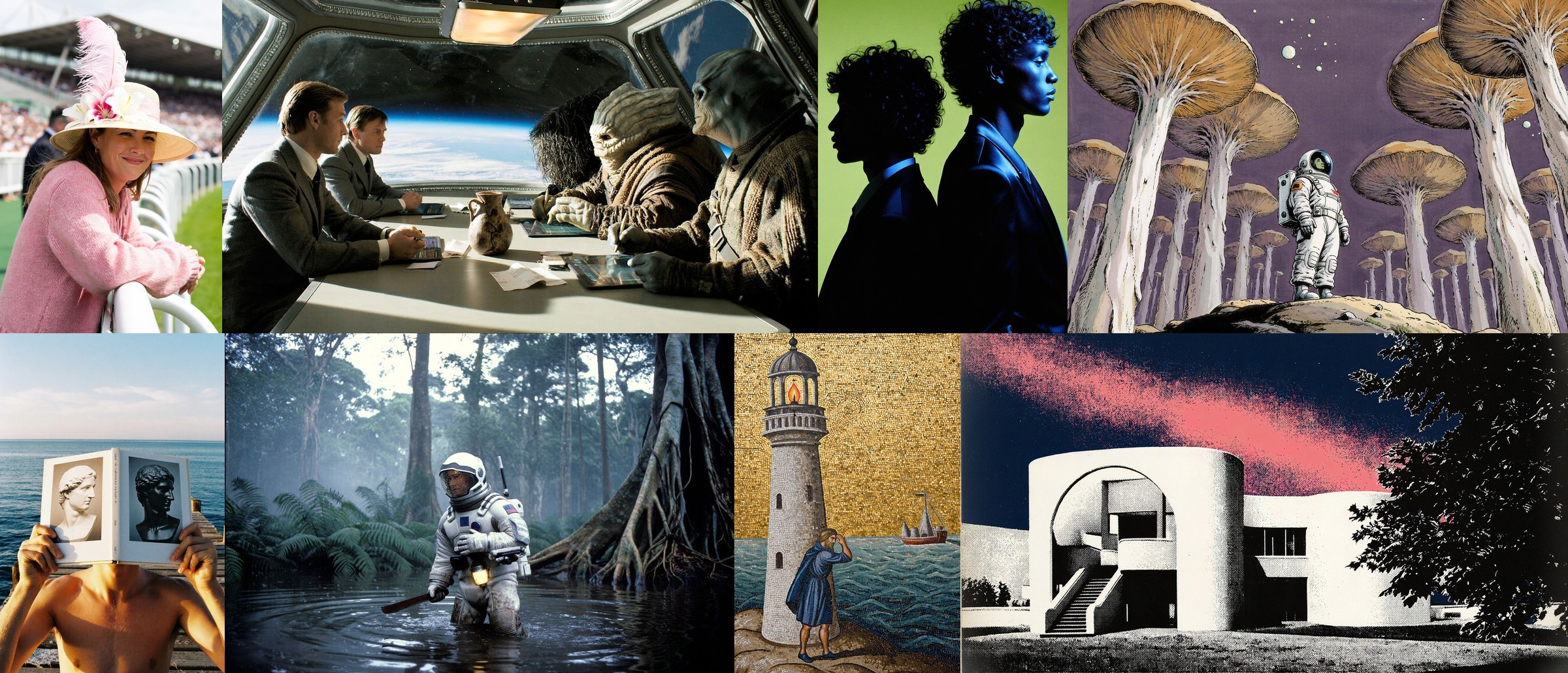
On November 3, 2026, Pruna AI released P-H3-Image — an open image generation and editing model assembled from the MiniMax-H3 video model through component-wise distillation: the text encoder and transformer were compressed, and the diffusion schedule was shortened from 50 to 8 steps. As a result, photorealistic generation of a frame up to 8 megapixels without CFG or negative prompts fits into quantized weights of about 20 GB and peak VRAM of about 21 GB, whereas previously this class of tasks required server-grade accelerators like the H200. Weights are available on Hugging Face, and the model is natively supported in ComfyUI without custom nodes.


What happened
Pruna AI released the weights for the P-H3-Image image model, reassembling the MiniMax-H3 video model piece by piece: the text encoder was distilled from 32B to 4B parameters, the transformer was reduced from 33B to 20B, the diffusion schedule was shortened from 50 to 8 steps via DMD distillation, and the decoder was retrained for single frames. The model renders images up to 8 megapixels (up to 16 according to Pruna) without CFG or negative prompts and edits them based on one input image or a set of up to 8 references; inside the pipeline, a built-in prompt upsampler based on Qwen3.5-9B works, expanding a one-line request into a detailed prompt. Weights are published in two Hugging Face repositories: PrunaAI/P-H3-Image with a diffusers pipeline in bf16 weighs about 100 GB and is designed for H200/B200 or about 80 GB with offloading, while PrunaAI/P-H3-Image-Comfy contains int8 and 4-bit w4a8 versions with a load of about 20 GB. Support in ComfyUI is native (master and version v0.44.0) and does not require custom nodes; on an L40S, a 2048x2048 frame in quantized form is generated in 6.3 seconds compared to 19 seconds for bf16. The model is distributed under the MiniMax H3 Community License.
Context
The original stack was designed for servers: the weights of the MiniMax-H3 video model occupy about 143 GB, and high-resolution photorealistic generation in this class has remained tied to H200-level accelerators. The release relies on the known trend of few-step samplers: DMD distillation of the sampler schedule and the abandonment of CFG with negative prompts simplify and speed up the pipeline, but at the same time, the semantic load shifts to the compressed text encoder, which is important to consider when evaluating prompt adherence. A second structural nuance is that the system is effectively two-model: the final result depends on both the built-in upsampler based on Qwen3.5-9B and not just the basic generative part. Deployment readiness reached the level of the best open-weights image releases precisely because the reassembly was done for standard tooling: ComfyUI supports the model out of the box, and quantized weights are assembled with standard means.
Why this matters for the industry
For the industry, the release is valuable for hardware-verifiable numbers: component-wise distillation turned a 143 GB video stack into an image model with a load of about 20 GB, providing a sevenfold size reduction and a fivefold speed increase (2.6 seconds vs. 12.4 seconds at 4 megapixels on B200) with claimed preserved quality. As a result, high-resolution photorealistic generation moves from the "needs H200" class to the approximately 21 GB VRAM class with out-of-the-box ComfyUI on Ampere+ and RDNA3/4 architectures, which significantly improves the unit economics of services and lowers the barrier to entry for startups. Builders get a ready-made workflow constructor: reference-based editing, a built-in prompt upsampler, and native ComfyUI allow building an MVP on their own hardware over a weekend without a budget for server accelerators. Expected is also pressure on hosted generation prices in the photorealistic segment, as the local stack has become more accessible; if the reassembly recipe is reproducible on other video backbones, image versions of heavy video models may become a standard open artifact of their release.
Why this matters for users
The model is available today: weights are in the PrunaAI/P-H3-Image and PrunaAI/P-H3-Image-Comfy repositories on Hugging Face, and in ComfyUI version v0.44.0 and above, support is native, without custom nodes, with ready-made Text-to-Image and Image Edit templates. The practical path for most is quantized versions on a video card with approximately 21 GB VRAM: the w4a8 variant with int8 VAE requires about 20 GB of loading, works in eight sampling steps without a negative prompt, and a 2048x2048 frame on an L40S is generated in 6.3 seconds. The path through diffusers in bf16 requires H200/B200 or about 80 GB with offloading, so locally it is currently expensive. The model's strengths are photorealism, editorial and documentary photography, cinematic frames, and graphics with short text; weaknesses are hands and small details at resolutions below 8 megapixels, unreliable rendering of dense text, and sensitivity to "hype" words in the prompt. Before commercial application, it is worth carefully studying the MiniMax H3 Community License: it restricts commercial use, and without a separate agreement, some scenarios will be unavailable.
What is still unknown / limitations
The assessment of a "reproducible recipe for turning a video model into an image model" currently relies on a single case: one base model was reassembled and one derivative was obtained, and testing on other video backbones is yet to come. Key release figures, including the sevenfold weight reduction, fivefold speed increase, and the claim of 16 megapixels, are presented by Pruna AI itself, and at the time of release, there are no independent comparisons with the original MiniMax-H3 and competitors in terms of photorealism and editing quality. The result is two-model, as it depends on the built-in upsampler based on Qwen3.5-9B, which complicates the reproduction and interpretation of any comparisons. The exact terms of commercial use restrictions under the MiniMax H3 Community License should be verified by the license text before launching a commercial product.
Sources
- P-H3-Image: Turning a SOTA Video Model into an Efficient Open Image Model — Pruna AI (blog, November 3, 2026)
- PrunaAI/P-H3-Image — Hugging Face (model card, diffusers pipeline)
- PrunaAI/P-H3-Image-Comfy — Hugging Face (ComfyUI versions bf16/int8/w4a8)
Author
Look at AI, editorial team