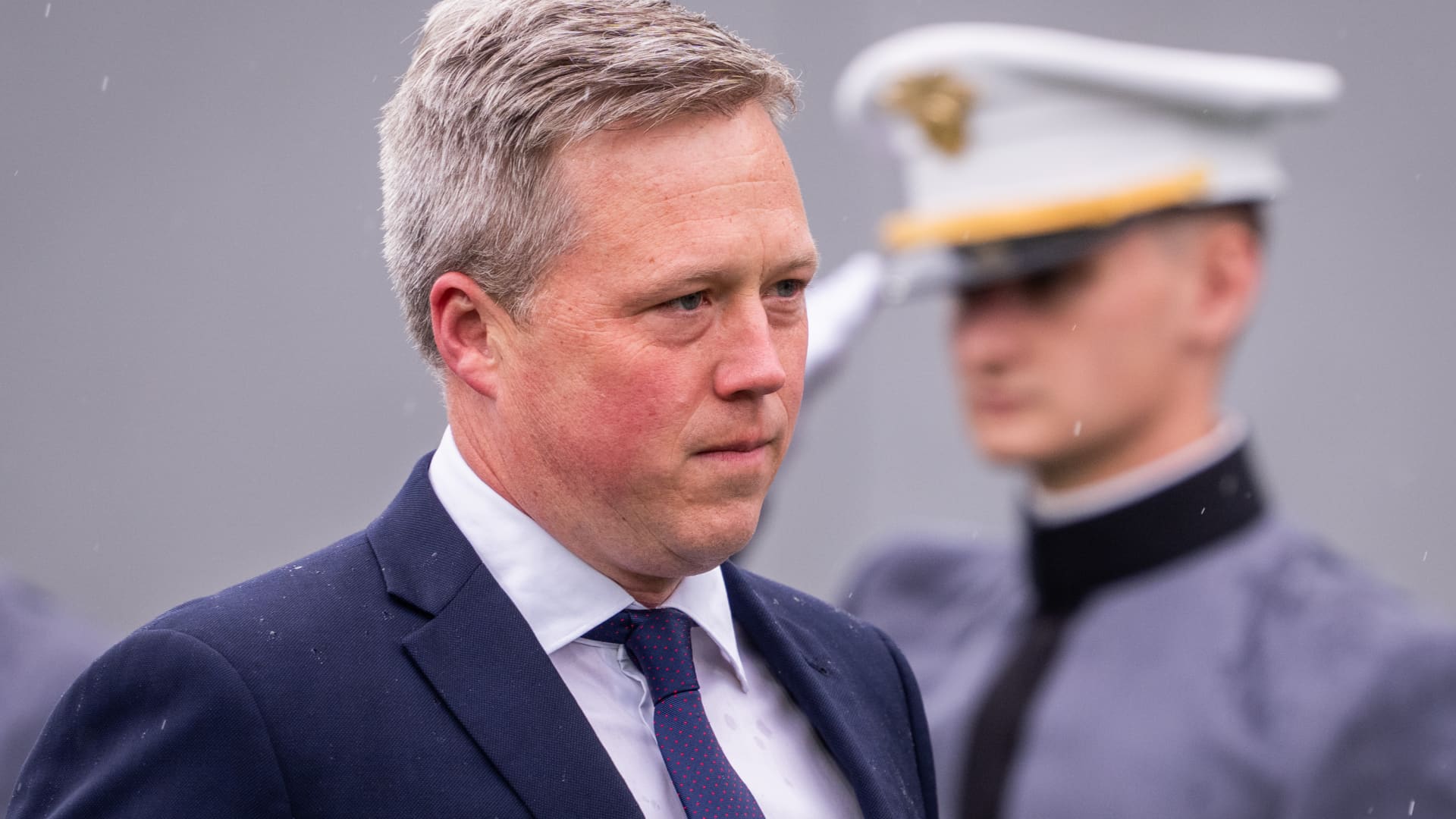
On November 2, 2026, OpenAI announced the appointment of Dan Driscoll, who held the position of Secretary of the US Army—the civilian head of the Army—to the new role of senior counselor for national security modernization. The position was created specifically for him: Driscoll will advise the company's leadership and partners on applying AI in national security and cybersecurity, leveraging the Daybreak program. The appointment makes national security a permanent staffed direction for OpenAI and serves as another example of the 'revolving door' between Washington and the AI industry: the former official joined the company 61 days after leaving government service.

What Happened
OpenAI announced the hiring of Dan Driscoll as senior counselor for national security modernization, a role established specifically for him. His responsibilities include advising OpenAI's leadership and the company's partners—government agencies, industry, universities, and US allies—on applying AI in national security and cybersecurity, as well as promoting the idea of 'democratic AI.' Driscoll is expected to help internal company teams understand the needs of defense structures. The Daybreak program, dedicated to cyber resilience and the protection of critical services, is cited as the foundation for this new direction. No product announcement accompanied this appointment: OpenAI's statement included no new models, API changes, pricing updates, or signed contracts.
Context
Driscoll led the US Army as its civilian head and left his post in 2026. According to Reuters, his departure was preceded by several months of friction with Defense Secretary Pete Hegseth, and Driscoll joined OpenAI 61 days after leaving government service. As Army Secretary, he oversaw its modernization, including expanding access for US allies to drones and counter-drone systems, giving him direct experience with defense procurement and international partnerships. Driscoll himself stated that 'national security requirements are changing faster than at any point in the last 50 years.' For OpenAI, national security had previously remained a research initiative and the Daybreak program; the appointment elevates the topic to a permanent staffed responsibility. This continues a notable pattern: frontier laboratories are increasingly recruiting former high-ranking government officials to build relationships with the defense and government sectors.
Why This Matters for the Industry
For the AI industry, the event is significant, although it changes nothing technically today: the announcement contains no new models, APIs, prices, or contracts. Within OpenAI, a personal channel has been created to transmit defense structure requirements directly into the laboratory's product priorities, and a personal bridge between the Pentagon and the frontier laboratory simplifies access to the company's models for military and US allies. The appointment also legitimizes the participation of AI startups in the defense sphere: transforming a research initiative into a permanent staffed direction shows that the government sector is viewed as a market, not an image project. The only named product framework is the Daybreak program for cyber resilience of critical services: if its methodology is public, it could provide the community with a new class of applied evals for cyber tasks; if closed, it will reduce transparency in a sensitive area. If defense structures begin purchasing models, requirements for reproducibility of evaluations, red-teaming, and reliability reporting may move from publications to contract terms. Teams whose products intersect with the government sector should reasonably document hypotheses for automating document flow, processing information streams, and cyber defense within the Daybreak orbit in their roadmaps and monitor OpenAI's first offers to government clients in the coming quarters.
Why This Matters for Users
For most users and developers, nothing changes immediately: access to models, API terms, and prices remain the same, and a personnel appointment is not a release. It is worth monitoring for practical reasons. Within OpenAI, there is now a dedicated channel transmitting defense structure needs into product priorities, so it makes sense to track the company's government-sector products—document flow automation, information stream processing, and cyber defense within the Daybreak framework—as they appear. The first terms of use for models by defense clients will show whether such access to OpenAI models will differ from standard commercial access. For readers, the appointment is a clear example of how AI application policy is formed in practice: key decisions about the operation of frontier models in defense and critical services are advanced through personnel changes and personal connections between agencies and laboratories. Teams selling solutions to the government sector should consider that a major laboratory has gained its own representative with defense apparatus experience, and competition for government clients may intensify.
What Is Unknown / Limitations
The appointment is an organizational, not a product, event: the announcement contains no product facts confirming an acceleration in the release of government-sector products, so such predictions remain interpretation rather than fact. No contracts with defense or government clients have been announced, and it is unknown whether separate terms of use for models will appear for such clients. It is unknown whether the Daybreak program's methodology will be public—this determines whether it will become a basis for applied evals in the cyber field. Reuters' data on Driscoll's friction with Defense Secretary Pete Hegseth as the reason for his resignation is a reporter's version of the motives for leaving, not an explanation confirmed by the parties. Finally, the sustainability of the new direction depends on the political context in the US, and it is premature to speak of its fate on a two-year horizon.
Sources
- Official OpenAI announcement on the appointment of Dan Driscoll (Dan Driscoll joins OpenAI)
- Reuters: OpenAI taps former US army secretary Dan Driscoll for national security role
- CNBC: OpenAI hires former U.S. Army Secretary Dan Driscoll for national security role
- Financial Times: Article on the hiring of Dan Driscoll at OpenAI
Author
Look at AI, editorial team