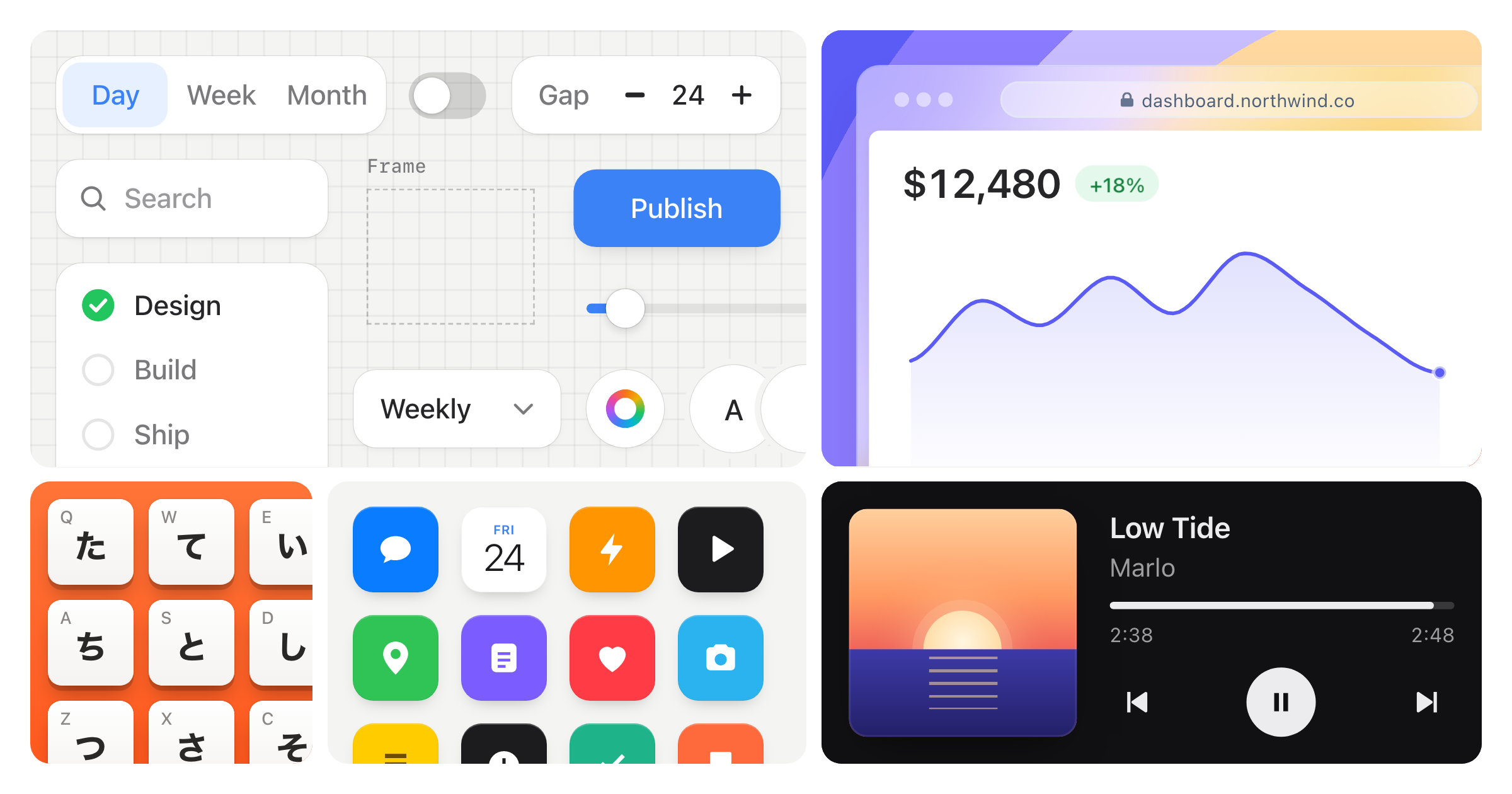
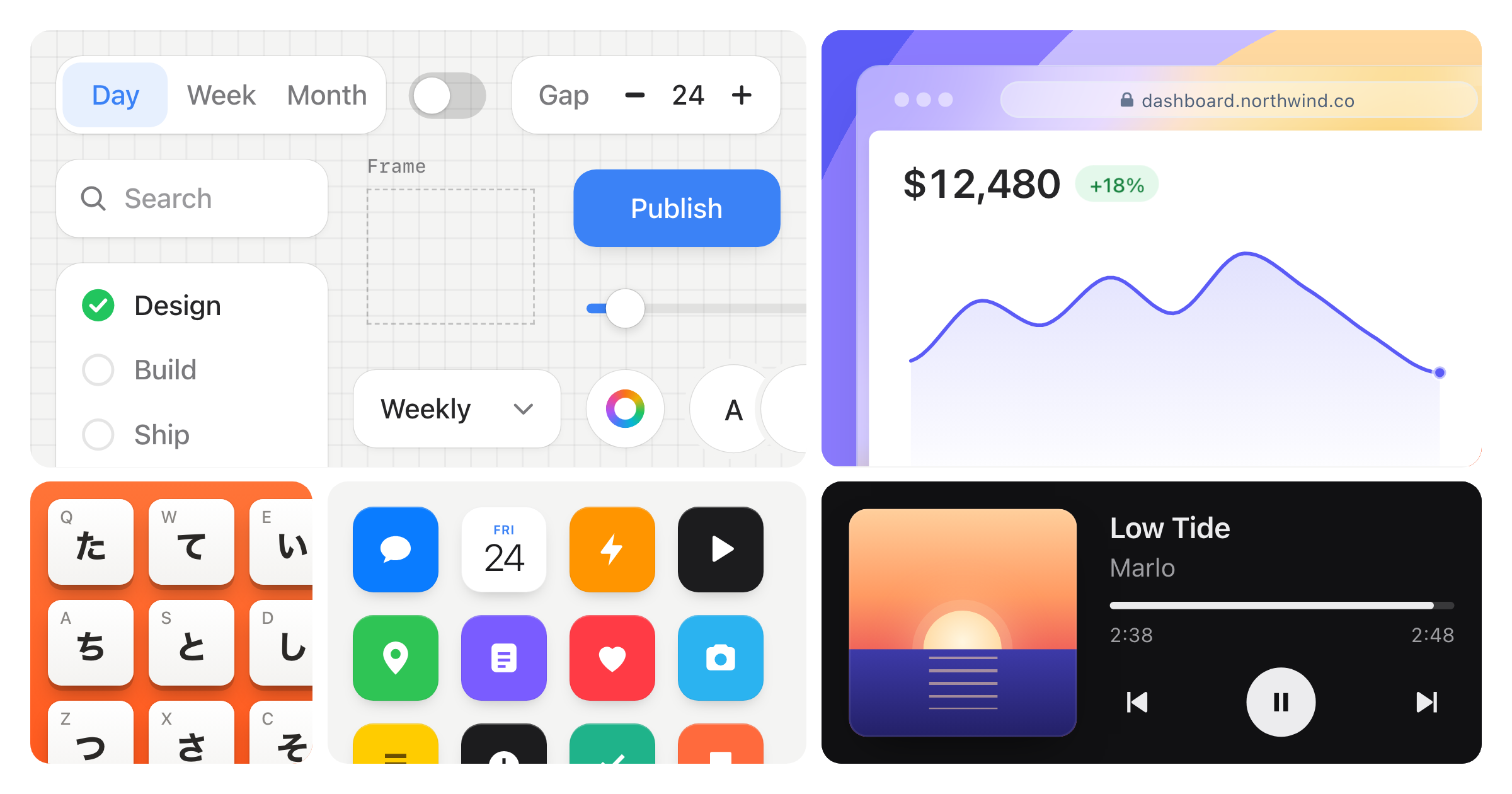
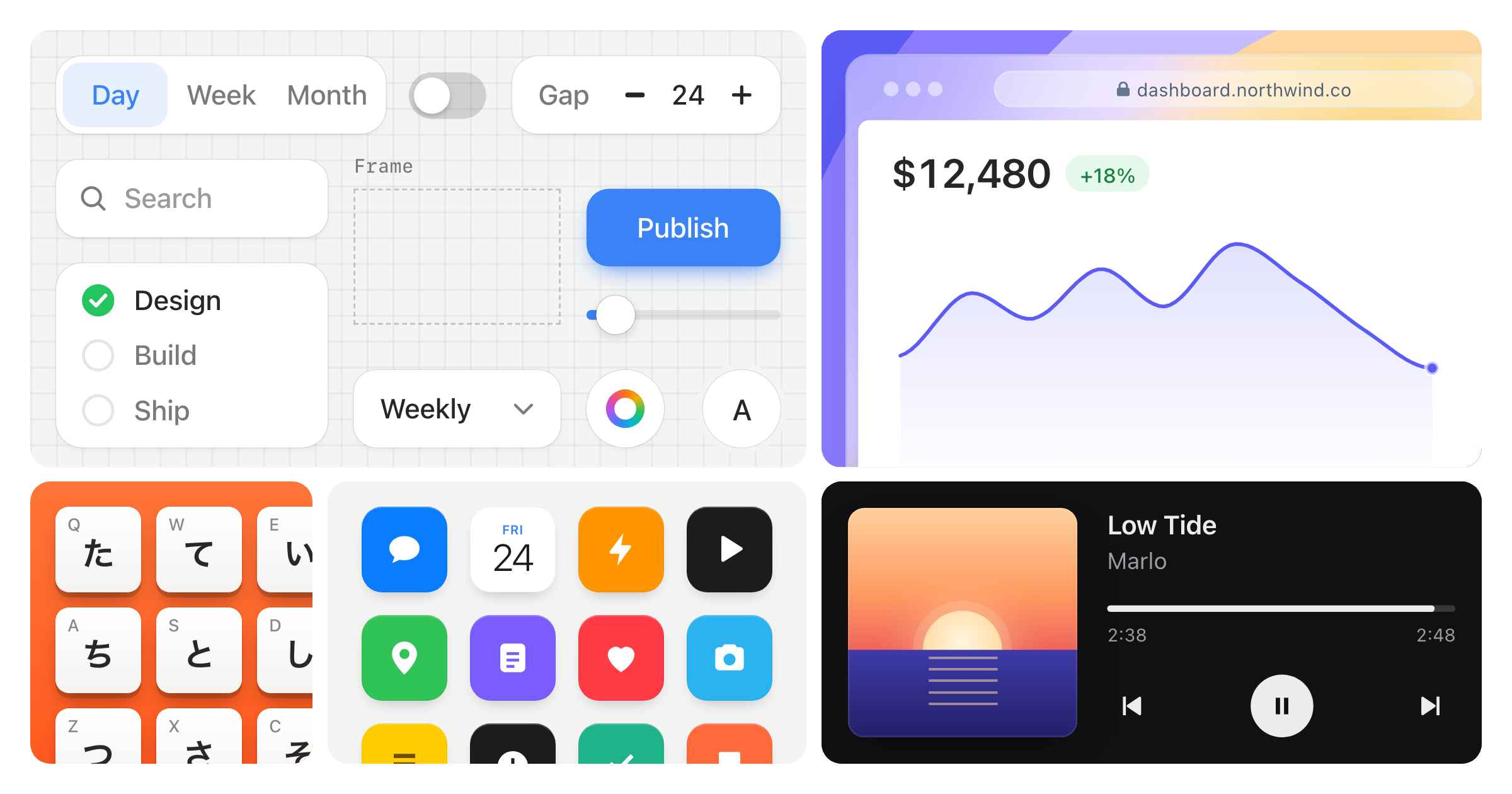
Benji Taylor, art director at X and SpaceXAI, released the open-source Stageshow skill for AI agents Grok Build, Claude Code, Codex, and Gemini on October 31, 2026. It teaches agents to create "faux UI"—polished static and animated interface mockups for landing pages, promo motion, and infographics: professional design rules within the project are combined with a built-in self-check loop. The skill is installed with a single command on top of existing agents, allowing users to try it the same day.
What happened
The project was published in the benjitaylor/skills repository on GitHub, which had accumulated 669 stars and 30 forks by the time of this article. The core of Stageshow is the SKILL.md file with a seven-step workflow: format selection, style definition, a 3–5 scene plot, reference example selection, screen work, motion choreography, and a final "rehearsal." The package includes a library of React components with browser and app windows, phones, and macOS 26, cursors that automatically find interface elements by name, a virtual camera, and themes based on design tokens. Separate scripts film.mjs, jumps.mjs, and layout.mjs record demos and programmatically check every frame, including phone width and the seam in a seamless loop.
Context
Stageshow is not a new model or a cloud service, but an installable artifact in SKILL.md format, an extension for existing coding agents. The value of the project lies in formalizing what was previously considered purely subjective: five typical errors in generated mockups—composition overload, skeleton wireframe, "window in a frame," flatness, and lack of identity—have been translated into explicit rules, and quality control is built not on a single screenshot, but on demo recording and analysis of each frame—the contact sheet. The skill is agent-agnostic: it is an addition to a coding agent, not a feature of a specific model. The fact that the extension changes the result indirectly confirms that a significant part of the gap in models' "sense of style" is closed by context and instructions, not just by the choice of the base model.
Why this matters for the industry
For the industry, this is a working example of a new category of products—the "skill" as an artifact where a professional designer's taste is codified into rules, components, and auto-check scripts, meaning it can be versioned and improved like code. When an art director of the level of X and SpaceXAI gives such a package to the community for free, the lower segment of web visual production—hero demos, promo mockups, infographics—transforms from a service into almost a utility resource, reducing the cost of initial visual content for companies; this is currently a market hypothesis, and its caveats are discussed in the limitations section. The "recorded demo—checked frames—fixed" loop is transferable to any task where an agent must control its own visual result: diagrams, slides, documentation—and in the future, it may become a standard block in agent toolchains.
Why this matters for users
Nothing prevents readers from trying the skill today: the command npx skills add benjitaylor/skills --skill stageshow connects it to an already used agent—Claude Code, Codex, Gemini, or Grok Build—without screen recording and without a designer. After this, the agent outputs drafts of hero demos, bento grids, and infographics in the style of reference examples like Linear, Slack, Figma, and Notion—this is enough for marketing materials, SEO illustrations, and feature presentations. Since the skill works as an offline generation tool and not a production component, implementation does not affect running services; the first iteration is significantly cheaper, although the final acceptance of the result should still be done manually.
What is currently unknown / limitations
Information about the actual quality of the result is currently limited: the project is very new. There are no independent comparisons of Stageshow demos with existing production assets, so the thesis about the devaluation of the lower segment of web visuals remains a market hypothesis, not a technical conclusion. The author himself notes that the first run is a big step forward, but most demos require several rounds of edits, meaning the skill lowers the barrier to entry and the cost of the first iteration, without eliminating manual work. It is also unknown how equally the workflow works on different agents—Grok Build, Claude Code, Codex, and Gemini; there are no independent reports on the success of runs yet, and repository stars and forks show community interest but do not prove utility in real projects.
Sources
- Stageshow: A Skill for High-Fidelity Faux UI (benji.org)
- GitHub — benjitaylor/skills: Skills for AI coding agents
- Benji Taylor's post on the Stageshow release (X / Benji Taylor)
Author
Look at AI, editorial team