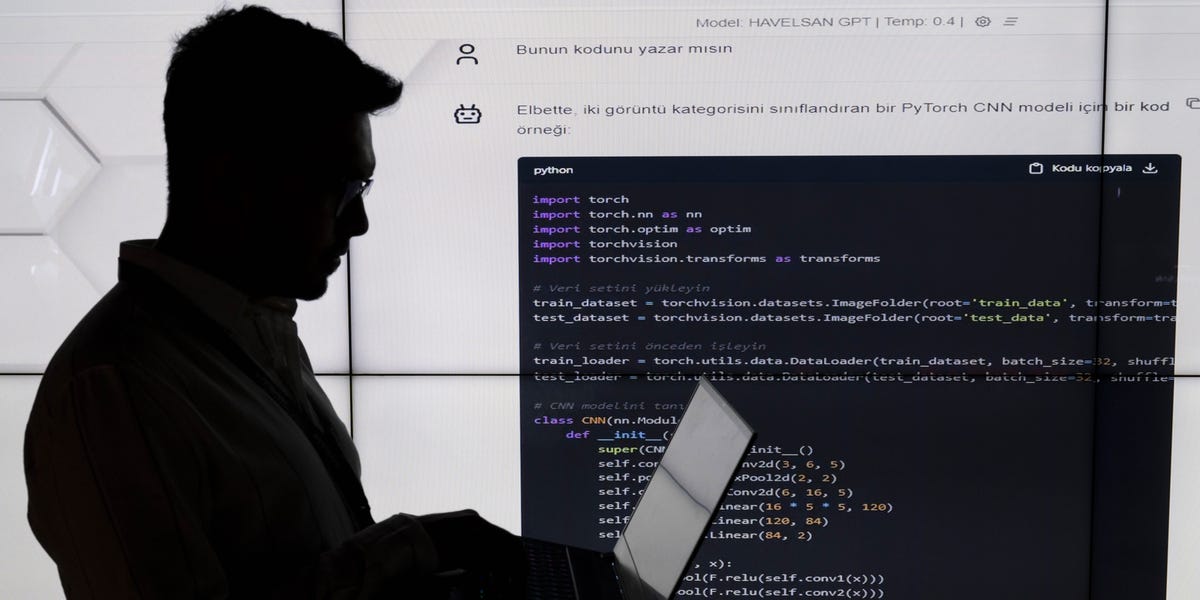
Felix Rieberg, who led the development of Claude.ai, Claude Code Desktop, and the Cowork tool at Anthropic, has abandoned the traditional coding task interview when hiring for his team. His logic is simple: Claude now solves typical problems better than candidates, so such a test no longer distinguishes strong engineers from weak ones. Instead, he currently looks at resumes and portfolios, advising juniors to show one completed prototype rather than another round of LeetCode.

What happened
In a post dated October 27, 2026, titled “Hunger beats tenure: Advice for junior engineers,” Rieberg announced that he had buried the traditional coding task interview this month. He formulated his argument as follows: “giving a small React task no longer makes more sense than testing on assembly — Claude now handles both better.” In his observation, the most productive builders in his teams are successful regardless of how they performed on such tests. Instead of coding tests, the manager currently reviews resumes and portfolios, looking for small prototypes where “taste, empathy, principled thinking” are visible. At the same time, he honestly admits that he has not yet figured out how to evaluate candidates who build products well with AI. There, he also gives juniors specific advice: choose one ambitious idea related to the company's business goals and build a prototype over the weekend.
Context
This case is not a quirk of one manager, but a symptom that coding interviews as a measurement tool have “expired.” Any test loses its discriminating power when the ability being tested — solving a small, isolated task — becomes cheap for models: then the test result no longer says anything about the person, just as an “expired” benchmark does not indicate model progress. Rieberg manages teams that create AI coding tools themselves, so he observed the process from the inside. The trend is noticeable in other corporations as well: Google is expanding pilots of engineering interviews where candidates are allowed to use Gemini, and Amazon warns engineers against “tokenmaxxing” — the race for AI usage metrics — and calls the current moment the era of the “Renaissance Developer.” Against this backdrop, Rieberg's step shows that the old hiring filter broke down faster than the industry came up with a replacement.
Why this matters for the industry
For the industry, the signal is twofold. First, the hiring criterion has shifted: algorithmic agility on isolated tasks no longer predicts productivity, while hunger, taste, and the speed at which a candidate builds working prototypes with AI gain weight. Second, the hiring funnel is left without a standard filter — a validated replacement for the coding test does not yet exist, and this is a ready-made product gap: from portfolio screening tools to systems that evaluate how a person actually works with agents, and builders are already probing this niche. If Google's pilots with Gemini allowed in interviews continue to expand, expect an increase in the number of teams with “AI-allowed” and “AI-neutral” formats, a wave of DIY replacements like prototype challenges, and a lag in the validation of these formats compared to practice. On a longer horizon, the market will likely split: part of the industry will move to evaluating completed artifacts and live tasks, part will retain standardized tests as a mass filter for the flow of candidates, and public standardized trials for AI-assisted development may appear — similar to how the SWE-bench benchmark became a measure of the models themselves.
Why this matters for users
If you are a junior or an engineer without status and “social capital,” the practical takeaway is the most direct: stop grinding LeetCode-like problems and instead show one small but completed prototype that solves a real business problem. This move is accessible to everyone right now and costs nothing: one ambitious idea, a weekend of work, a finished artifact in the portfolio — and it does not negate classic preparation, but simply adds your main argument in teams looking for “taste, empathy, principled thinking.” The fresh eyes of a newcomer — the ability to notice friction in the product and challenge the “impossible” — are now valued higher than formal tenure, because execution with AI has become cheap: this is the point of the post's title, where hunger beats tenure.
What is still unknown / limitations
It is not worth generalizing: the decision concerns one team and is not a corporate policy of Anthropic, and the company's public guidelines on the use of AI in live interviews have not changed. The statement “Claude now handles both assembly and a small React task better” in the post is not supported by any benchmark — it is a personal management observation. The conclusions are also influenced by the self-selection effect: Rieberg looked at candidates and juniors within Anthropic, where engineers initially arrive AI-fluent, and the company's business model directly depends on the value of AI coding. Finally, the proposed replacement does not yet have proven validity: it is unknown how well portfolios and prototypes predict real productivity, so the thesis that “coding interviews are dead for the entire industry” remains a media extrapolation of one local observation.
Sources
- Anthropic Manager Says AI Has Made Coding Interviews Obsolete (Business Insider)
- Anthropic engineering manager stops using coding interviews, has no replacement yet (Crypto Briefing)
Author
Look at AI, editorial team