An author under the handle lyra (@_lyraaaa_, X blue check) published the 'evil qwen' recipe: if you simultaneously raise MLP neuron L14 N8949 by +1 and lower L13 N7956 by -1 during inference, the Qwen3.5-4B model, according to the author's description, changes its personality to aggressive and begins responding with rudeness and hostility. The post went viral, and the entire methodology is available in the open-source repository neuron-explorer, making the experiment reproducible locally.
What happened
On October 24, 2026, lyra showed on X that shifting the activations of two MLP neurons makes Qwen3.5-4B rude and hostile; the post gathered 18.9k likes and 421 replies. Mechanically, this is not a weight rewrite: for each input token, a vector along the column W_down[:, n] of the down_proj matrix is added to the layer output. The methodology is disclosed in the open-source repository neuron-explorer, created on October 21, 2026, and which gained 982 stars and 107 forks in five days: it includes a steering fork of vLLM (RhizoNymph/vllm), runs on a CUDA pod, and a research log with a systematic sweep of all 9,216 MLP neurons in layer L22. Among other personas found in the log is neuron L22 N2742, which the author describes as an alien named Extrali from the planet Xeno-888.
Context
The technique itself is classic activation steering: switching personas via such shifts in interpretability has been known for a long time, so the headline about 'neuron editing' is only partially accurate. A competent engineering detail of the recipe is the dose normalization using the formula: dose × median(‖resid‖ at the output of layer L, tokens 1:) / ‖W_down[:, n]‖: the shift is defined in units of residual norm, so the same dose acts comparably on 'quiet' and 'loud' neurons. Calculations show that such operations during inference are trivial, and they can be implemented as a hook in the serving stack without noticeable overhead. The effect is reversible: after removing the shift, the model's character returns to its original state. The real novelty of the case is not the two neurons themselves, but the reproducible neuron-explorer pipeline, which distinguishes this work from a random find.
Why this matters for the industry
The 'personality' of an open model transforms from the result of expensive fine-tuning into a cheap, reversible inference artifact: it is significantly easier and faster for startups to customize a persona on open weights, but for exactly this reason, any product whose differentiation relies solely on a tuned model character is vulnerable to cheap copying. A second consequence is safety and consistency: the same mechanics can suddenly break an assistant's personality in a product, so robustness to additive activation shifts is a concern for teams running assistants on open weights, not a curiosity. Finally, the blueprint for managing persona as an interface parameter is already available in open access, and this is a direct invitation for tooling teams around vLLM.
Why this matters for users
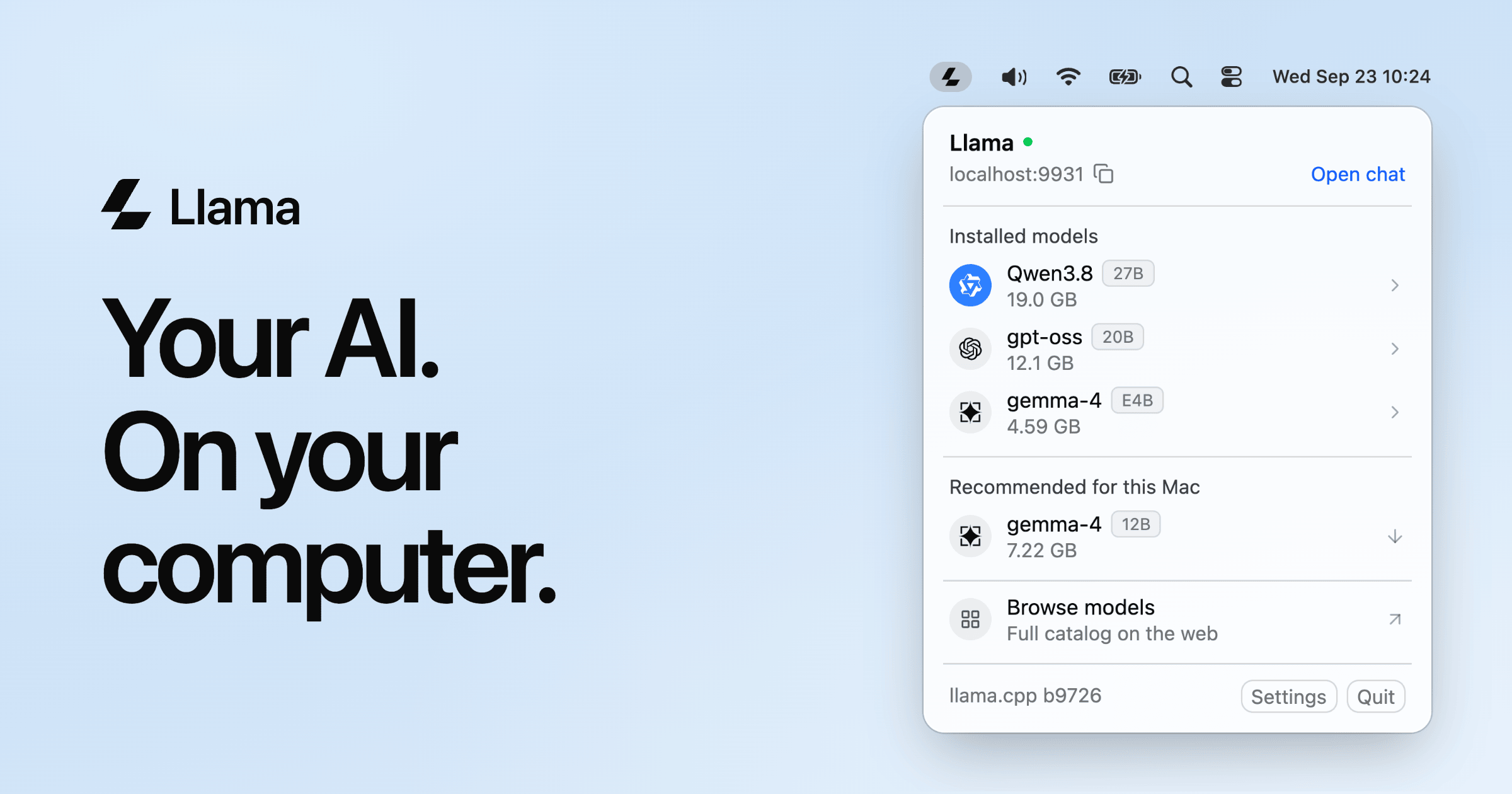
To replicate everything independently, a local Qwen3.5-4B is sufficient: it can be installed for free in the Llama desktop application (llama.app), and the open-source neuron-explorer will display a 3D map of neurons and provide a steering chat in three columns (-, 0, +), where it is immediately visible how the model responds to negative, zero, and positive shifts. The same toolset will help find neurons responsible for other emotions and manners on your own prompts. A clear takeaway for the reader: a model's 'personality' is specific directions in activation space that can be moved and observed in real time, not a mysterious emergent property.
What is currently unknown / limitations
For science, this is a demonstration on a single small model without metrics, not a verified result, and the neuron-explorer repository is only five days old. The normalization formula is a convenient heuristic, not a ready-made API contract: without dose-effect curves, control with random neurons of the same dose, and stability measurements across prompts and layers, it is premature to sell steering as a predictable, configurable interface parameter. Predictions about the spread of steering-first tooling around vLLM and the first 'persona maps' of open models are interpretations of a single case requiring independent research.
Sources
- lyra (@_lyraaaa_) on X: “try steering neurons L14 N8949 +1 and L13 N7956 -1 — now you have evil qwen”, 24.10.2026
- GitHub: lyramakesmusic/neuron-explorer — Steering-first neuron explorer for Qwen3.5-4B
- Llama — Your AI, on your computer (desktop application for local running of open models)
Author
Look at AI, editorial team