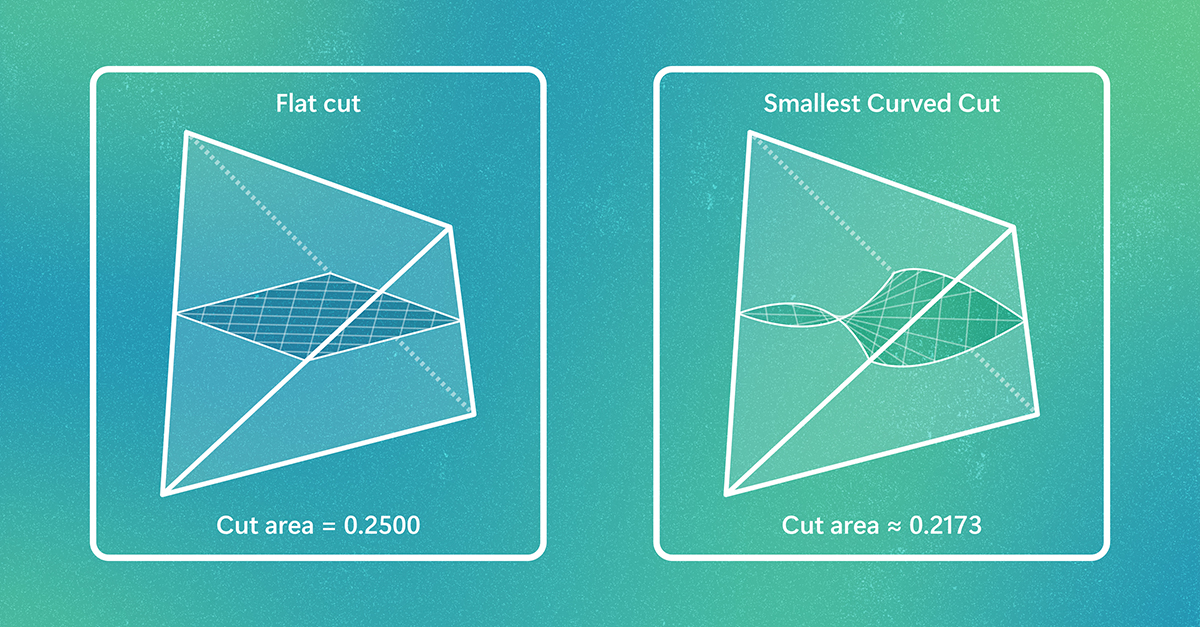
Zhao Song (independent researcher) and Xinzhi Zhang (Machine Learning and Optimization group at Microsoft Research) have announced a proof of the KLS (Kannan–Lovász–Simonovits) conjecture from 1995—one of the central open problems in high-dimensional convex geometry. In working on the 140-page proof, AI agents explored more than 100 approaches in parallel, while humans selected directions and executed key steps; an independent 32-page version of the proof by another group appeared almost simultaneously. The result removes the dimension dependence of constants governing the convergence rates of random walks and MCMC sampling, and for the AI industry, it serves as a rare documented example of agents and mathematicians collaborating on a grand-challenge-level problem.


What Happened
The 140-page preprint "An O(1) Bound for the KLS Constant" appeared on arXiv on October 1, 2026, with a second version released on October 4 under arXiv:2610.01447, and Microsoft Research officially announced the result on October 21, 2026. The theorem asserts that the Cheeger constant $\psi_n$ of any isotropic log-concave probability distribution in $\mathbb{R}^n$ is bounded below by a universal constant independent of dimension; a similar universal bound is also provided for the Poincaré constant. According to the authors, the proof was built on agentic search with human curation: AI agents explored more than 100 approaches in parallel involving long tensor computations, while the authors discarded weak directions until they found a new criterion applied recursively. The researchers themselves developed the recursive cycle and the final error bounds that completed the proof, relying on their earlier work on fast linear programming algorithms. In parallel, an independent 32-page proof by Bizeul, Klartag, and Lehec was released on the same days.
Context
The KLS (Kannan–Lovász–Simonovits) conjecture was formulated in 1995 and required proving that every isotropic log-concave distribution in $\mathbb{R}^n$ has a universal, dimension-independent lower bound on the Cheeger constant. For 31 years, the problem remained open and was considered central to the field: MSRI called it the "central open problem in high-dimensional convex geometry," and the Simons Institute described it as "one of the most important open problems in convex geometry." The stakes are high because the Cheeger and Poincaré constants determine the convergence rates of random walks and MCMC sampling algorithms, and through them, the theoretical guarantees for sampling, statistics, and high-dimensional optimization. The technical foundation of the new proof grew from the authors' own trajectory: their earlier work on fast linear programming algorithms provided the material for the recursive criterion that closes the argument.
Why This Matters for the Industry
For the AI industry, the main signal is methodological: the "agentic search plus human curation" workflow has been documented on a grand-challenge-level problem. The value of the agents here was not in autonomy, but in generating and checking dozens of parallel directions under expert selection; autonomous attempts by several leading AI models with approximately the same token budget, but without human guidance, yielded no results. For teams building research tools, this provides a ready-made skeleton: batch generation of candidates, a human review queue, and tracking of parallel directions can be prototyped on existing LLM agents today. There is no immediate product impact—this is a theorem, not a release: there is no code, API, or benchmarks to deploy, but the case strengthens the positioning of "AI for R&D" products. In the near term, secondary works are expected: simplifications of the proof, progress in formalization in Lean 4, and the first product copies of the "agent candidates plus human curation" UX in scientific copilots and R&D platforms.
Why This Matters for Users
The news brings three practical things to readers. For researchers sampling from log-concave distributions and MCMC: convergence guarantees in theory no longer hit a wall of dimension dependence via KLS, meaning the starting point of algorithmic theory changes, although no ready-made new algorithms exist from the theorem yet, and there is nothing to implement in current pipelines. For those building agentic systems: a working benchmark has emerged where agents are delegated mass generation and checking of variants, while humans retain direction selection and error control in the loop. For everyone else—a sober coordinate system: AI has genuinely gone through proving a grand-challenge-level problem, but as an accelerator under the guidance of mathematicians, not as an independent author of the theorem.
What Is Still Unknown / Limitations
The proof currently exists as a 140-page preprint: community verification is not complete, and formalization in Lean 4 has only just begun, so it is more accurate to speak of a claimed result, although the independent parallel proof significantly increases confidence in the theorem's truth. The methodology of the agentic experiments has not been published: there are no ablations, no description of prompts and scaffolds, and no annotation of which contributions were made by agents and which by humans; details of autonomous attempts, including specific models and budgets, have not been disclosed. Finally, this is the only documented case of its kind, so extrapolating the transferability of the pattern to other problems and teams is premature.
Sources
- Solving a 31-year-old grand challenge in mathematics – the KLS conjecture (Microsoft Research Blog)
- An O(1) Bound for the KLS Constant — Zhao Song, Xinzhi Zhang (arXiv:2610.01447)
- AI-assisted proof cracks 31-year-old KLS conjecture (Unite.AI)
Author
Look at AI, editorial team