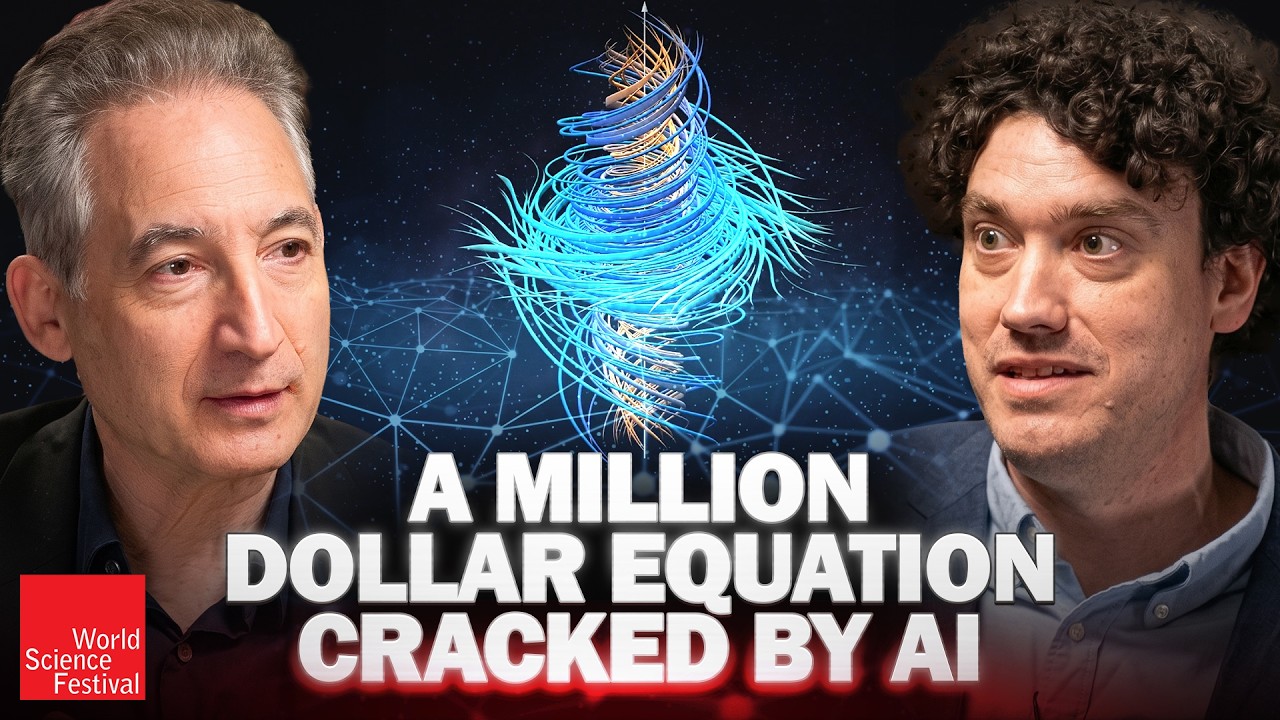
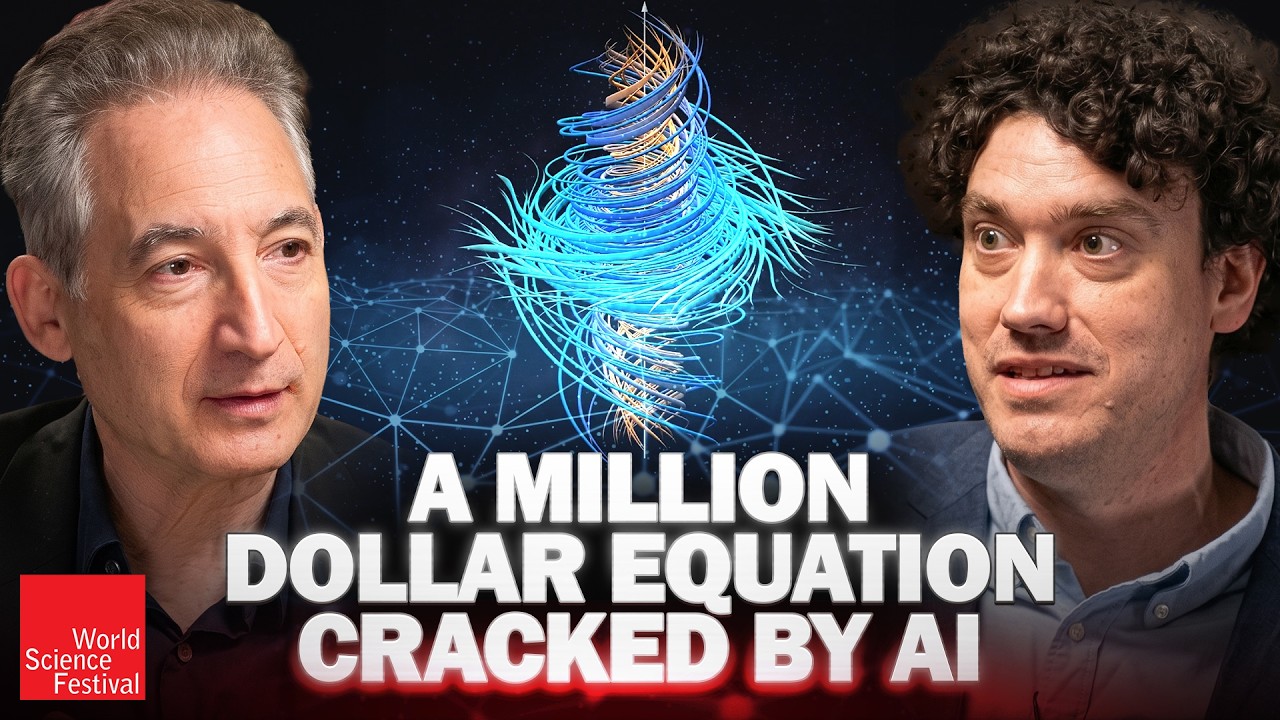
World Science Festival released a one-hour interview, 'The Moment AI Changed Mathematics Forever,' on October 2, 2026, in which physicist Brian Green speaks with Tristan Bakmaster, a mathematics professor at the Courant Institute (NYU), about AI breakthroughs in the Navier–Stokes and Euler equations. At the center of the conversation are proofs generated by AI in a collaboration between a mathematician and Google DeepMind: correct, but unreadable to humans. This is Bakmaster's first major public statement about the September events, when OpenAI announced the solution to the Navier–Stokes problem by a group of coordinating AI agents, sparking a conflict over priority and authorship.
What Happened
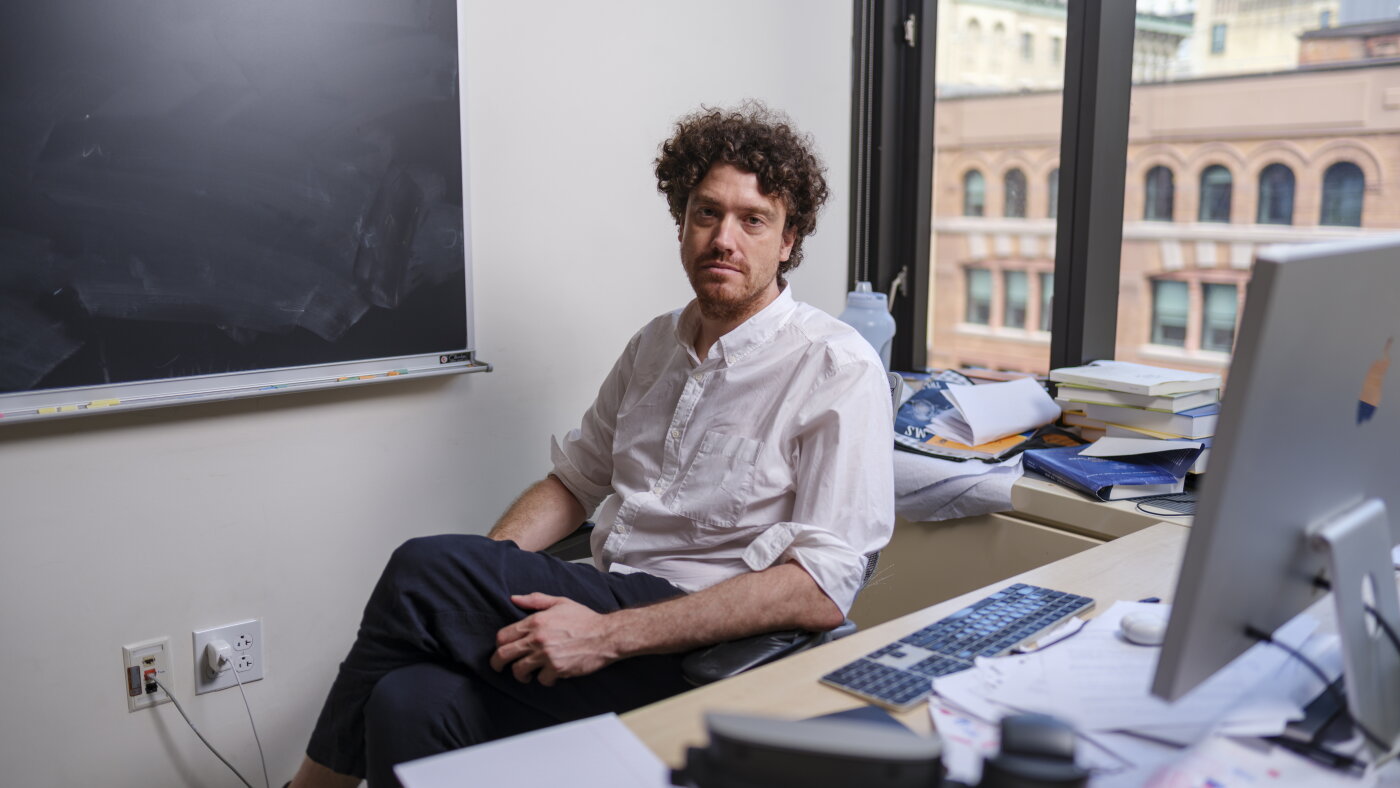
In a conversation with Brian Green, Tristan Bakmaster describes the results of his collaboration with Google DeepMind: he called the reasoning generated by the machine the 'worst math' he has ever seen, although it turned out to be correct. The key question of the conversation is what a proof means that no human can read, and how to build trust in such results. The recording garnered over 200,000 views in two days.
Context
The Navier–Stokes equations describe the flow of a viscous fluid, while the Euler equations describe an ideal fluid; the Navier–Stokes problem was included by the Clay Institute in the list of Millennium Problems, with a prize of $1 million for its solution. On September 8, 2026, OpenAI announced that the problem had been solved: approximately 10,000 coordinating agents worked for about 88 hours on the company's internal model, and the proof was formalized in Lean. Simultaneously, a conflict over priority and authorship arose between OpenAI, Bakmaster, and Levent Alpöge: the speed of industrial pipelines is outpacing the usual norms for fixing scientific results—dated preprints and a clear definition of author contributions. The same problem is being independently worked on by a second industrial team, Bakmaster's collaboration with Google DeepMind, meaning the direction is being duplicated by two organizations at once.
Why This Matters for the Industry
For the industry, the interview marks a paradigm shift: correctness has been separated from readability, and trust in the result is established by formal verification, not human review. The scheme of 'massive agentic generation plus an external formal verifier' has proven its viability on a Millennium Prize-level problem, and the coordination of large populations of agents is becoming the norm at top labs. There is no direct product from this yet: the model is internal, and there are no public APIs, prices, or reproducible runs, so the bottleneck shifts from generating answers to the verifiability and interpretation of machine results, and new tools should be expected in this direction. The case also documented how AI labs behave in scientific priority situations, and the resonance of the interview and statements increases capital appetite for AI for science and the race for research agents. The expected trajectory is the publication of formalized artifacts and the transfer of pipelines to adjacent problems; Euler is already mentioned in this conversation.
Why This Matters for Users
The recording gives the reader almost an hour of 'first-person' explanations: what the Navier–Stokes and Euler equations are in simple terms, why a solution with infinite speed would mean a broken model, and why the Millennium Prize exists at all. A separate storyline is why even a correct AI proof today teaches mathematicians little: without interpretable mechanisms, new methods cannot be extracted from the result, as Bakmaster says in the NPR article 'Mathematicians learn little from AI completing unsolved Navier-Stokes problem.' The conversation also raised questions beyond the main topic, for example, why the lift of a wing has not yet been derived from first principles. The recording is aimed at those who want to understand what really stands behind the headline 'AI Solved a Millennium Problem.'
What Is Still Unknown / Limitations
OpenAI's statement has the status of 'solution claimed, but not verified': there is no scientific article, public artifact, methodology description, or independent verification in open sources. Lean formalization is mentioned as a property of the claimed pipeline, but the formal artifact itself has not been published, proofs are not available in the public domain, and the model is internal, so it is impossible to reproduce the run on one's own infrastructure. Independent discussion on the substance has not yet begun: the discussion on Hacker News amounted to a single post without comments. The publication of preprints, independent community checks, and the transfer of pipelines to other problems are cautious expectations, not confirmed facts.
Sources
- The Moment AI Changed Mathematics Forever — Interview with Brian Green and Tristan Bakmaster, World Science Festival (YouTube, October 2, 2026)
- NPR: Mathematicians learn little from AI completing unsolved Navier-Stokes problem (with comments from Tristan Bakmaster)
- Discussion of the interview on Hacker News, October 4, 2026
Author
Look at AI, editorial team