The 29th part of the 'Accumulated on #minimaxH3' collection has been released in the 'Neuronaut' channel — fresh VAEs, turbo-LoRAs, and ComfyUI tools for the open 33B video model MiniMax H3, which generates video with native stereo sound. The main result of the month: the community has compressed the model to working sizes and built a whole layer of components around it, so video generation with sound now runs on cards with 8–12 GB of VRAM, and a working pipeline can be obtained today along with models, nodes, and workflows.
What happened
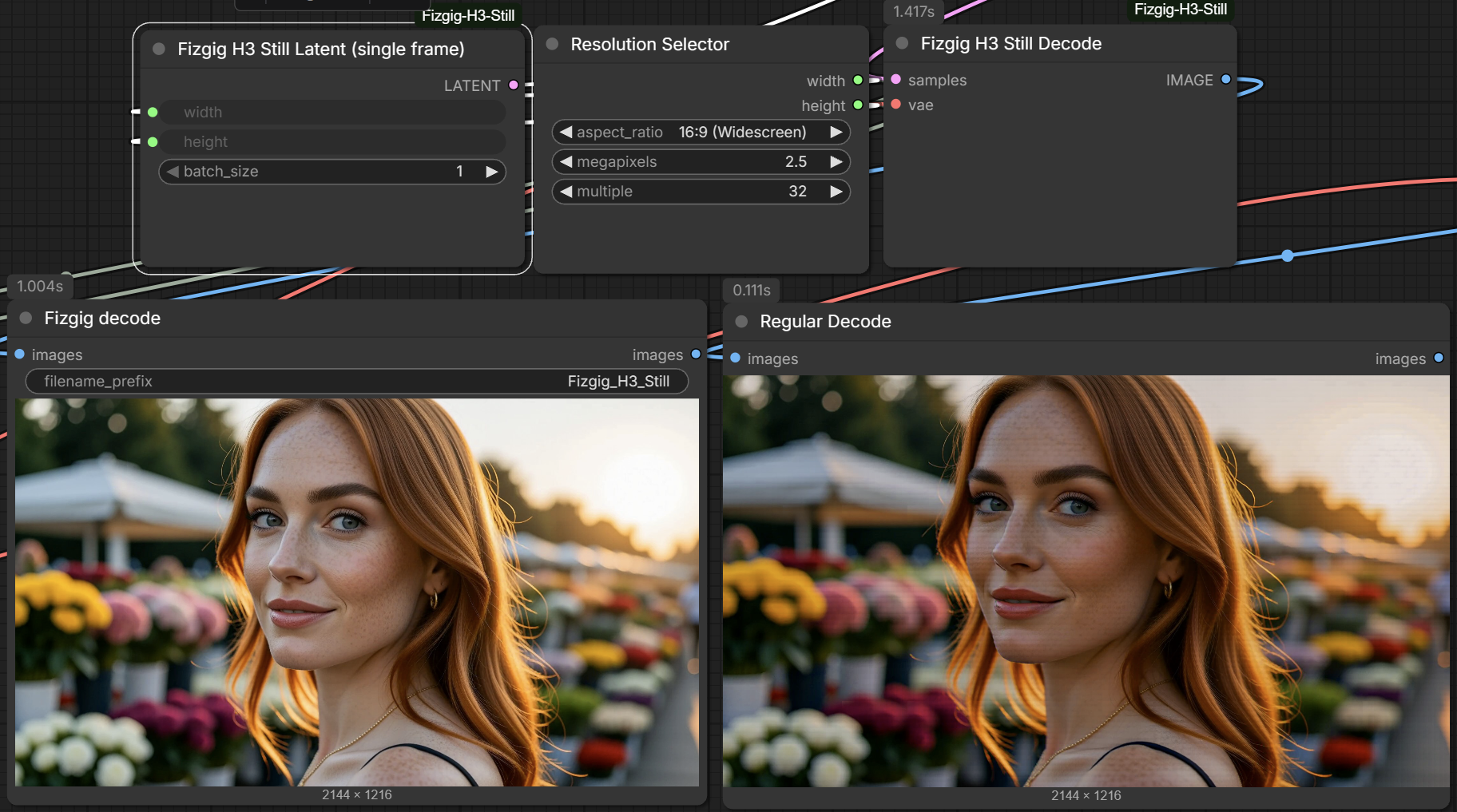
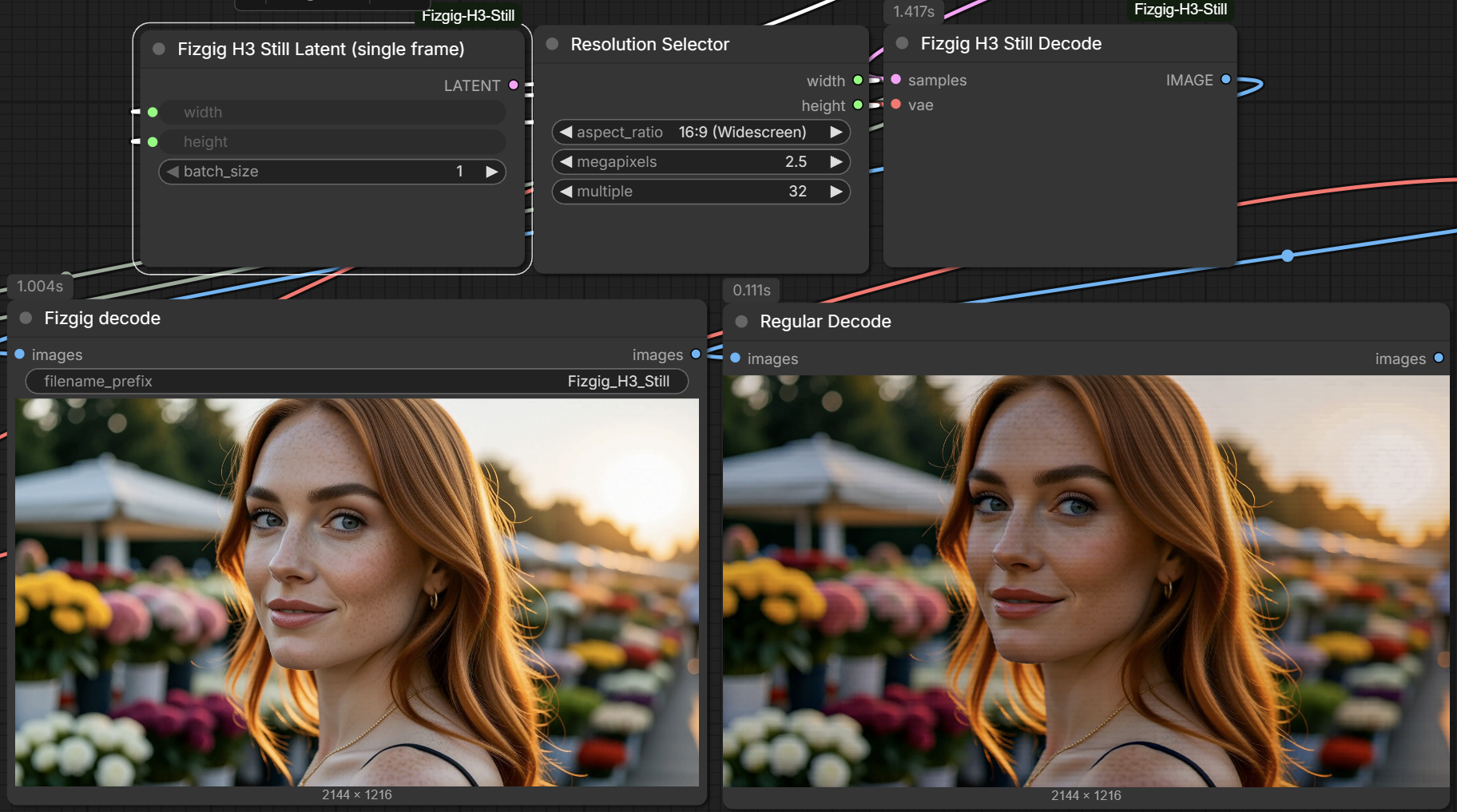
The new issue features three independent VAEs for MiniMax H3: a lightweight int8 version by Kijai, X2-Detail-VAE by speach1sdef178, which adds details by bypassing the latent bottleneck, and LightVAE by corechan. Among the LoRAs — a 360° camera orbit in four steps, tested on a card with 8 GB of VRAM (736×576 resolution, about seven minutes per clip), Kijai's ELM longlive 4-step, 80s sci-fi stylization, a LoRA for fixing motion continuity, pixel art, and a merge of five turbo-LoRAs into a single 1 GB file. Separate tools include Fizgig H3-Still, which provides a true single frame up to 8 MP faster than the old five-frame workaround, the 4-bit QuantFunc quant with a claimed 23.7 dB PSNR and an SM75+ GPU requirement, the 22 GB MiniMax-H3-x-Z-Image hybrid for RTX 3060 12 GB with a sampler start time of about 70 seconds, and a plugin with over 700 cinematic presets. All 15 links in the issue have been checked and are accessible.
Context
MiniMax H3 is an open 33B model that generates video with native stereo sound and operates in t2v, i2v, FL2VA, and Ref2VA modes; the full weights take up 123.6 GB. In a month, the collection series has reached its 29th part, and a full layer of components has formed around the open weights — alternative VAEs, 4-step turbo-LoRAs, quants, and 'director's' wrappers on top of the Agent Plugins v1 plugin standard — a picture compared to the early days of Stable Diffusion. The structure of the issue is also indicative: three independent VAEs for one model mean that the community is deliberately working with H3's latent space at different quality-memory compromise points, rather than just making noise. The X2-Detail-VAE itself is non-trivially designed: it takes early features from the source encoder to render details in I2V, because the latent behind the bottleneck no longer contains them.
Why this matters for the industry
This looks like a platform shift, not a one-off feature: quants and lightweight VAEs lower the entry barrier from data center GPUs to consumer cards like the RTX 3060 12 GB and 4070 8 GB, meaning video generation with sound is quickly moving into the local loop. For startups and studios, this means virtually zero cost for prototyping video features and quick hypothesis testing on their own hardware. If the current pace is maintained, turbo-LoRAs and quants will become the default way to run H3 on consumer cards, the first independent comparison tables of VAEs and quants will appear — currently no one is calculating them, and the first to standardize the protocol will gain a significant advantage — and wrapper competition will shift from model access to UX and templates. On a two-year horizon, the sustained compression of open video+audio models to consumer hardware reduces the value proposition of purely cloud services.
Why this matters for users
If you have ComfyUI and a card with 8–12 GB of VRAM, a pipeline for your configuration can be assembled right now. You can install the 4-bit QuantFunc quant or one of the lightweight VAEs, add a turbo-LoRA, and get a ready-made scenario: a seamless 360° orbit of a frozen scene in four steps with a looped clip, a single frame without the banding that regular VAE Decode produces on a single frame, or long clips via ELM longlive 4-step. Owners of the RTX 3060 12 GB can assemble the MiniMax-H3-x-Z-Image hybrid, where the sampler starts in about 70 seconds. The cost of such generation is only your GPU time: minutes per clip at 736×576, and each build comes with a model, node, and ready-made workflow on Hugging Face or GitHub, so the integration risk is low.
What is still unknown / limitations
The only numerical metric in the issue is the 23.7 dB PSNR of the QuantFunc quant, but this is a per-pixel similarity frame metric provided without a baseline: the PSNR of the full precision model on the same set, the clip set itself, and the resolution are unknown, and it says nothing about video temporal coherence or stereo sound. The X2-Detail-VAE trick without ablations and detail metrics can also lead to the opposite side — amplification of artifacts. The orbit-LoRA test on 8 GB VRAM is a manual test of a single configuration, and the claimed timings of about seven minutes per clip and 70 seconds for sampler start are not independently confirmed. No claim in the issue is supported by a reproducible protocol, and independent comparison tables of VAEs and quants do not yet exist. Finally, the question remains open as to whether the quality of 4-bit and 4-step pipelines will hold up against full weights.
Sources
- GitHub — shootthesound/ComfyUI-Fizgig-H3-Still: true single-frame stills from MiniMax H3 in ComfyUI
- Hugging Face — speach1sdef178/MiniMax-H3-X2-Detail-VAE
- Hugging Face — QuantFunc/Minimax-H3-Quantfunc-4bit
Author
Look at AI, editorial team