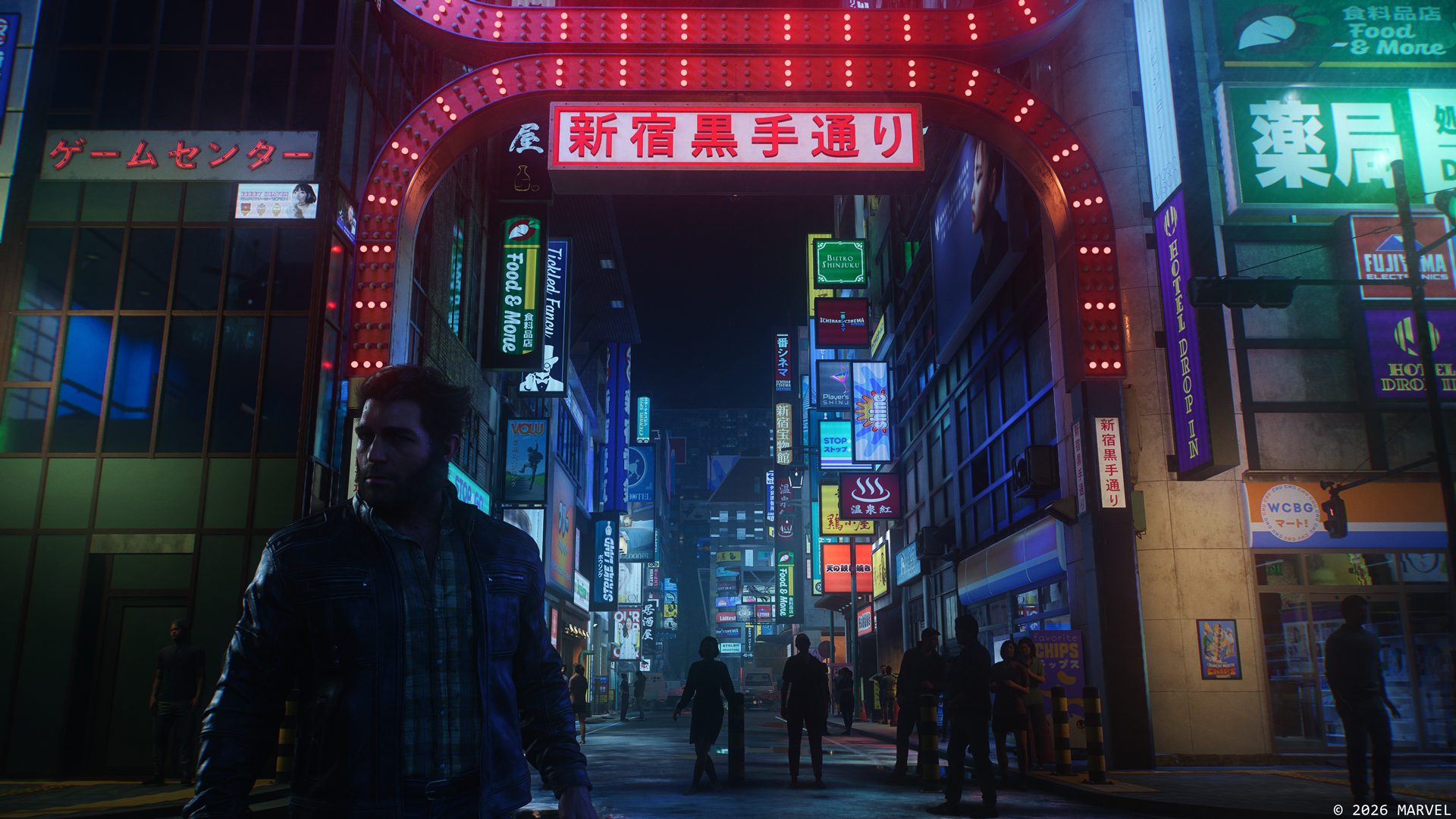
On October 1, 2026, Sony announced Quick Spectral Super Resolution (QSSR) — a lightweight tier of AI upscaling from the PSSR family that for the first time went beyond the PS5 Pro and ran on the base console. Patches with the new technology were released the same day for Marvel's Wolverine and Ghost of Yōtei, so base PS5 owners just need to update their game to get a sharper and more stable image without buying new hardware.


What happened
The announcement was posted on the official PlayStation.Blog. QSSR stands for Quick Spectral Super Resolution and is built on a simplified neural network architecture created as part of the Sony and AMD collaboration under the Project Amethyst program. On the day of the announcement, October 1, 2026, patches with QSSR support were released for Marvel's Wolverine by Insomniac Games and Ghost of Yōtei by Sucker Punch Productions. Sony established a quality hierarchy: full PSSR on the PS5 Pro remains the "gold standard," while QSSR is positioned as a lower tier for the base model. The company also stated that it plans to open QSSR to all PlayStation developers in the future.
Context
The PSSR (PlayStation Spectral Super Resolution) family emerged as neural upscaling for the PS5 Pro, and the base console was left out: it couldn't handle the full model due to its compute budget. QSSR fills this gap through distillation — a simplified neural network solves the same upscaling task on hardware that was previously considered too weak for it. The technique of compressing a model to a fixed budget in machine learning is not new, but here it is confirmed by a console vendor for the first time as a product, not an experiment. Scalability is also notable: one technology now exists in two profiles, Pro and Quick, designed for different classes of hardware — it is precisely this structure that makes the announcement notable, although in essence it is an engineering result, not a scientific breakthrough.
Why this matters for the industry
For the industry, this is a documented production pattern: a heavy AI graphics feature plus a distilled lite version, delivered via SDK updates and patches to already sold devices. Image quality stops being an exclusive advantage of Pro models and potentially spreads via software across the entire installed base. Delivering patches to two released AAA games on the day of the announcement shows that the model and its integration have passed a full QA cycle within the release pipeline — a rare level of readiness for an ML deployment. If Sony fulfills its intention to open QSSR to all PlayStation developers, a wave of patches from third-party studios is expected, and the division of AI features into Pro and lite profiles could become a standard graphics delivery method, extending the lifecycle of base devices. While the SDK is closed, for third-party developers this is a reference example of the mechanics, not an available tool.
Why this matters for users
Base PS5 owners don't need to buy anything: just update Marvel's Wolverine or Ghost of Yōtei and enable QSSR in the graphics settings. The claimed effect is a sharper and more stable image over time, meaning less blur when upscaling resolution and less flickering of small details in motion. Expectations should be calibrated: QSSR is a lightweight tier, and how much it lags behind the PS5 Pro with full PSSR is currently unknown. It makes sense to keep an eye on the list of third-party titles that will join after the SDK opens: currently, there are only two enhanced games.
What is still unknown / limitations
The entire evidence base today is a vendor announcement: no published benchmarks, technical documentation, or figures on quality, latency, and memory usage. The gap between QSSR and the "gold standard" PSSR is not quantified, so the assessment of "improvement" is currently supported only by the announcement. Visual comparisons from PlayStation.Blog are selected without external audit, and the risk of cherry-picking successful frames in screenshots and videos cannot be ruled out. The SDK for third-party studios has not yet been opened, so it is impossible to reproduce or evaluate the approach outside the first two titles. Long-term scenarios like an industry standard for "two profiles" remain hypotheses, not announced vendor plans.
Sources
Author
Look at AI, editorial team