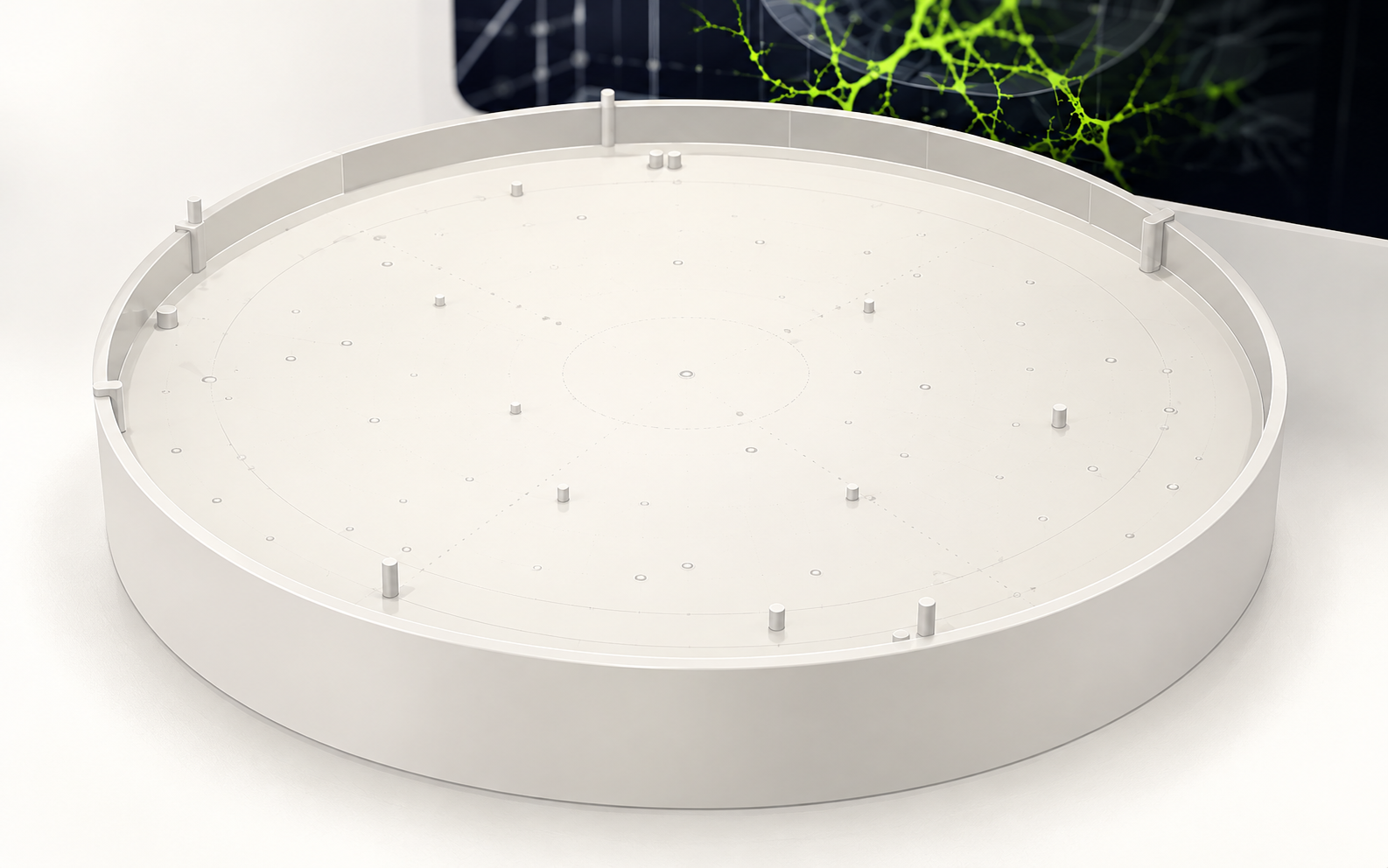
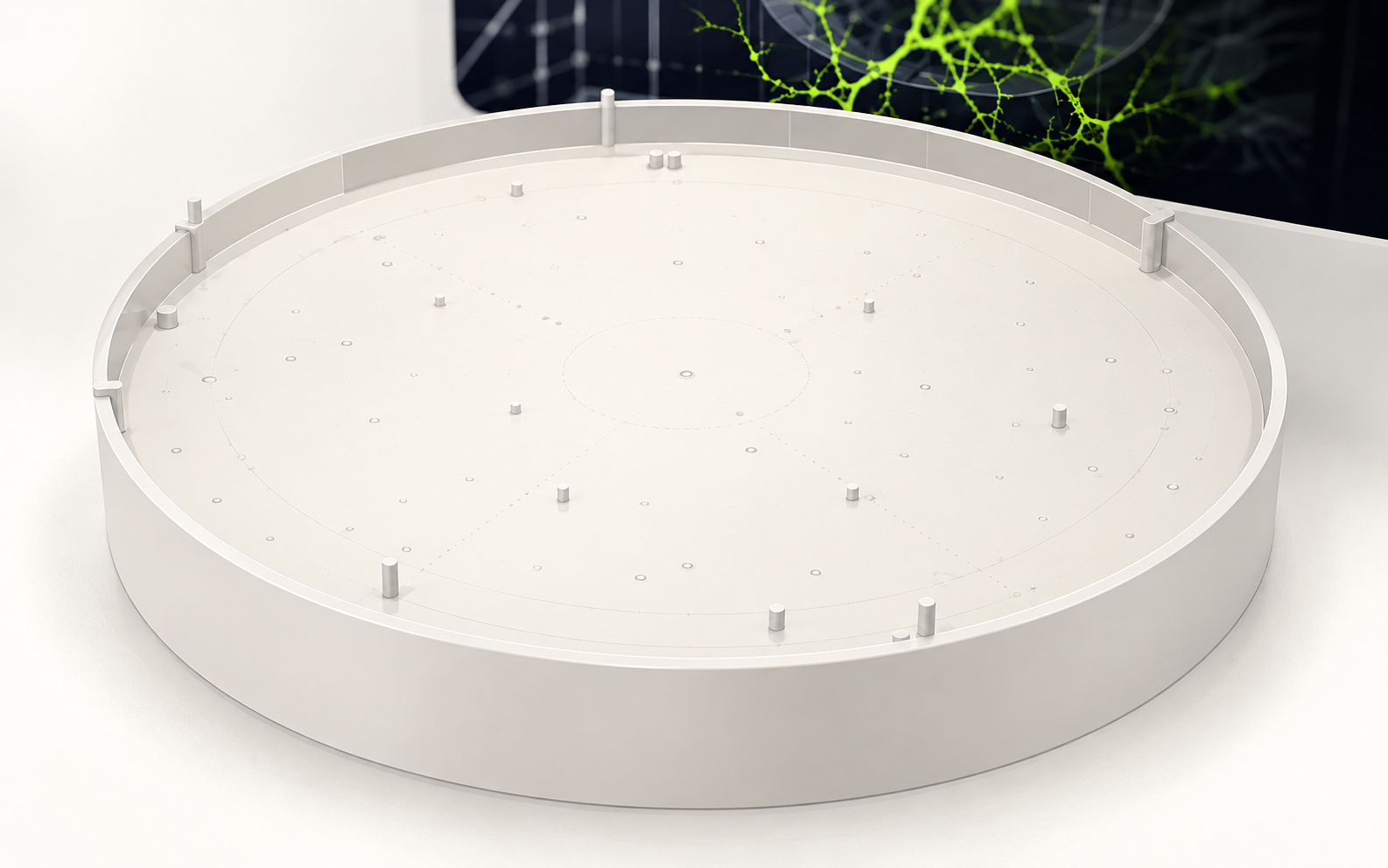
A free demo is now live on dontdoit.tech: users enter up to five tasks, and the choice of the top priority is made by an emulation of the adult Drosophila nervous system, built on the open MaleCNS v1.0 connectome — a map of over 166,000 neurons released by the FlyEM project (HHMI Janelia) together with Cambridge, MRC LMB, and Google Research. The decision is presented as a shareable card, and the entire list can be transferred to MWS Tables. The model does not 'read' task names: each task corresponds to a moving marker on the arena, and the fly's nervous system 'turns' toward one of them. This is not the first experiment with the connectome — previously it was connected to Doom, Super Mario 64, and chess.
What happened
The MWS team launched the web demonstrator dontdoit.tech. It works like this: the user enters up to five tasks, after which each of them becomes a moving marker on the arena, and an emulation of the Drosophila nervous system, built around the MaleCNS v1.0 connectome, 'turns' toward one of them — this task is declared the top priority. Task names are not analyzed: there is no semantic connection between the text of the tasks and the final choice; the emulation reacts to the movement of markers in space. The result is presented as a shareable card, and the entire list is transferred to MWS Tables, where it can be managed by days. No registration is required to try the demo — it is free.
Context
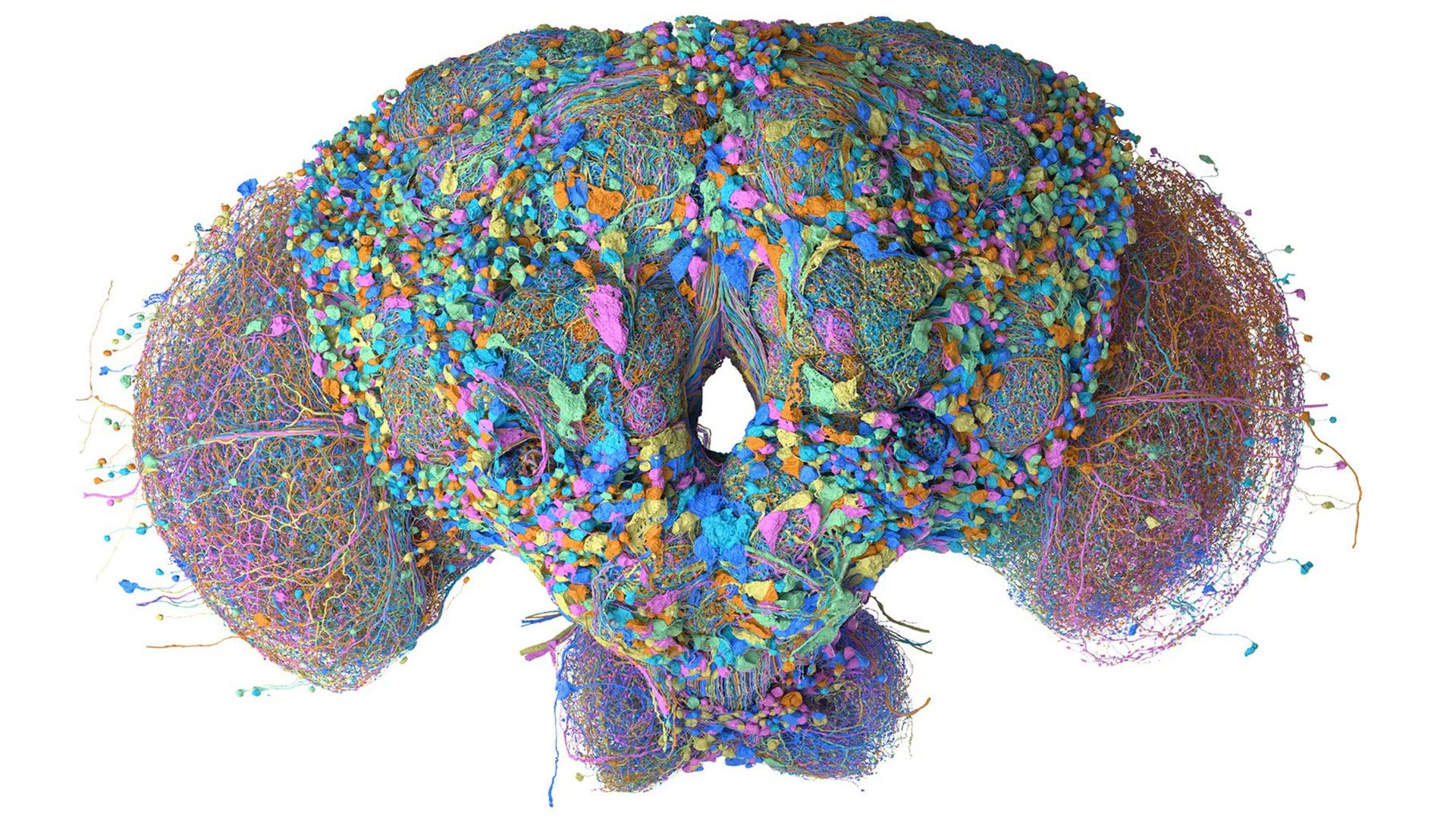
MaleCNS v1.0 is a reconstruction of the entire central nervous system of an adult male Drosophila melanogaster: over 166,000 neurons plus a map of synapses between them. The release was prepared by the FlyEM project from HHMI Janelia together with Cambridge, MRC LMB, and Google Research: the dataset was released on June 8, 2026, and on September 3, 2026, the scientific description was published as a peer-reviewed article in Cell. The data is available under the CC-BY license on the official website male-cns.janelia.org, including direct access to download. Before dontdoit.tech, this connectome had already been turned into a game 'engine': enthusiasts connected it to Doom, Super Mario 64, and chess, and Tom's Hardware described this wave of experiments on September 8, 2026. The new demo fits into the same reproducible 'reconstruction → emulation → application' scheme, only this time the output was not a game, but an applied scenario for task prioritization.
Why this matters for the industry
The main signal for the industry is not the 'prioritization' itself, but the fact that an open dataset at the Cell level has become a ready-made engine for product applications. MaleCNS v1.0 under the CC-BY license is available to any team without a laboratory, and the 'reconstruction → emulation → application' pipeline is already being replicated for games, chess, drones, and now task planning. The mechanism is non-trivial: the decision is made not by an LLM or a random number generator, but by a biologically accurate map of neurons and synapses connected to the application via input-output of movement toward markers. At the same time, the confirmation here is at the demo level: there is no public API, latency metrics, or quality assessments, nothing to deploy in a production stack, and monetization has not been announced. There is no direct commercial effect at the moment — the benefit is more distributional: viral cards collect organic traffic almost for free, and the pipeline itself can be reproduced by any developer today if they wish.
Why this matters for users
You can try it right now: go to dontdoit.tech, enter up to five tasks, and the fly's connectome chooses the top priority; the result is presented as a shareable card, and the entire list goes to MWS Tables for day-by-day planning, without registration. It is worth seeing with your own eyes that the choice is made by an emulation of a real nervous system through moving markers, not a chatbot; the demo does not reduce to practical utility for planning, so the fly's 'recommendation' is best perceived as entertainment. For those who want to dig deeper: the original MaleCNS v1.0 data is open for download at male-cns.janelia.org/download/, and examples of projects on the connectome are collected in the GitHub lists cobanov/awesome-fly and townie/awesome-fruit-fly.
What is still unknown / limitations
There are no quality assessments for the choice: the authors of the demo do not provide a random baseline — for example, uniform selection from five markers — do not show the distribution of decisions across repeated runs with fixed input, and do not check robustness to the physical layout of markers. It is currently impossible to distinguish the 'signal' of the emulation from spatial biases of dynamics: the choice is blind to the content of the tasks and reacts to the movement of markers, not to meaning. Therefore, dontdoit.tech should be considered as a showcase of the possibility to connect a nervous system reconstruction to an application, not as proof of a working intelligent selector or a recommendation system. Open questions remain as to whether the layout of tasks affects the result, whether the choice is repeatable, and whether independent assessments will appear of what the static reconstruction actually 'computes' in such demos.
Sources
- Fly decides — where to start? — task prioritization demo on the Drosophila connectome (MWS)
- Male CNS Connectome — official FlyEM (HHMI Janelia) project site with Cambridge, MRC LMB, and Google Research
- Tom's Hardware — Google maps entire brain and central nervous system of adult male fruit fly, software engineers immediately make it run Doom
- GitHub list of example projects on the Drosophila connectome cobanov/awesome-fly
- GitHub list of example projects on the Drosophila connectome townie/awesome-fruit-fly
Author
Look at AI, editorial team