The GreenNeuralRobots Telegram channel released the 28th issue of the "Accumulated on #minimaxH3" digest — a collection of 17 LoRAs and ComfyUI tools for the MiniMax H3 video model, manually verified: all links return a 200 status code, and almost everything was updated between September 19 and 27, 2026. The issue includes solutions for synchronized speech with facial expressions, character replacement, camera control, and upscaling, as well as an adapter connecting MiniMax H3 to the LTX pipeline.

What happened
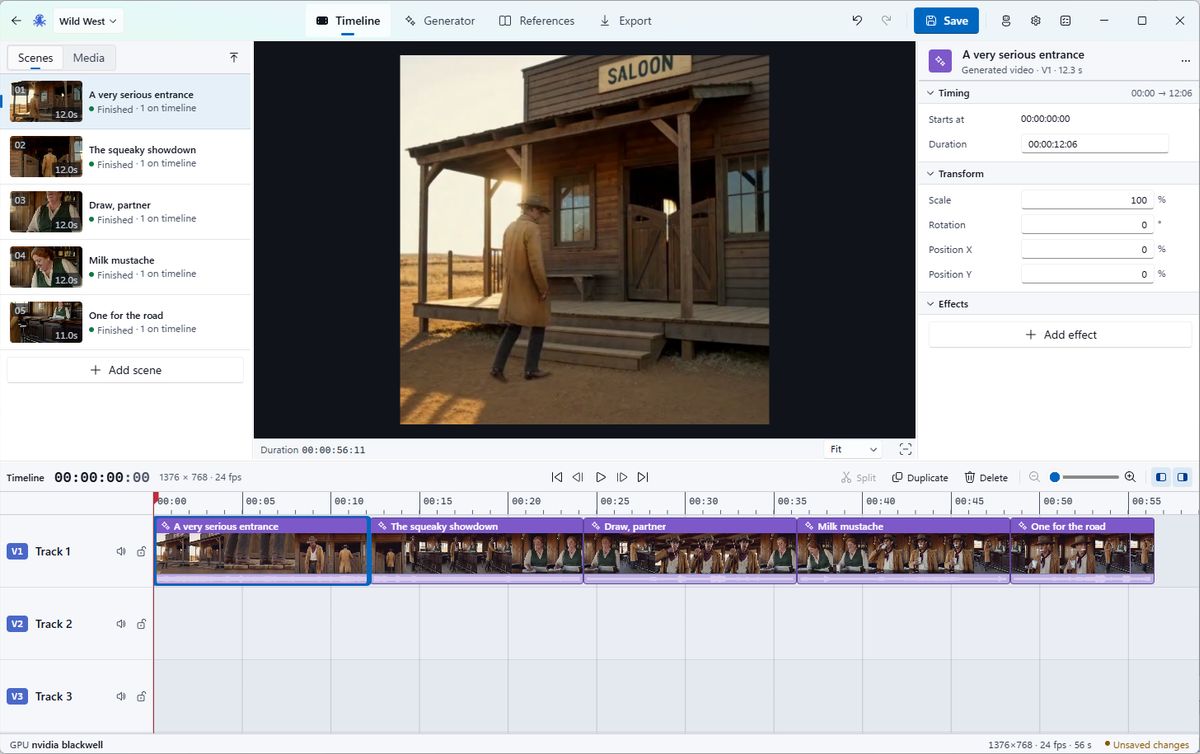
The channel published another digest of the MiniMax H3 video model ecosystem — "Part 28." It includes 17 fresh LoRAs and ComfyUI tools, manually verified: all links return a 200 status code, and almost everything was updated between September 19 and 27, 2026. Among the releases are the synchronized speech with facial expressions LoRA vpakarinen/natural-face-speech-h3-lora (male and female voices, 654 downloads) and the character replacement LoRA akatz-ai/MiniMax-H3-Character-Swap-LoRA (3436 downloads: background is preserved better than the base model, but timing and facial expressions are unstable). Also presented are the 360-degree orbital LoRA pablodawson with fixed first and last frames for FL2VA and the latent adapter Efficient-Large-Model/H3-to-LTX-Latent-Adapter, which translates H3 results into the LTX latent space. Among the utilities: ComfyUI-H3-FaceAutoBypass automatically determines whether a clip needs face fixing; ComfyUI-H3-Refine (Chain Tone v0.3) compensates for accumulated brightness shift when stitching clips; ComfyUI-VideoAnalyzer converts video into an H3 prompt. Separately mentioned are the upscaling node Comfyui-MMH3-UltimateUpscale (215 GitHub stars, updated September 23, 2026), ComfyUI-RemoteMiniMaxH3 with encoder offloading to a second PC, and the desktop tool Slopus with a timeline.
Context
All 17 LoRAs are trained on the same base model MiniMaxAI/MiniMax-H3, whose open weights are hosted on Hugging Face, and add narrow skills without changing the model's own weights: synchronized speech with facial expressions, character replacement, camera control, upscaling. The H3-Visual-Marker-Control pattern is notable: marker frames with blue and red frames around the character and target are recognized by the external model Qwen3-VL-32B, and scene control occurs without fine-tuning — the capability is assembled from a composition of models, not from retraining. The weakness of the base model — temporal and brightness misalignment in long sequences — is indirectly indicated by the utility ComfyUI-H3-Refine itself: the community is addressing the problem with external correction, not by fixing it in the model. From a scientific perspective, this is not a breakthrough, but the maturity of an open ecosystem: none of the releases is accompanied by evaluation methodology or benchmark numbers; the value of the collection lies in manual verification and link currency.
Why this matters for the industry
For the industry, the signal is in the pace: this is already Part 28, meaning the ecosystem of open LoRAs and ComfyUI nodes around MiniMax H3 is growing in weekly increments and filling gaps in the base model — synchronized audio with facial expressions, character replacement, upscaling pipeline, camera control. Individual video capabilities are being commoditized at the same time: they are free, open, and available to everyone, making it increasingly difficult to sell them individually as a feature, and value is shifting from the base model to the layer of adapters and tools. The H3→LTX latent adapter and encoder offloading to a second PC in ComfyUI-RemoteMiniMaxH3 connect H3 to other pipelines and remove the VRAM limitation — inter-model interoperability at the latent level. For companies, this is primarily cheap R&D: the tools are free and open, but the sources contain no admin controls, compliance history, or quality stability guarantees, so corporate application is isolated pilots, not a ready production contour.
Why this matters for users
For the reader, the digest is a ready-made and manually verified shortlist for experiments in ComfyUI: each tool can be downloaded for free from Hugging Face weights or GitHub and applied to a specific task — anime to photorealism, shootouts, "camera on head" POV, headswap, speech with facial expressions, orbital camera, upscaling. All links are live, updates are dated September 19–27, 2026, so the collection can be relied upon without independently checking each link. Those who don't want to assemble a pipeline from nodes manually will find Slopus suitable — a local desktop tool with a timeline for Windows, where working with video is like in a familiar editor, not like in a node graph.
What is still unknown / limitations
The sources contain no metrics for speech and facial expression synchronization accuracy and quality comparisons with the base model: the number of downloads (654 for vpakarinen/natural-face-speech-h3-lora) and stars (215 for Comfyui-MMH3-UltimateUpscale) measures popularity, not quality. It is unknown how much quality is lost when translating H3 results into the LTX latent space through the adapter. The instability of timing and facial expressions during character replacement is stated in the LoRA's own description. For corporate application, there is no data on stability, support, and compliance. Forecasts about the development of the ecosystem while maintaining the weekly pace are an interpretation of the observed trend, not a confirmed fact.
Sources
- bbaudio-2025/Comfyui-MMH3-UltimateUpscale — GitHub repository of the upscaling node (215 stars)
- Slopus — open-source AI video/image workspace for Windows
Author
Look at AI, editorial team