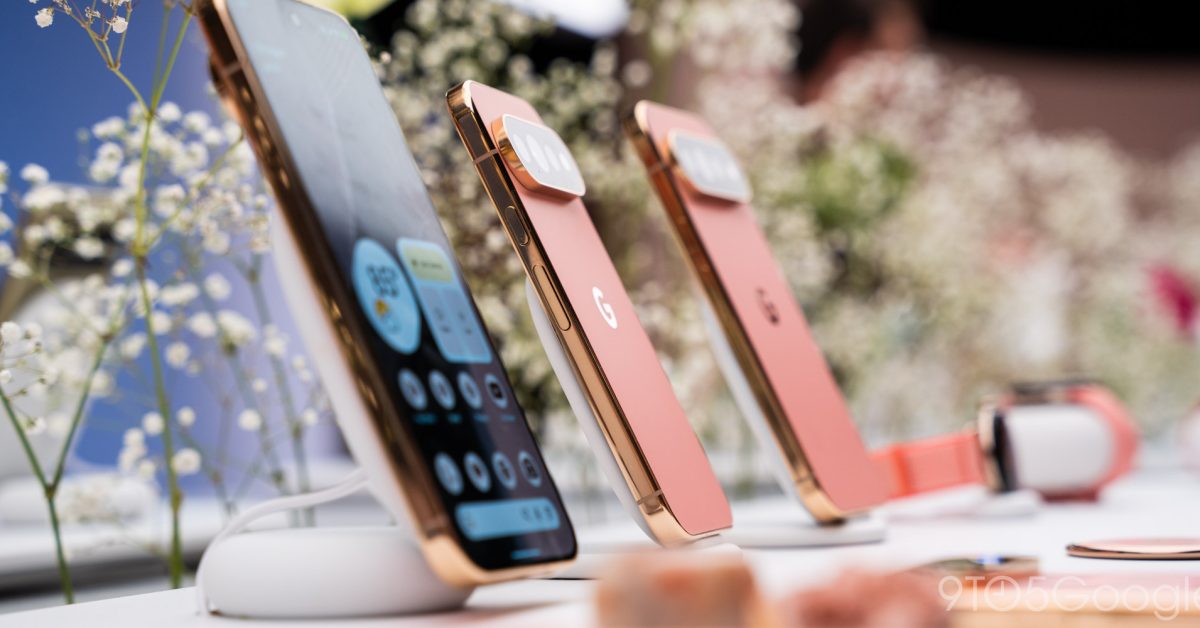
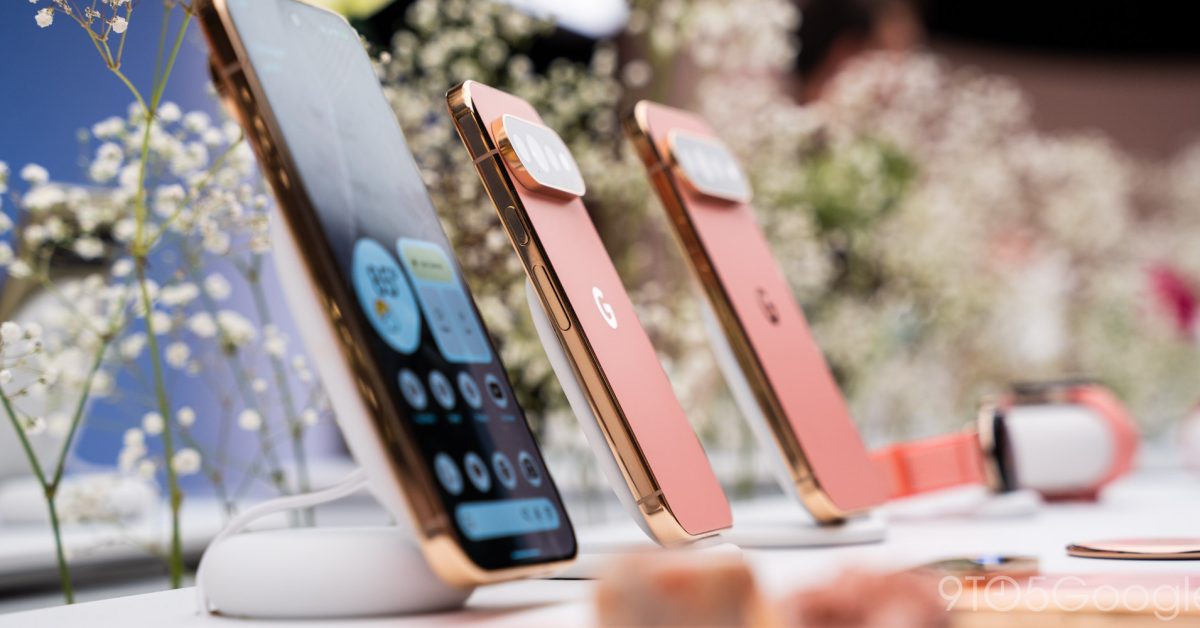
Google has opened an early preview of the Call for Me feature, in which the Gemini agent calls stores, restaurants, and salons on the user's behalf and independently navigates the path to a live operator. The user sees a live transcript on the screen and can take over the call at any moment. The new feature is currently available only in the US, only on the Pixel 11 lineup, and only to paid Gemini subscribers participating in the Phone by Google beta program.

What happened
The call goes through the beta version of Google's Phone app and comes from the subscriber's real number, so businesses see a regular incoming call. The agent introduces itself to the recipient, navigates IVR menus (i.e., automatic voice menus in call centers), waits for an operator, and conveys data pre-agreed with the user. The scenarios announced at launch are booking a table, checking product availability, and rescheduling an appointment.
Context
The feature builds on already-released Google Direct My Call and Hold for Me tools, so the fundamentally new part here is not the model architecture, but the integration: the engineering assembly of known components — ASR, TTS, a dialogue agent, and IVR navigation — has been brought to the level of real transactions. Call for Me also practically revives the idea of Duplex, Google's calling agent, which was shut down in 2022 and never scaled. At the same time, this is a distribution shift: the agent is not built into a separate assistant, but into the standard phone app at the operating system level and is monetized through a paid Gemini subscription, and in publications the launch is presented as a direct response to similar agents from competitors.
Why this matters for the industry
For the industry, this is the first precedent of a production deployment of a calling voice agent with IVR navigation: a closed beta with real transactions becomes a field test of the model, in which Google collects calibration data on live dialogues, not on synthetic data. Automating the first contact shifts business phone communication to agents and simultaneously burdens call centers with AI dialogues, and upon successful scaling, the 'client — business' channel will begin to transform into a partially machine-to-machine one, where agent calls respond to IVRs and voice bots. For engineers, this is not yet a tool, but material for analysis: Google does not disclose APIs, pricing, or data on latency and call quality, but the pattern of 'pre-agreed brief, live transcript, and call takeover' can be transferred to one's own voice products right now. If the beta continues, the accumulated corpus of real dialogues with transaction outcomes will become a data flywheel advantage unavailable to competitors without their own phone infrastructure.
Why this matters for users
Direct access today is available only to a very narrow group: US residents with a device from the Pixel 11 lineup, including the 11 Pro, 11 Pro XL, and 11 Pro Fold, a paid Gemini subscription, and participation in the Phone by Google beta program. They can delegate routine transactional calls that previously consumed time waiting on the line and navigating voice menus, while maintaining full control over the situation. For everyone else — outside the US, on other devices, or without a paid subscription — access is completely closed, and the practical value of the news is currently signal-based: call delegation is moving from demo stands to standard phone apps, so it is worth watching for the expansion of the device and region list.
What is still unknown / limitations
It is impossible to assess the real quality of the feature from the outside: TechCrunch and 9to5Google publications have no benchmarks, call success metrics, latency data, or user intervention frequency, so claims about calibration cannot yet be verified. The conclusion that after the shutdown of Duplex in 2022 the idea will now be scalable is only an interpretation: there are no explanations in the sources about what technical changes make a retry viable. Google's phrasing about 'non-linear live dialogues' indirectly acknowledges that resilience to open phone dialogue cannot be assessed outside of real calls, meaning that the cost of model errors in the beta is borne by real customers. There are also no exact plans for expansion to other devices and regions in the sources.
Sources
- Google tests letting Gemini call businesses for you — TechCrunch
- Pixel 11 testing 'Call for Me' to have Gemini phone on your behalf — 9to5Google
Author
Look at AI, editorial team