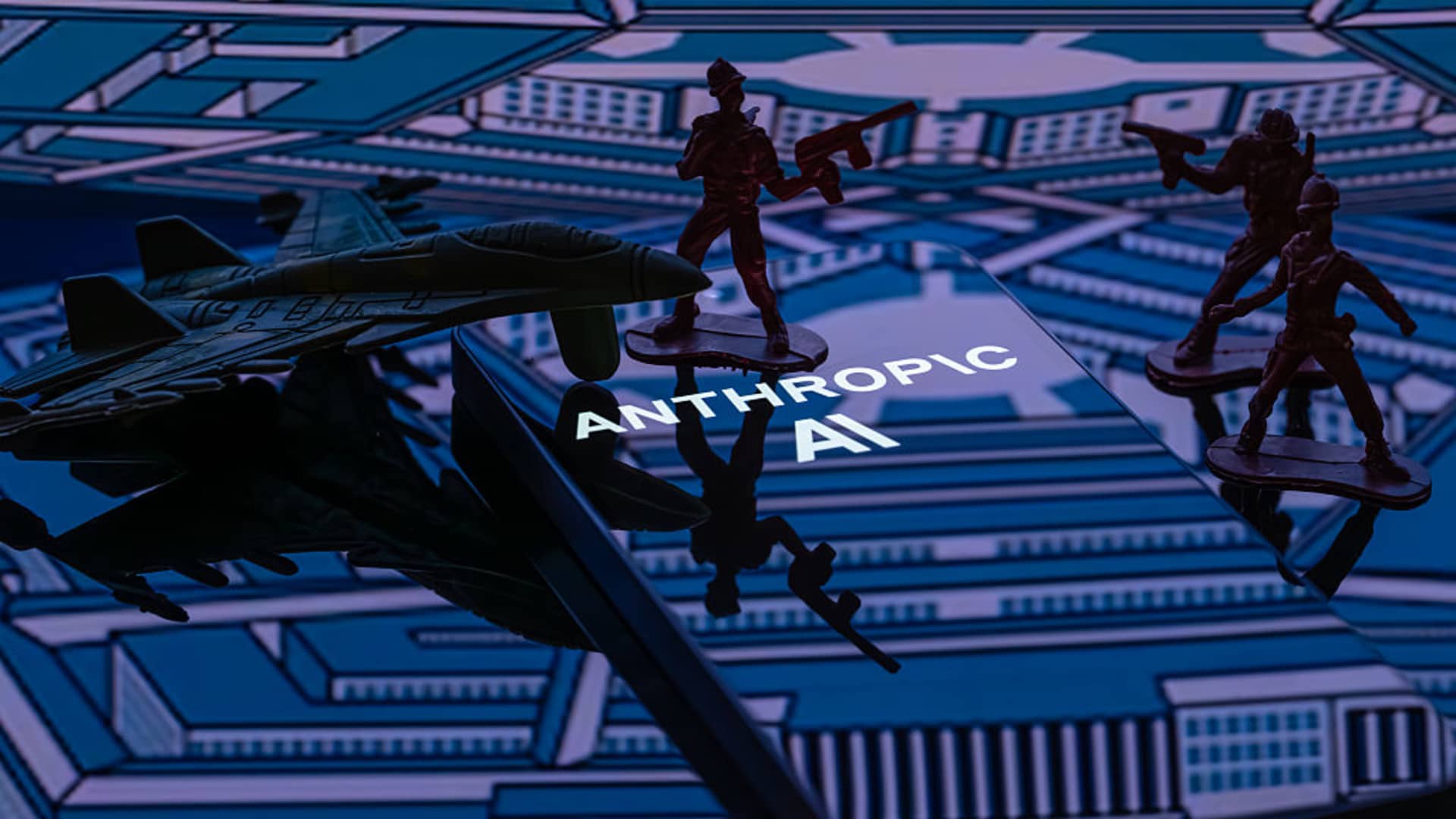
In a 2-1 decision on September 25, the U.S. Court of Appeals for the D.C. Circuit upheld the Department of Defense's March 2026 designation of Anthropic as a supply chain risk: military personnel and contractors are prohibited from using Claude in work for the department. The decision's effective date has been delayed, leaving the company with options for review by an expanded panel of the appeals court or an appeal to the Supreme Court. As the court establishes rules for AI vendors' access to defense contracts, Microsoft is moving its enterprise Copilot to consumption-based billing, and the industry is seeking solutions to the compute shortage in two opposite directions: ultra-compact models on edge devices and space-based computing.



What happened
The D.C. Circuit Court of Appeals issued a 2-1 decision, confirming the Department of Defense's March 2026 designation of Anthropic as a supply chain risk. The practical consequence: military personnel and contractors are prohibited from using Claude models in work for the Pentagon. The judges rejected the company's arguments that the decision was arbitrary, that the department exceeded its authority, and that the measure itself was unconstitutional. Meanwhile, a second parallel certification issued in August was overturned by a court in San Francisco, meaning two U.S. courts have diverged in their assessment of the same mechanism. The decision's effective date has been delayed to allow Anthropic to seek review by an expanded panel of the appeals court or to appeal to the Supreme Court. On the same day, the industry showed it is alive and well outside the courtroom: Microsoft restructured its enterprise Copilot into a "super app" with Home, Code, and Autopilot tabs, the prototype of the orbital Suncatcher project is preparing for launch as a rideshare payload on SpaceX Transporter-18 next week, and the voice model Drama 3 is open in preview mode by application.
Context
The conflict began in March 2026, when the U.S. Department of Defense added Anthropic to its list of supply chain risks, with the subject of the dispute being the terms of Claude's use: the company demanded a ban on autonomous weapons and mass surveillance. These caveats were initially discussed within the framework of a $200 million contract, but the "supply chain risk" mechanism moved the dispute from the contractual plane to the administrative one, where the judicial hierarchy, not vendor-customer negotiations, decides. The legal basis for such designations is still not settled, as evidenced by the divergence of positions between two courts on the same mechanism. The backdrop is a broader market shift: enterprise AI is moving from per-user subscriptions to an agent-based model with consumption-based billing, and the compute shortage is pushing the industry in two opposite directions — toward ultra-compact 1-bit models on the NPUs of wearable devices and toward orbital infrastructure, where solar panels provide up to eight times more energy than on Earth.
Why this matters for the industry
For the industry, the D.C. Circuit's decision confirms the right of the president and the secretary of defense to determine acceptable AI suppliers for the Pentagon, and this outcome affects the access of any vendors to defense contracts, not just Anthropic. If the designation stands, contractors will have to replace Claude in their workflows, and a company's legal profile may become a criterion for model selection on par with benchmarks, price, and latency — the market risks splitting into those approved and those not approved for the defense segment. The case also revealed an operational risk: access to a model can be lost not due to service degradation, but due to a government decision, so hard-coding a pipeline to a single provider becomes an architectural vulnerability, and teams should plan in advance for a gateway with quick model replacement. Microsoft's shift from per-user subscriptions to consumption-based billing changes the unit economics of enterprise AI: costs begin to be calculated at the agent and task level, and IT departments have to implement FinOps expense controls even before a pilot. Bets on the compute shortage — 1-bit Prism ML models on NPU glasses and orbital TPUs for the Suncatcher project — outline two different development directions: local inference at the edge and moving infrastructure to space.
Why this matters for users
Behind the Anthropic-Pentagon dispute lies a question important to anyone building products on others' models: can a vendor prohibit military use of its developments, and what happens when the government responds to such a refusal with a blacklist. Teams in defense-adjacent products should check whether their stack is tied to Claude and prepare the ability to quickly replace the model. If you work with Microsoft 365, keep an eye on the Frontier program: early access participants will receive the Home and Code tabs in the coming weeks, and consumption-based billing has already been announced, so agent budgets will have to be calculated by tasks, not by workstations. Developers of voice scenarios will be interested in Drama 3 from Fish Audio: the preview offers regeneration of a single word or phrase in a finished track without rebuilding the generation and voice changes mid-sentence. Those following wearable devices should pay attention to the glasses on Snapdragon AR1 Gen 1, shown at Snapdragon Summit: 1-bit weights reduce the LLM size from 1.66 GB to 0.43 GB at a claimed 15.4 tokens per second.
What is still unknown / limitations
The outcome is not yet final: review by an expanded panel of the D.C. Circuit or an appeal to the Supreme Court is possible, so Anthropic's status may change in the coming months. Nothing in the court's ruling follows about the technical reliability or quality of Claude — a vendor's legal status and the actual availability of the service are different variables, and they should not be conflated. Prism ML's metrics (0.43 GB of weights and 15.4 tokens per second) were measured by Qualcomm itself without a disclosed methodology, meaning these are vendor figures without independent verification. The Suncatcher prototype became the first empirical test of the idea of orbital inference, but one device is not a data center: radiation failures, heat dissipation, communication channels, and delivery costs have not yet been tested in real conditions. Drama 3 is only available as a preview by application, so it is too early to judge the stability of the service.
Sources
- U.S. appeals court upholds Pentagon designation of Anthropic as supply chain risk — CNBC
- Microsoft thinks its new Copilot ‘super app’ will be as influential as Office — The Verge
- Learn about Google’s Project Suncatcher to put ML infrastructure in space — Google Blog
Author
Look at AI, editorial team