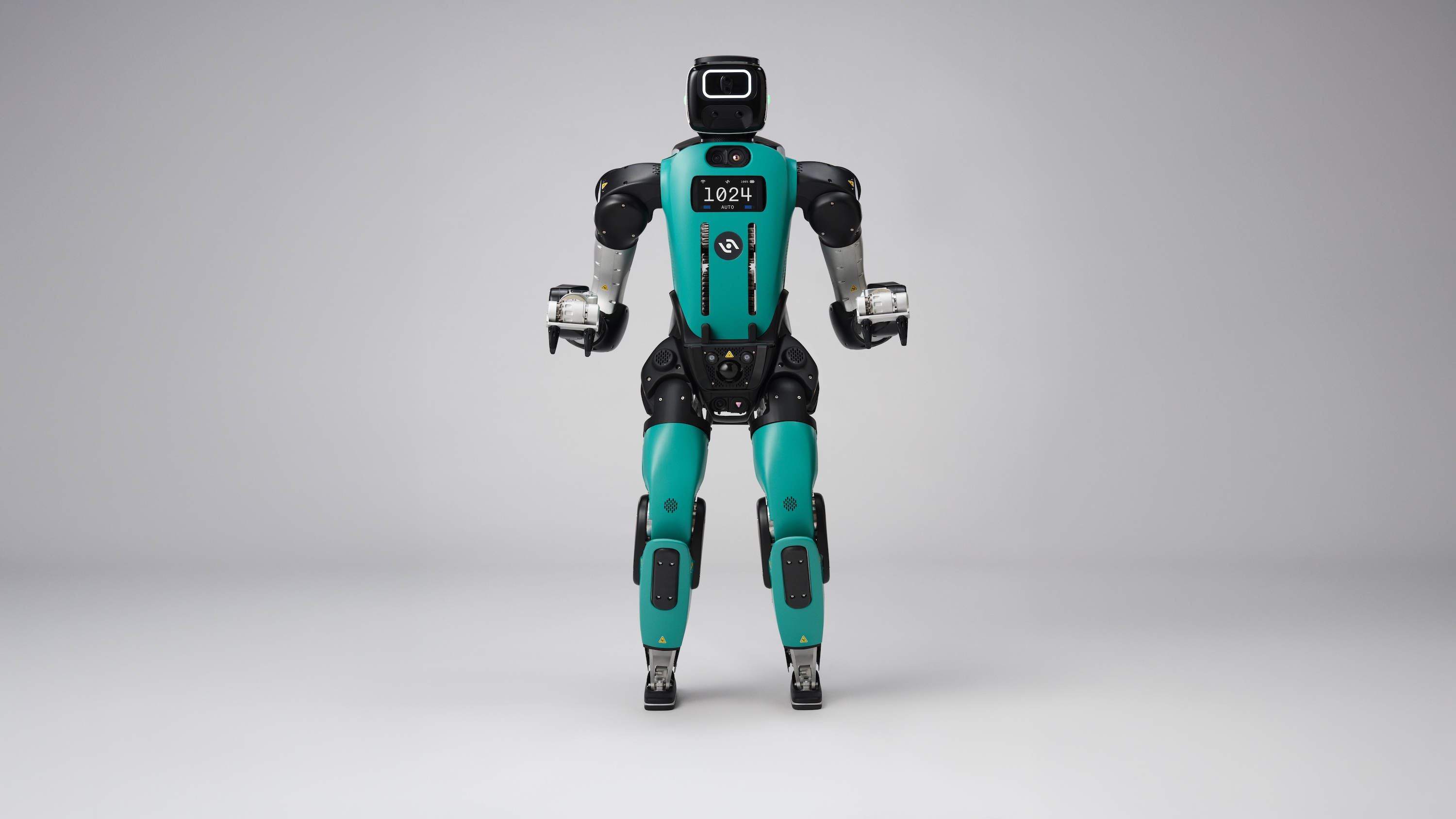
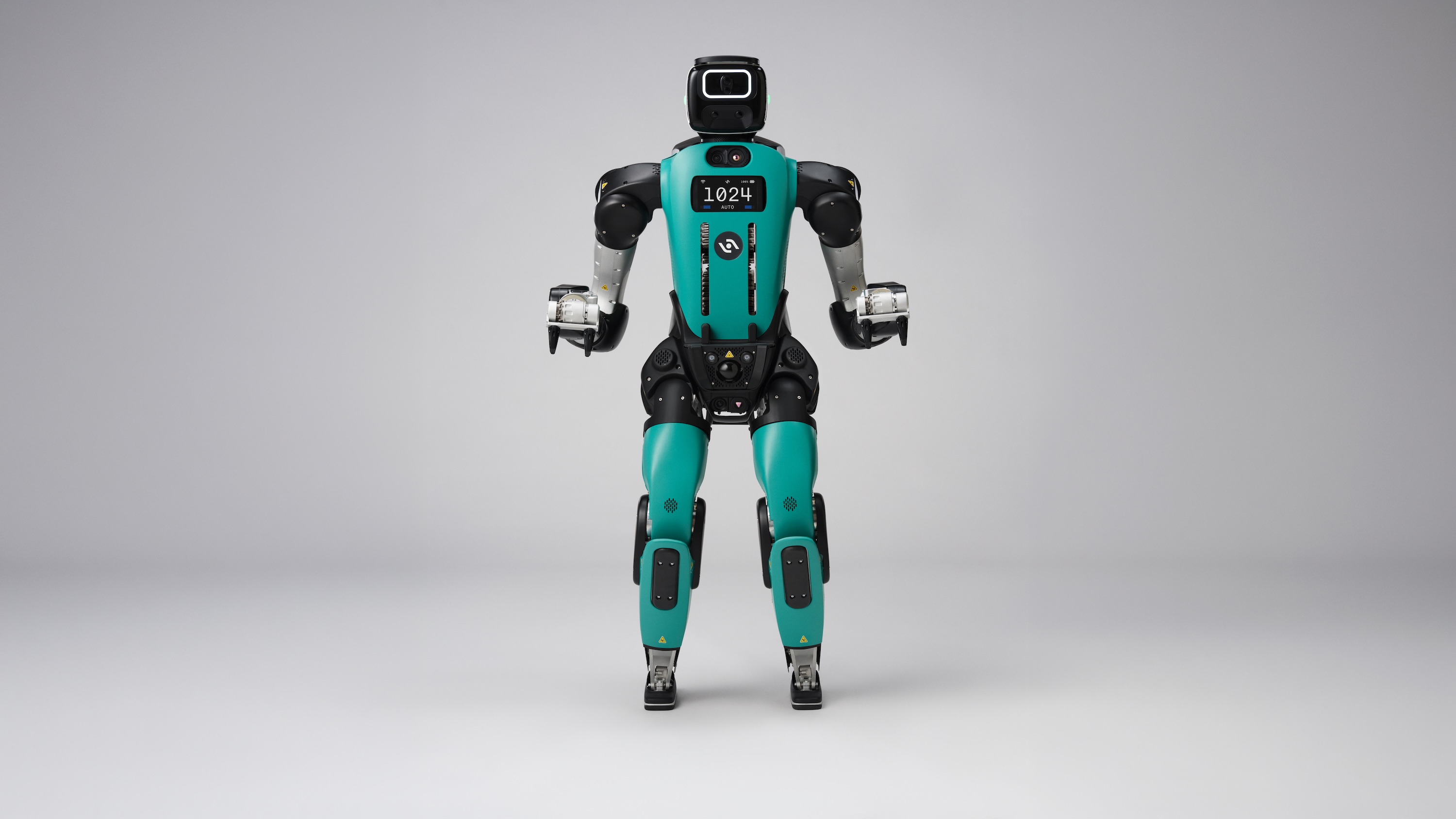
Agility Robotics unveiled Digit 5 on September 15, 2026 — the fifth generation of its humanoid robot and the first machine in the lineup designed for “cooperatively safe work” — working in close proximity to people in warehouses and manufacturing without protective barriers. Digit 5 became the first humanoid to pass an independent field assessment on a customer’s production line under OSHA industrial standards, and the first launch partner for the NVIDIA Halos for Robotics platform on the NVIDIA IGX Thor and Halos Core stack. Together with a $300 million order book, this marks a transition of humanoids from pilot projects to serial deliveries.
What happened
Digit 5 stands 1.81 m tall and weighs 129 kg, lifting up to 22.7 kg — 40% more than Digit 4 — thanks to a new leg design and proprietary cycloidal actuators. The robot reaches shelves up to 2.2 m high, operates for 90 minutes on a single battery, and charges in 9 minutes, so battery swaps can support more than 20 hours of operation per day. For collaborative work with people, Digit 5 received an AI-based human detector with an independent safety controller: depending on the situation, the robot goes around a person, stops, or crouches, and warns with visual and auditory signals. The grippers are interchangeable on ISO-standard flanges, and control and integration with warehouse systems run through the Agility Arc platform. The robot cannot yet be purchased: early access is announced for the first half of 2027, with general availability by the end of 2027.
Context
Demand for warehouse automation is limited not by robot dexterity, but by certifying their work near people: for decades, industrial robots have been isolated behind barriers, and no international safety standard specifically for humanoids existed. Agility is moving this barrier in several directions: from participation in developing the ANSI/A3 TR R15.108 and ISO 25785-1 standards — the first international safety standard for humanoids — to relying on the real field experience of the previous generation. The partnership with NVIDIA brings automotive-grade functional safety to humanoid deployments: the Halos for Robotics platform runs on the NVIDIA IGX Thor and Halos Core stack. The scale of the series is indicated by the announced capacity of the RoboFab factory in Oregon — up to 10,000 robots per year. Finally, the lineup already has a rare volume of operation for humanoids: Digit 4 has been working on commercial sites at GXO, Schaeffler, Amazon, and Toyota Motor Manufacturing Canada for nearly 3 years, totaling over 65,000 hours.
Why this matters for the industry
For the industry, the main signal is a shift in acceptance criteria for humanoids: instead of demo videos, pilot customers will begin to demand independent field safety assessments and proven operating hours, and competitors will have to publicly answer questions about collaborative work safety and likely reorient their roadmaps toward certification and partnerships at the NVIDIA level. For implementation teams, this is a preparation window: now is the time to design architecture for the Agility Arc platform with integration into WMS, WES, and MES, design unguarded mixed zones, and build ROI models on real Digit 4 operating data. The battery swap cycle sets requirements for on-site charging infrastructure, and standardized ISO flanges open the market for third-party grippers — end-effector vendors get a predictable integration point.
Why this matters for users
For readers in logistics and manufacturing, this means humanoids are no longer just trade show content: if timelines are confirmed, the first Digit 5 units will appear at customer sites under early access, and the announced RoboFab capacity and order book point to serial deliveries to real warehouses, not demo zones. The combination of interchangeable ISO grippers and Agility Arc with integration into WMS, WES, and MES expands the robot’s tasks from tote transport to machine loading, kitting, and palletizing, meaning one machine can cover different areas. Those considering automation should check in advance whether their scenarios fit the announced payload and reach specifications, watch for the pricing model — purchase, lease, or robots-as-a-service — and how safety standards progress. If release plans are realized, engineers will have new roles: fleet operations, MLOps for behavioral models, and training staff to work in mixed zones.
What is still unknown / limitations
“Independent field assessment under OSHA standards” is a safety assessment on one customer’s production line, not a capability benchmark: the source lacks methodology, passing criteria, and metrics like cycle time, operation success rate, or safety loop trigger frequency. The announced specifications for payload, reach, and operating cycle are not accompanied by measurement conditions: for example, it is unclear whether the maximum load is lifted at full extension and what the real duty cycle is with battery swaps. The perception and human detection architecture is proprietary, with no publications or methodologies. The $300 million in orders and RoboFab capacity are company claims, not confirmed deliveries; early access and general availability timelines are currently confirmed only by Agility’s words, and the pricing model is not disclosed.
Sources
Author
Look at AI, editorial team