
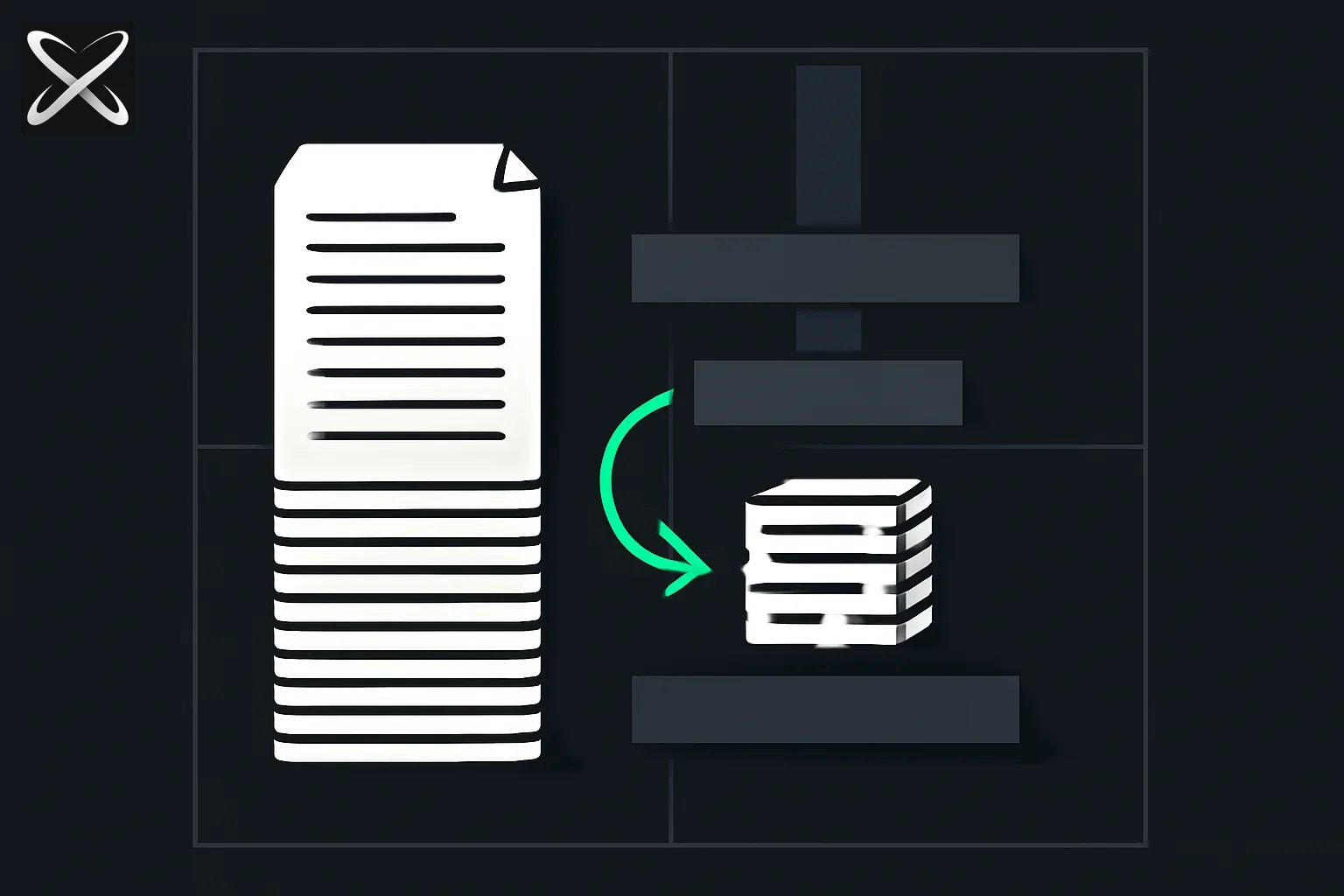
OpenAI has enabled the 1M-token context window for the GPT-5.6 Sol model in Codex for users with ChatGPT accounts. Previously, the 1,050,000-token window was available in Codex only through API keys. The default effective window remains 272,000 tokens, but it can be expanded with a few lines in the local configuration.

What happened
The announcement appeared on August 17, 2026, in an X post by OpenAI engineer Tibo Sottiaux (@thsottiaux), who works on Codex and ChatGPT: according to him, the 1M-token context for GPT-5.6 Sol in Codex now works when used through ChatGPT accounts. The expansion is enabled as a model override: in the local Codex configuration, the values for the model_context_window and model_auto_compact_token_limit keys are set, both of which are described in the official configuration reference. The auto-compact threshold of 900,000 tokens leaves approximately 100,000 tokens of headroom for system context before history summarization begins.
Context
The GPT-5.6 Sol model is advertised with a 1,050,000-token context window, but in Codex the effective window is limited to 272,000 input tokens by default, and this limit is fixed in the Codex CLI v0.144.6 metadata. OpenAI deliberately does not enable the full window for all users by default to avoid inflating inference costs and response latencies. In agentic coding, when the effective window is exhausted, compaction is triggered, meaning the session history is summarized, during which some context details are lost. This is why, for long sessions, the default window forces the model to compact more often than necessary.
Why this matters for the industry
For the industry, this is a platform shift, not a feature update: OpenAI is moving the 1M-token context for GPT-5.6 Sol from an API exclusive to a standard Codex capability, and long context is becoming a mass expectation in agentic coding. The model override mechanism itself shows how OpenAI makes long context an optional lever: the base window remains compact, expanded context is enabled via explicit opt-in, and it is tied to higher pricing and costs. For product builders, the 1M window transforms from an API integration task into a configurable tool parameter, and the competitive edge in agentic coding shifts from the ability to hold the entire context to orchestrating work within the window.
Why this matters for users
If you work in Codex with GPT-5.6 Sol, you can expand the context right now: three lines in ~/.codex/config.toml — model = "gpt-5.6-sol", model_context_window = 1000000, and model_auto_compact_token_limit = 900000 — or the same values via -c flags for a single session. For long agentic sessions, this means fewer history compaction events and the ability to push significantly more code into the context, including entire repositories. For most users, the default window does not change, so costs and latencies in basic scenarios remain the same.
What is still unknown / limitations
The advertised 1,050,000-token window is a product claim: in available materials, there is not a single article, benchmark, or comparison of GPT-5.6 Sol's behavior at 272,000 and 1,000,000 tokens, and the magnitude of the quality gain is not measured. The claim that tokens beyond the default window are counted with an x2 multiplier comes from the community and is not confirmed in OpenAI's announcement. According to explainx.ai, on some subscription plans the effective ceiling may not reach 1M. A nominal window is not equal to free memory: even with maximum context, a long session at the 900,000-token threshold still undergoes summarization, and losses during compaction are not estimated by sources.
Sources
- Tibo Sottiaux (@thsottiaux) post on X
- OpenAI Codex Configuration Reference
- explainx.ai blog: Enable a 1M-Token Context Window in Codex CLI (GPT-5.6 Sol)
Author
Look at AI, editorial team