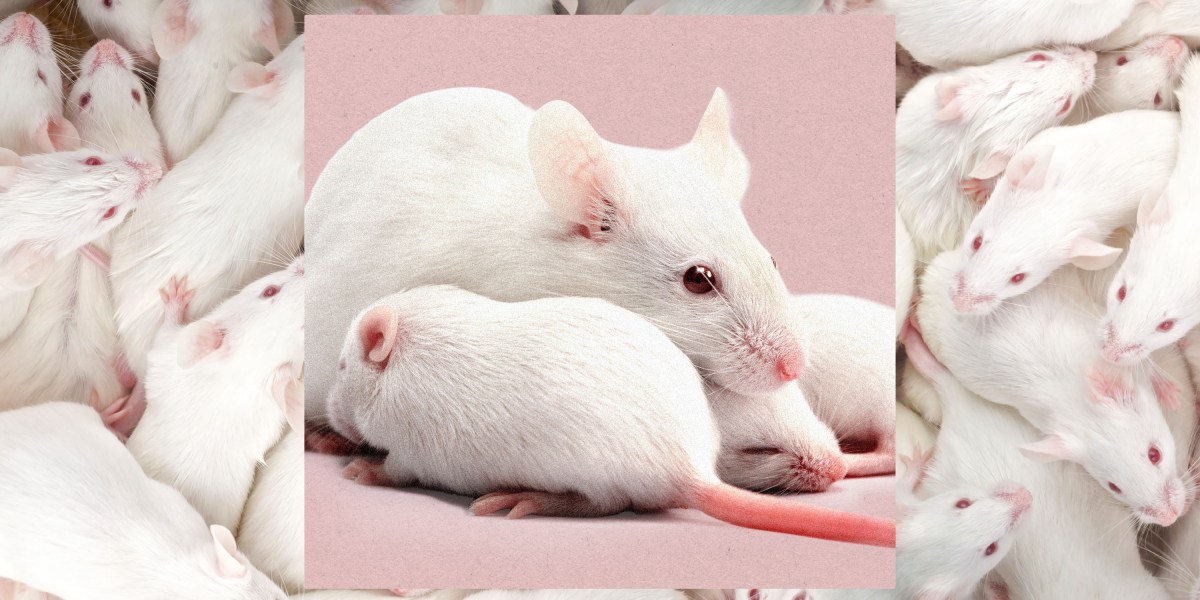
Japanese researchers from Yamanashi University and the RIKEN Bioresource Research Center have, for the first time, obtained fertile female mice from male cells by removing the Y chromosome using the CRISPR tool Y-CUT. The born XO females produced viable offspring — including when crossed with cloned males from the same genome, which means the initiation of full reproduction from the cells of a single animal.

What happened
A team led by Takashi Ishiuchi (Yamanashi University) and Shogo Matoba (RIKEN Bioresource Research Center) developed the Y-CUT method — a CRISPR tool for the targeted removal of the Y chromosome from diploid male cells. The method works on two levels: on early XY embryos and on cryopreserved somatic cells of adult males. After removing the Y chromosome, the nucleus is transferred into an egg cell (somatic cell nuclear transfer), resulting in the birth of healthy XO females. The obtained females proved to be fully fertile and produced viable offspring, including when crossed with cloned males from the same original genome — thereby reproducing, for the first time, mammalian reproduction initiated exclusively from a male genome. The results were published as a preprint on bioRxiv (August 2026, DOI 10.64898/2026.08.03.742506v1), and peer review is not yet complete.
Context
Traditionally, sex determination in mammals is considered to be rigidly determined by the chromosome set: XX determines the female sex, and XY — the male. However, in nature, there are organisms with high plasticity of sexual development — it is precisely the Okinawa rubble goby, which in natural conditions changes sex when there is a shortage of partners, that served as the conceptual inspiration for the work. The Y-CUT technology is based on CRISPR editing adapted for large-scale chromosomal operations and is combined with the method of somatic cloning, previously applied in experiments to obtain females from male cells without targeted removal of the Y chromosome. Successful application on cryopreserved cells of adult individuals is critically important: this means that the method is potentially applicable to existing biobanks and cryoarchives, without requiring access to live animals.
Why this is important for the industry
The Y-CUT method radically changes approaches to the genetic conservation of endangered species: from cryopreserved cells of a single male, a reproductive pair of both sexes can be obtained — for example, black-footed foxes or Przewalski's horses, whose populations are critically small. For the genetically modified animal industry, the method accelerates the creation of lines: instead of years of breeding to fix a modification, it is enough to have one edited male, from which males and females are obtained. This also stimulates demand for bioinformatics tools and AI platforms for designing chromosomal modifications, simulating genomic operations, and automating laboratory cloning protocols. In the 2-year perspective, with successful expansion to other species, commercial bio-AI platforms specializing in chromosomal engineering planning may appear.
Why this is important for users
The work demonstrates that sex determination in mammals is fundamentally more plastic than previously thought. The technology is not applicable to humans and other large species in the foreseeable future, but it already opens the way to double-sex cloning — the creation of a full reproductive pair from the cells of a single animal. For readers following the development of biotechnology, this is a signal of a new direction in synthetic biology: manipulation of sex at the chromosomal level is becoming an available tool, not a theoretical possibility.
What is still unknown / limitations
XO fertility is specific to mice. In most mammals, including humans, the XO configuration leads to infertility and Turner syndrome, which requires additional methods — for example, the insertion of a second X chromosome — for expansion to other species. The results are at the bioRxiv preprint stage without peer review; independent replication has not yet been carried out. For the AI and ML infrastructure industry, there is no direct impact: there are no APIs, open-source repository, or reproducible pipeline. Commercialization is at the stage of fundamental science.
Sources
- MIT Technology Review — Scientists just created female clones of male mice
- Initiating mammalian reproduction from a single male genome — Life Science Network
- Initiating mammalian reproduction from a single male genome — bioRxiv preprint
Author
Look at AI, editorial team