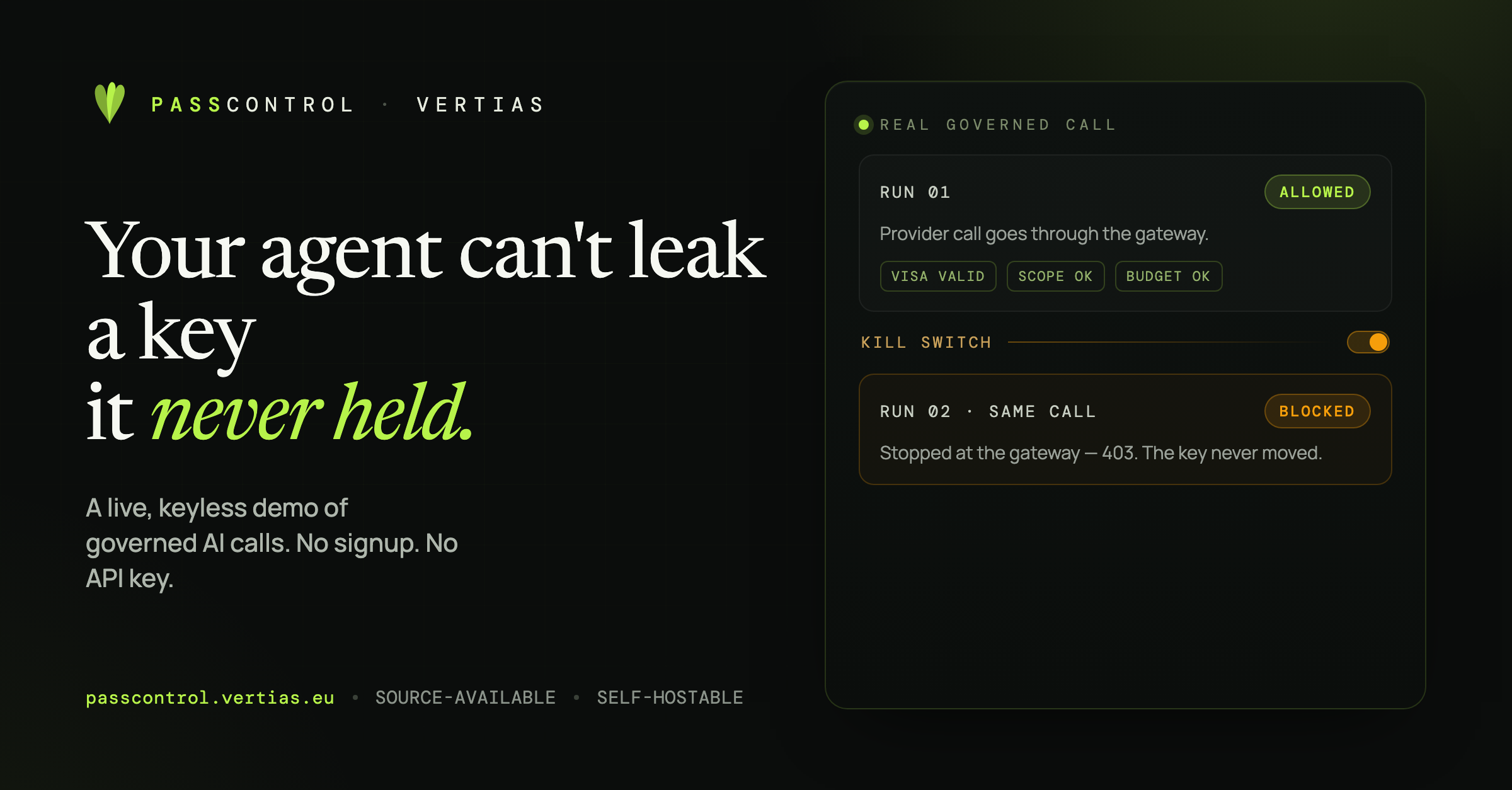
PassControl has been introduced — a specialized gateway designed to secure autonomous AI agents. The system allows for the use of OpenAI, Anthropic, and other providers without passing real API keys directly into the agent's runtime environment, minimizing the risks of leaks and uncontrolled expenses.
What Happened
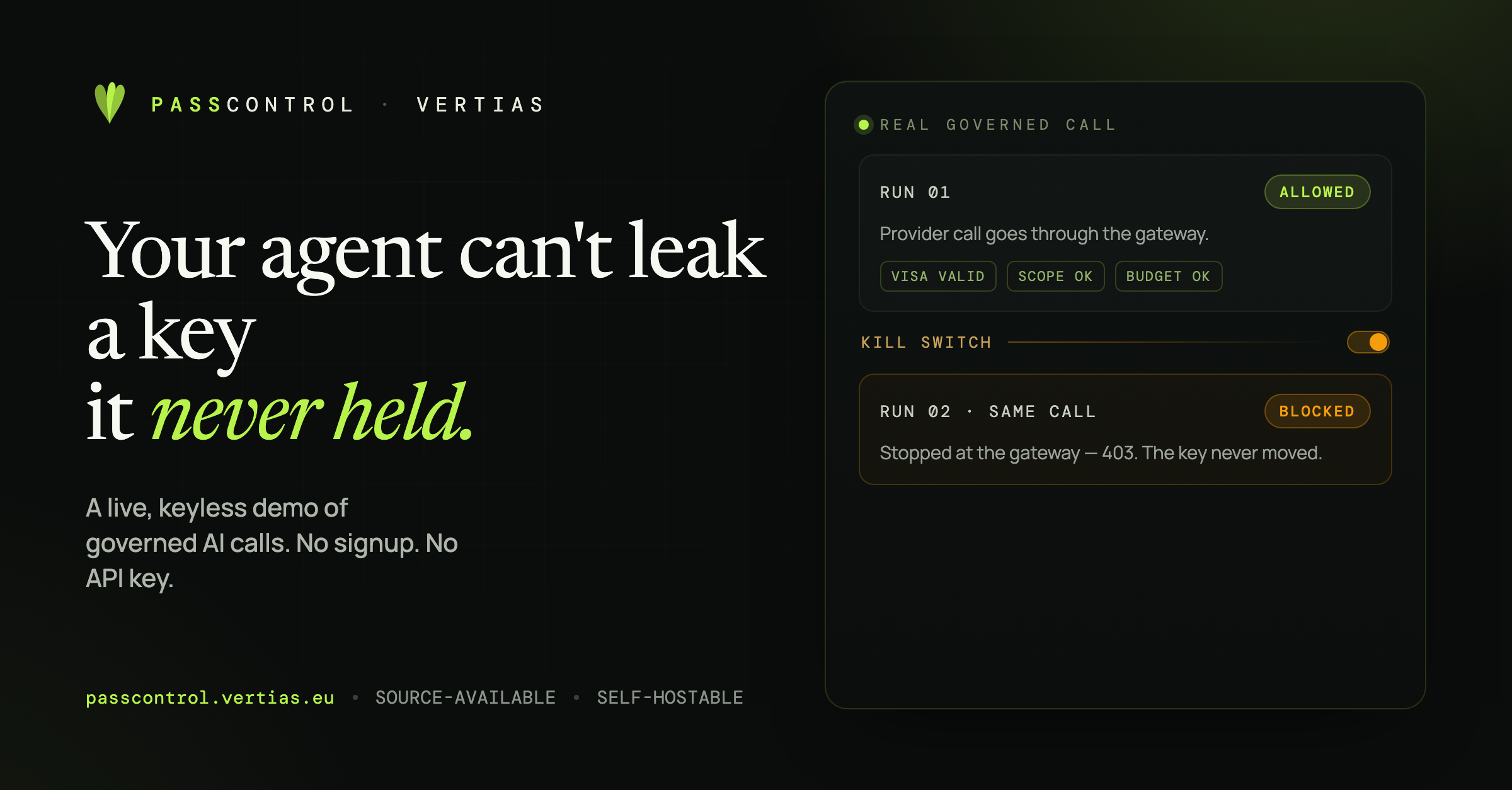
Developers have introduced PassControl, which implements the concept of Ed25519 passports for credential management. Instead of passing raw secrets, the agent signs a request with a cryptographic signature, and the gateway exchanges this "visa" for a real API key at the exact moment the request is executed. The system also includes a Kill Switch mechanism for the instantaneous revocation of access rights without the need for key rotation.
Context
With the development of autonomous agents, a critical security problem arises: granting full access rights (API keys) to an environment where third-party or local code is running creates a risk of data and financial compromise. PassControl moves secret management from the application level to the infrastructure gateway level, implementing a Zero Trust architecture.
Why It Matters for the Industry
For the industry, this signifies the emergence of a new layer of Agentic Middleware. The solution allows for the implementation of granular access control policies (Policy Enforcement Point), restricting the use of specific models and setting strict budget limits. In the long term, this could lead to the formation of a market for specialized Identity & Access Management (IAM) systems designed specifically for AI agents.
Why It Matters for Users
Users can safely run agents in tools such as Claude Desktop or Cursor via the MCP protocol without fearing that agents will "carry away" paid API keys. This lowers the barrier to entry for safely testing autonomous systems in environments with access to real resources and allows for full control over neural network usage costs.
Sources
Author
Look at AI, Editorial Staff