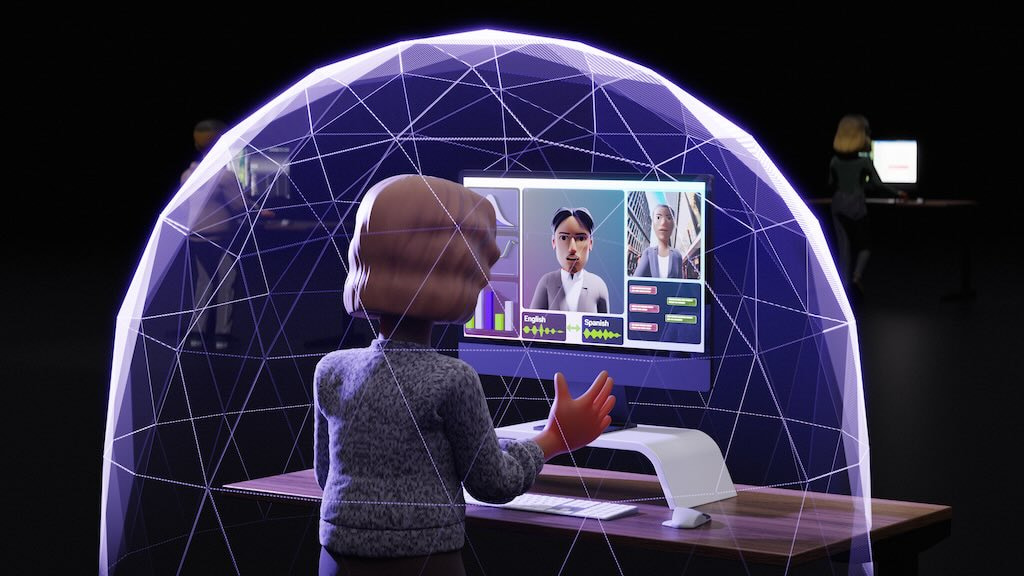
At the SIGGRAPH 2026 conference, NVIDIA announced the Synthetic Video Detector NIM — a specialized microservice designed for high-speed verification of video content to determine if it is synthetic or AI-generated.
What Happened
The new tool utilizes DINOv2 and DINOv3 architectures for frame-by-frame video analysis (at 504×504 resolution). The system demonstrates a detection accuracy of 92% on uncompressed video, 87% with 15% compression, and 82% with 50% compression. On RTX GPU systems, processing a 1080p clip takes approximately 22 ms, enabling real-time service usage. Future plans include integration with streaming services such as Wowza.
Context
With the advancement of generative AI technologies, the deepfake problem is becoming critical for the media environment. NVIDIA offers a ready-to-use API and microservice architecture (NIM), allowing companies to implement content authenticity checks without the need to independently develop complex machine learning models.
Why It Matters for the Industry
For the industry, this means lowering the barrier to entry in the media data verification niche and enabling the creation of real-time automated verification tools. However, the use of the NVENC codec creates a hardware dependency, which may limit the deployment of the solution in data centers on server GPUs (such as A100 or H100) that lack support for these specific codecs.
Why It Matters for Users
Media editors and streaming platforms will be able to instantly flag suspicious content as AI-generated, increasing trust in digital news and protecting audiences from manipulation. In the long term, this could lead to the standardization of authenticity labels in live broadcasts.
What Is Not Yet Known / Limitations
Detection effectiveness drops significantly with high levels of video compression (down to 82% at 50% compression). Additionally, there is a hardware tie to NVIDIA codecs, which may complicate the use of the tool in cloud infrastructures without appropriate optimizations.
Sources
Author
Look at AI, Editorial Team