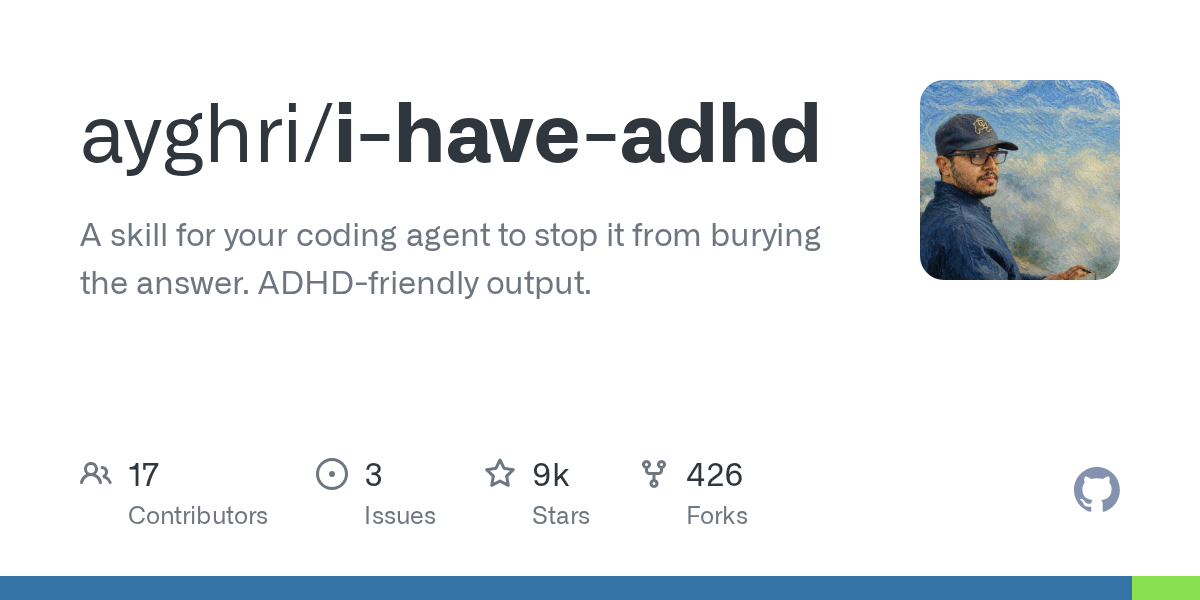
A developer has introduced the open-source project i-have-adhd — a set of specialized skills for coding agents such as Claude Code, Codex, and Cursor. The tool is designed to optimize the structure of AI responses, stripping away unnecessary polite preambles and focusing on specific actions, which is critical for users with ADHD and those who value high-speed workflows.
What Happened
The i-have-adhd project has been released, presenting a skill system for managing the output style of LLM agents. Instead of long textual introductions, the agent gets straight to the point using a clear structure: immediate action, a numbered list of steps, and one specific next step. This minimizes the amount of "noise" in programming responses.
Context
Modern AI agents often generate redundant polite digressions that increase the cognitive load on the developer. The technical value of i-have-adhd lies not in changing the architecture of the models themselves, but in using effective prompt engineering through the creation of system instructions (skills) that control agent behavior within existing APIs.
Why It Matters for the Industry
The emergence of such tools marks a shift from chasing "pure" model accuracy toward developing personalized interaction interfaces. The industry is moving toward tuning the cognitive style of LLMs, where managing user cognitive load and creating flexible interaction profiles (personas/cognitive styles) directly within serving solution infrastructures becomes a key factor.
Why It Matters for Users
Programmers can immediately optimize their workflow by making interactions with AI assistants more straightforward. Using ready-made skills allows them to eliminate "fluff" from responses and receive structured instructions in real-time, which increases overall coding efficiency and reduces the risk of losing the essence of a task within a mass of text.
What Is Not Yet Known / Limitations
At the moment, the project focuses on managing response formats through system instructions; however, the long-term integration of such mechanisms directly into the core capabilities of model APIs remains a subject of ongoing industry development.
Sources
Author
Look at AI, Editorial Staff