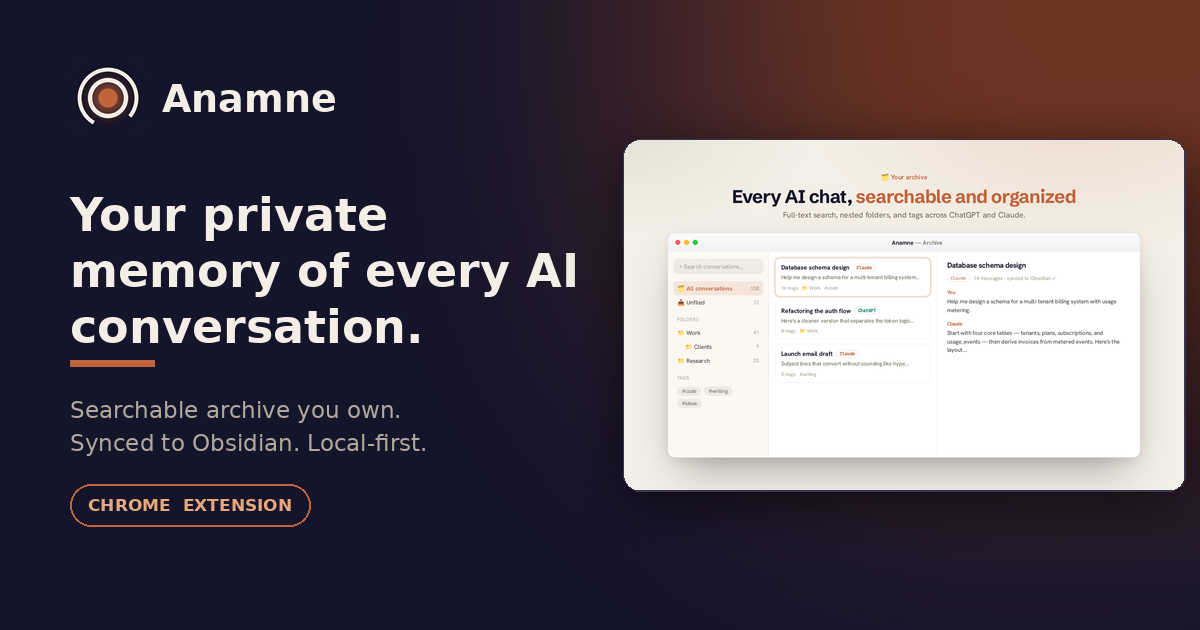
Developers have introduced Anamne — a Chromium browser extension that allows users to create local archives of conversations with ChatGPT and Claude, turning scattered dialogues into a structured knowledge base.

What Happened
The Anamne extension has been released for Chrome and Edge, which automatically converts chats from ChatGPT and Claude into Markdown files. The tool provides data synchronization with Obsidian, allowing users to save interaction histories locally. The free version supports the main ChatGPT and Claude models, while the paid Pro version includes support for Gemini, Perplexity, Grok, and DeepSeek, as well as providing encrypted cloud synchronization and saving generated images.
Context
The problem of data fragmentation arises from the intensive use of various chat interfaces, where interaction history often remains locked within proprietary cloud platforms. Anamne's local-first approach aims to minimize data leak risks and provide users with control over their digital footprint within LLM ecosystems.
Why It Matters for the Industry
The emergence of Anamne signals the formation of a new market segment — tools for personal AI Memory Management. This highlights the growing need to create specialized "middleware" between the user and cloud models that will be responsible for structuring knowledge and ensuring its portability across different services.
Why It Matters for Users
For users, this means the ability to turn temporary AI sessions into a long-term knowledge base in Obsidian or other Personal Knowledge Management tools. This allows them to avoid losing valuable information and ensures seamless integration of AI dialogues into general workflows without the need to transfer data to third-party services.
What Is Not Yet Known / Limitations
Using a browser extension expands the attack surface, which may create conflicts with corporate information security policies in large organizations (enterprise perimeter).
Sources
Author
Look at AI, Editorial Team