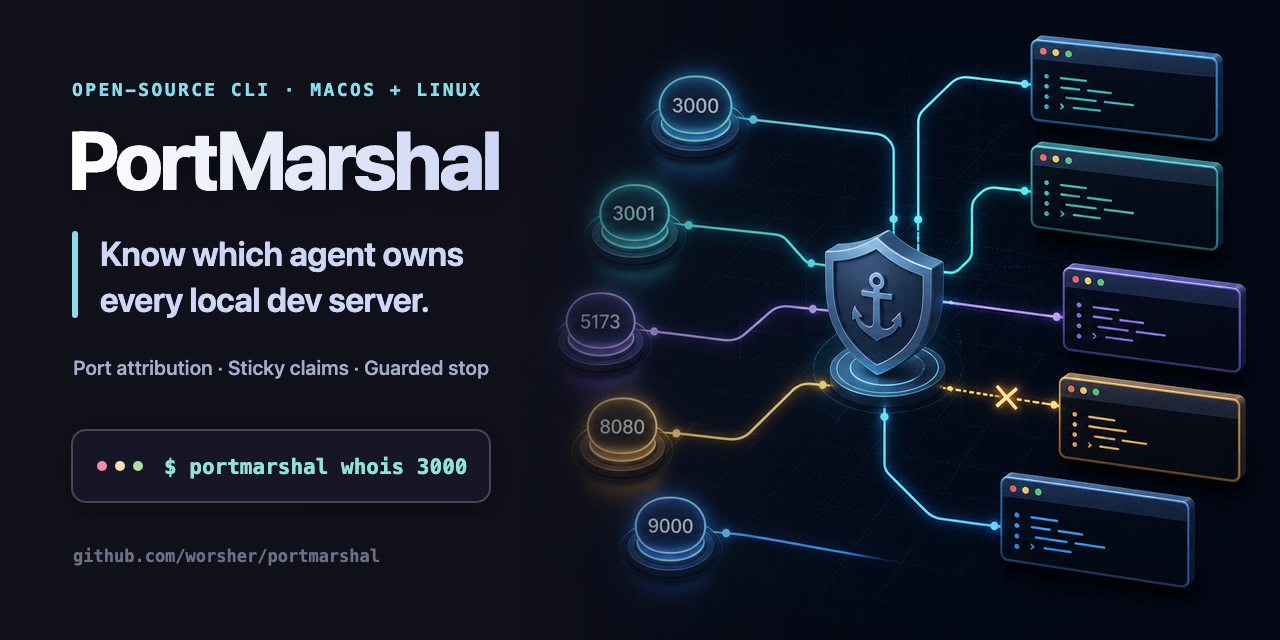
The release of PortMarshal — a specialized tool for macOS and Linux — aims to solve the problem of resource conflicts in environments where multiple autonomous AI coding agents, such as Claude Code or Cursor, are operating simultaneously.
What Happened
The PortMarshal utility has been developed to allow TCP ports to be attributed to specific projects and agents. The tool prevents the accidental shutdown of third-party services ("friendly fire"), detects port drift, and supports integration with PM2 and Docker. To identify resource owners, PortMarshal uses tracking via the parent process chain (PID).
Context
With the growing popularity of autonomous AI development assistants, conflicts over local machine resources are arising. In multi-agent environments, an additional infrastructure layer is required to manage process lifecycles and resource ownership (ports and files) to avoid operational chaos.
Why It Matters for the Industry
The emergence of such tools signals the formation of a new infrastructure niche for multi-agent development environments. In the long term, resource ownership mechanisms could become part of a mature AI-native development ecosystem, integrating directly into runtimes or IDEs.
Why It Matters for Users
Developers using multiple AI assistants on a single machine will be able to avoid situations where one agent accidentally terminates another's server or when it becomes impossible to track which process has occupied a specific port (e.g., 3000).
What Is Not Yet Known / Limitations
There is a difference in the assessment of the solution's scale: while business representatives see this as a new market niche, technical and legal experts point to the tool's local nature and the need for further evaluation for enterprise use.
Sources
Author
Look at AI, Editorial Team