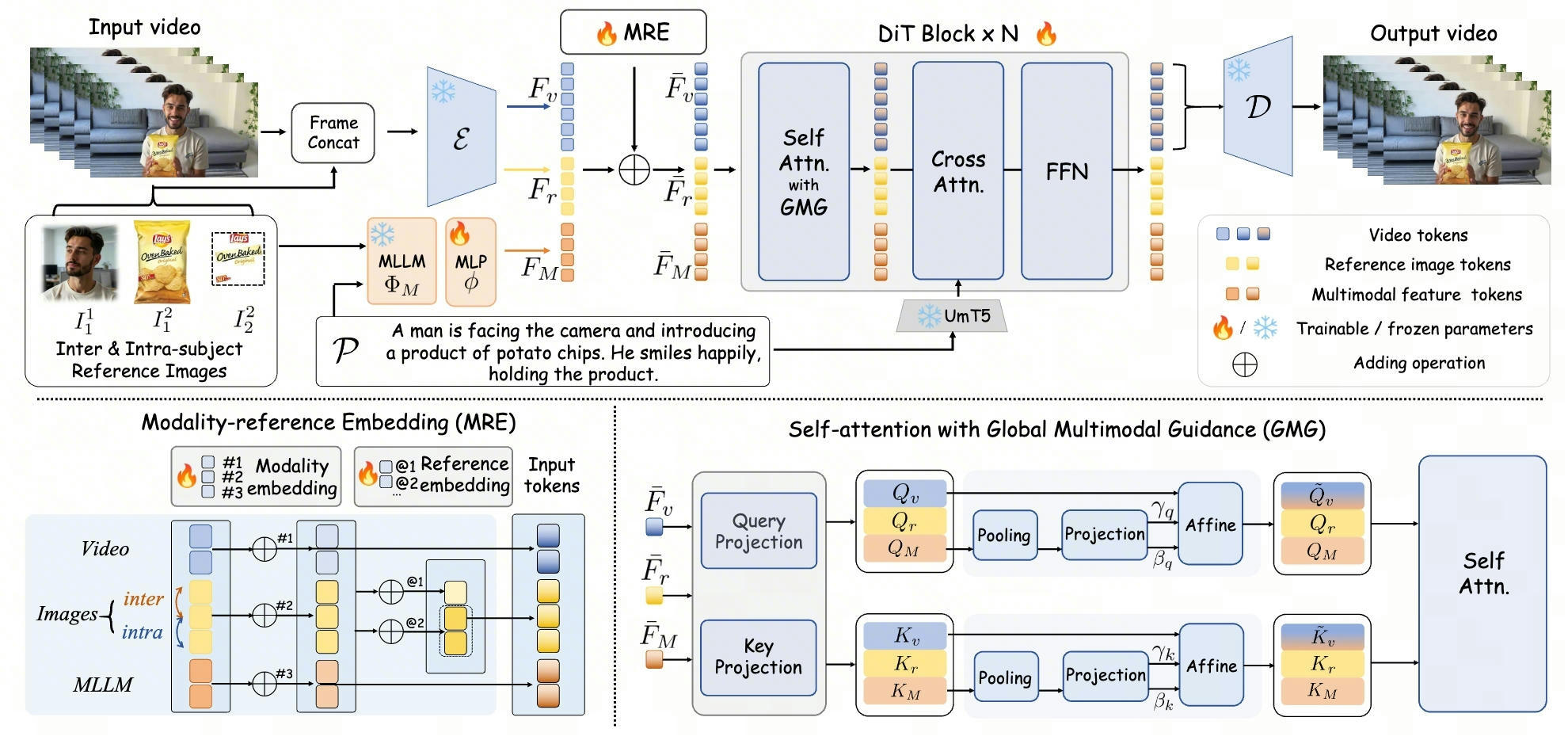
HOMIE has been introduced—an innovative framework for video personalization focused on controlling the interaction between humans and objects (HOCVP). The system utilizes Multimodal Large Language Models (MLLM) and the Wan2.1-T2V-14B architecture to create high-quality video content while preserving the identity of characters and objects.


What Happened
Developers have introduced HOMIE, which enables video generation with high precision in logo placement, text readability, and intra-subject consistency across changing camera angles. The framework is based on the Wan2.1-T2V-14B architecture and integrates MLLM capabilities for complex scene planning.
Context
Traditional video generation methods often struggle with loss of detail and object inconsistency during movement. HOMIE shifts from simple generation to complex 'human-object' interaction management, which is critical for creating branded content.
Why It Matters for the Industry
For the AI and marketing industries, this paves the way for professional use of generative video. Solving the problem of maintaining brand identity and logos transforms AI generation from an entertainment tool into a full-fledged workflow for creating advertising content. The availability of open-source weights on Hugging Face and code on GitHub accelerates the development of specialized tools.
Why It Matters for Users
Users and content creators gain the ability to generate realistic videos where specific people or branded products behave naturally, maintaining their unique features and accurate logo representation even in dynamic scenes.
What Is Not Yet Known / Limitations
The project is currently in the R&D and Early Adoption stage; technical specialists point to the need for further verification regarding scalability and inference costs for use in real-time or production-grade advertising platforms.
Sources
- HOMIE: Human-object Centric Video Personalization via Multimodal Intelligent Enhancement
- HOMIE Demo Page
- HOMIE GitHub Repository
Author
Look at AI, Editorial Staff