
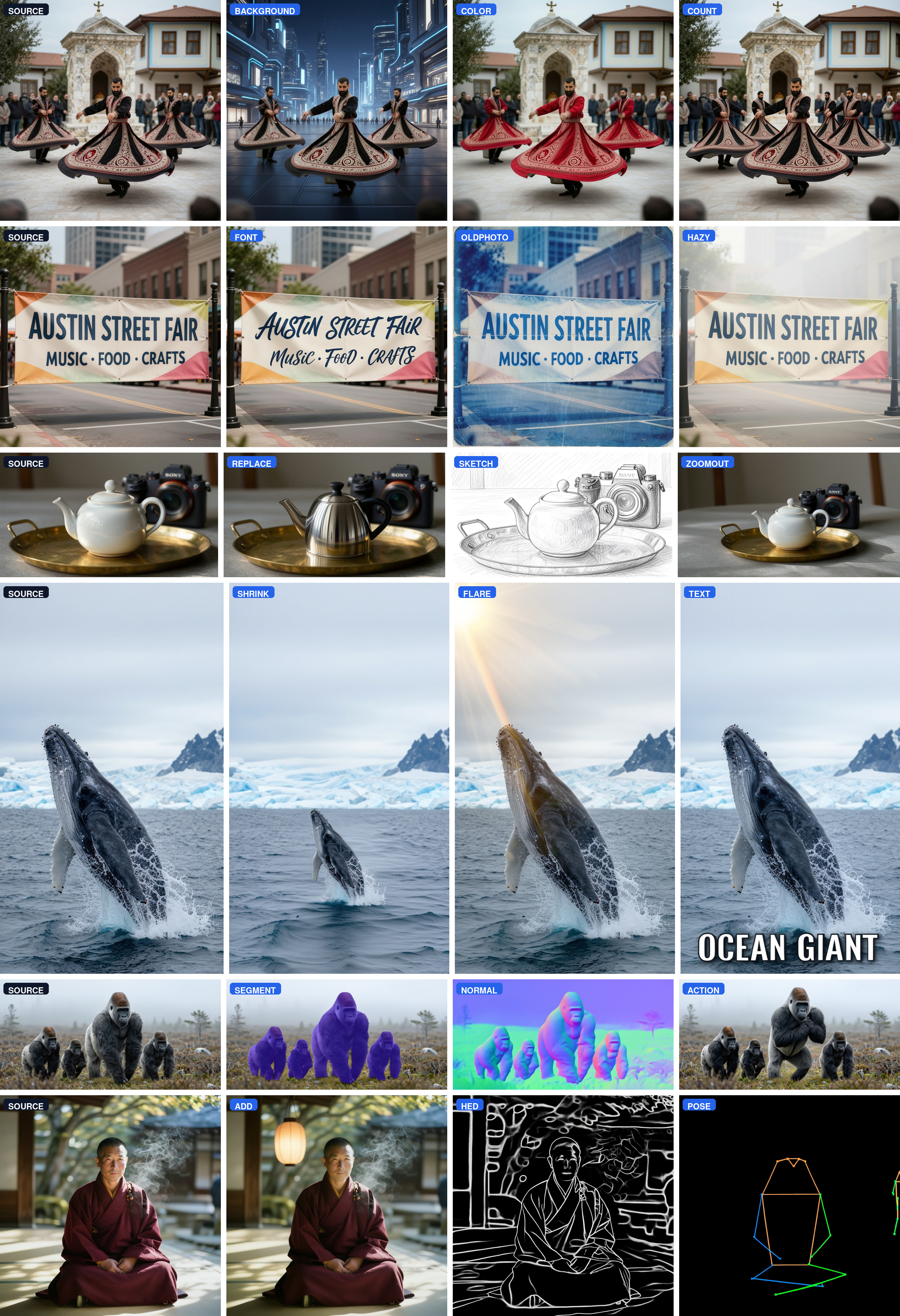
Microsoft has announced Mage-Flow, a family of compact multimodal models with 4 billion parameters designed for highly efficient image generation and editing. Thanks to the innovative Mage-VAE tokenizer, the system demonstrates outstanding speed and quality comparable to much larger architectures.


What Happened
Developers presented three model variants: Base, RL-aligned, and Turbo. The latter uses 4-step distillation to ensure ultra-fast performance. On an NVIDIA A100, the generation process via the Turbo version takes just 0.59 seconds, while editing takes 1.02 seconds. The models support resolutions ranging from 512 to 2048 pixels.
Context
The key technological achievement is the use of the lightweight Mage-VAE tokenizer, which is 12–22 times more efficient than traditional encoding methods. This allows compact 4B-parameter models to compete with giants exceeding 20B parameters by optimizing architecture and tokenization efficiency.
Why It Matters for the Industry
Mage-Flow proves that tokenizer optimization can significantly reduce computational resource requirements without sacrificing quality. This paves the way for a shift from massive monolithic models toward families of specialized and efficient small models (Small Language/Vision Models) and sets new standards for architectural efficiency.
Why It Matters for Users
For users, this means the ability to run high-quality image generation and deep editing tools on more accessible hardware. Thanks to sub-second latency, these technologies can be integrated into web and mobile applications to provide near-instant, real-time interaction.
Sources
- Mage-Flow: An Efficient Native-Resolution Foundation Model for Image Generation and Editing
- Microsoft Mage GitHub Repository
- Mage-Flow Models on Hugging Face
Author
Look at AI, Editorial Team