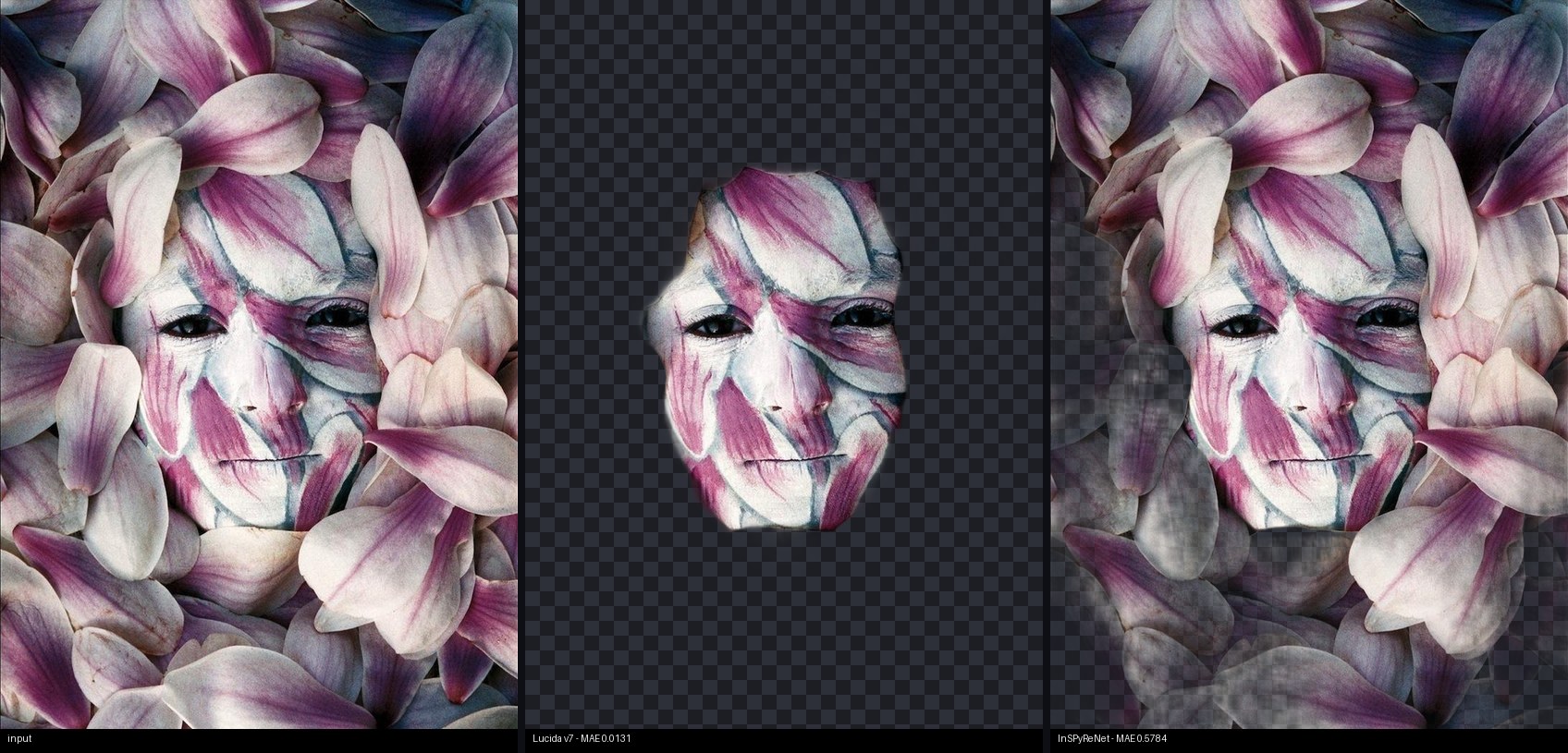
Lucida has been released—a specialized model for background removal (image matting) built on MIT's BiRefNet architecture. Thanks to targeted training on synthetic data, the model demonstrates outstanding results in complex scenarios, such as working with transparent glass, camouflage, text, and graphics.


What Happened
Developers have introduced Lucida v7, which has achieved leadership positions in the design (printing and stickers) and camouflage categories. In these tests, the model outperformed popular commercial solutions, including Ideogram, providing more accurate processing of complex visual elements.
Context
The model's technical success is due to the use of the BiRefNet architecture and specialized fine-tuning on synthetic datasets. Unlike general-purpose models, Lucida focuses on solving narrow computer vision tasks that require high precision in segmenting complex objects.
Why It Matters for the Industry
Lucida serves as proof that specialized fine-tuning of open-source models on high-quality synthetic data allows them to compete effectively with proprietary APIs in specific niches. This creates a trend toward using local, specialized solutions instead of universal paid services for CV tasks.
Why It Matters for Users
Users can now perform high-quality background removal for complex objects (text, logos, glass) for free and locally via Python or ComfyUI. This allows developers and designers to integrate advanced matting into their workflows without dependency on paid APIs.
What Is Not Yet Known / Limitations
Despite its success in narrow niches, the model may fall behind specialized competitors such as InSPyReNet in processing ultra-complex scenes and fine structures, or RMBG-2.0 in handling hair. Commercial APIs still demonstrate greater stability when processing complex transparency.
Sources
Author
Look at AI, Editorial Team