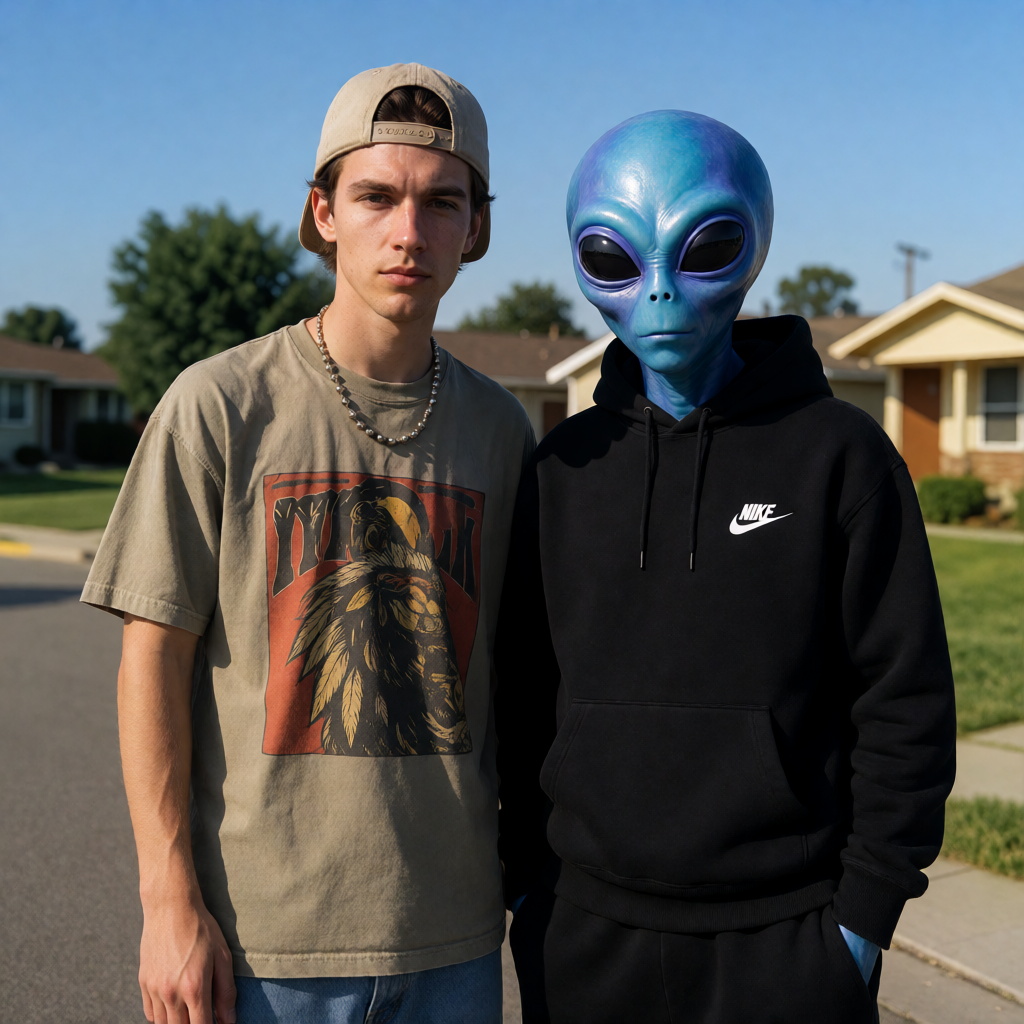
A specialized LoRA has been released for the Krea 2 Turbo model, designed for high-quality image outpainting (extending image boundaries) while preserving the spatial structure of the scene.


What Happened
A new LoRA has been developed for the Krea 2 Turbo architecture, which utilizes the Rotary Positional Embedding (RoPE) mechanism to register the source image onto the target canvas. This allows the model to maintain spatial awareness when generating the surrounding environment. To use this solution, the base Krea 2 Turbo model and a specific pipeline supporting the registered outpaint mechanism are required, available through tools such as ComfyUI.
Context
Traditional outpainting methods often face issues with context, lighting, or structural inconsistencies when significantly changing aspect ratios. Using Rotary Positional Embeddings (RoPE) addresses this problem by ensuring precise coordinate registration of the original content within the expanded space.
Why It Matters for the Industry
The emergence of specialized LoRAs with deep spatial awareness raises the quality standards for generative content expansion. This paves the way for professional design tools where control over composition and consistency during image format changes becomes predictable and commercially viable.
Why It Matters for Users
Users can now transform images from one format to another (e.g., from square to widescreen) without losing meaning or visual detail. Because the neural network accurately understands the position of the original, the drawn environment will be seamlessly integrated into the existing scene.
What Is Not Yet Known / Limitations
There is a difference in perceived implementation complexity: while ready-made pipelines in ComfyUI are suitable for immediate use, enterprise integration may require additional assessment regarding quality control and infrastructure setup complexity.
Sources
Author
Look at AI, Editorial Team