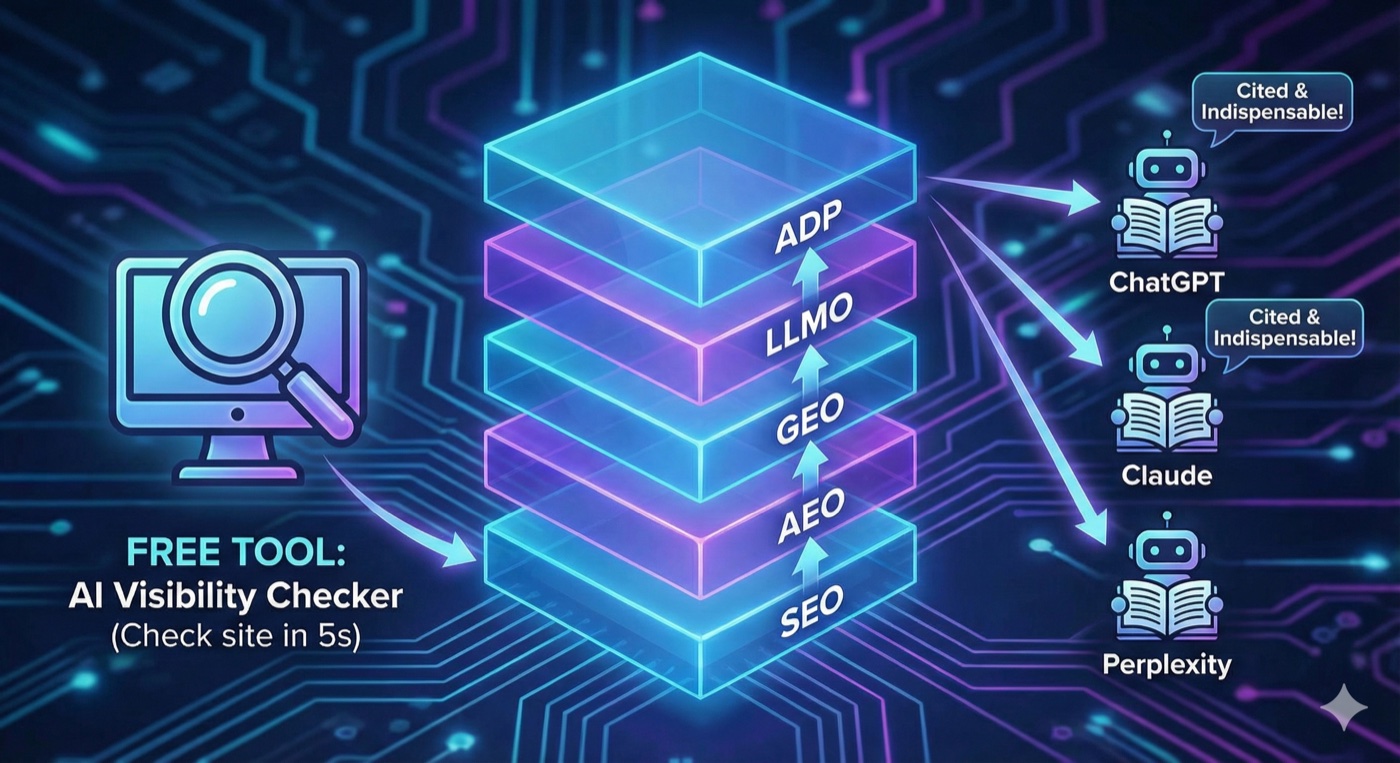
The Five-Layer Optimization Stack concept has been introduced—a multi-layered model designed to ensure content presence and citability in the responses of modern neural network search engines, such as ChatGPT, Claude, and Perplexity.
What Happened
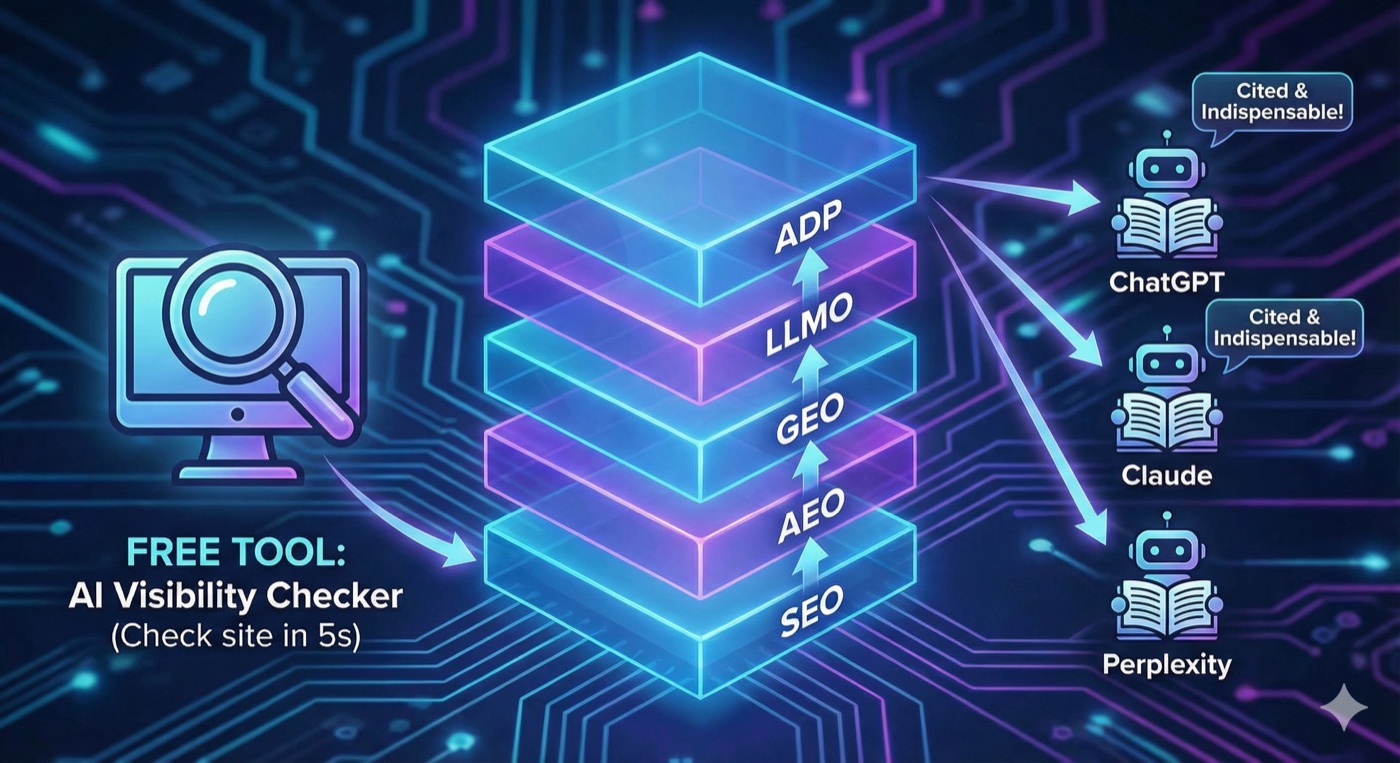
A new content optimization architecture has been developed, consisting of five layers: SEO, AEO (Answer Engine Optimization), GEO (Generative Engine Optimization), LLMO (Large Language Model Optimization), and ADP (AI Discovery Protocol). Particular attention is paid to the ADP v3.0 protocol, which implements the use of standardized JSON endpoints, such as /llms.txt and /ai-discovery.json, to simplify the interaction between AI agents and web resource data.
Context
Traditional search engine optimization methods, focused on ranking links in Google, are gradually giving way to the need to optimize citations in direct LLM responses. The transition to a multi-layered model requires website owners to provide data in a machine-readable format that is convenient for next-generation crawlers.
Why It Matters for the Industry
For the digital marketing and web development industry, this signifies a fundamental paradigm shift: the focus is moving from classical SEO to creating specialized infrastructure for AI visibility. This creates a new market for tools for automated website audits for compliance with LLMO and GEO requirements, and also stimulates the integration of ADP protocols directly into modern CMS.
Why It Matters for Users
Website owners and developers need to adapt to new technical standards (for example, implementing /llms.txt) so that their content does not lose reach as audiences transition to using AI agents. Understanding this stack allows for effective planning of promotion strategies in a changing search landscape.
Sources
Author
Look at AI, Editorial Team