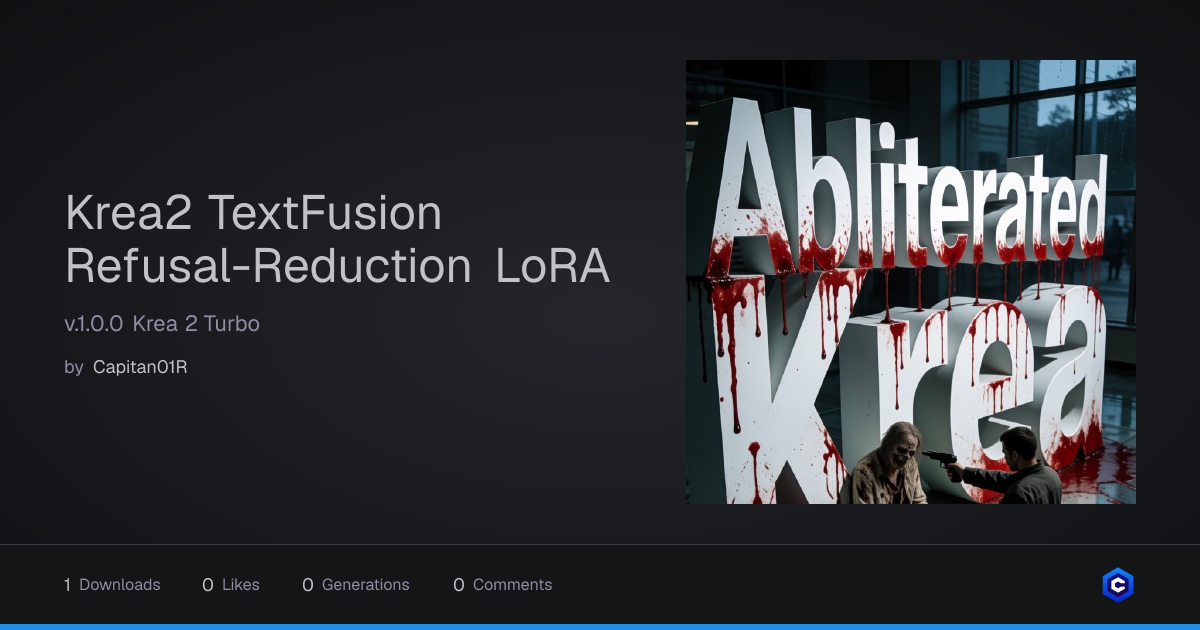
A specialized LoRA named Krea2 TextFusion Refusal-Reduction (v1.0) has been released for the Krea 2 base model. This rank 64 tool is designed to reduce the frequency of refusals during image generation from complex or controversial text queries, allowing the use of the model's latent visual knowledge without altering its core style.
What Happened
Developers have introduced the LoRA Krea2 TextFusion Refusal-Reduction (v1.0) with a rank parameter of 64. Instead of changing aesthetics or adding new styles, the solution adjusts weights in specific TextFusion layers: txtfusion.layerwise_blocks and txtfusion.refiner_blocks. This allows for targeted intervention in the model's decision-making mechanisms, minimizing the risk of visual quality degradation.
Context
Modern multimodal models often have strict safety mechanisms (guardrails) and refusal mechanisms built-in, which can block content generation for complex prompts. This LoRA acts as a "key," unlocking access to visual knowledge that is already present in Krea 2 but is restricted by built-in filters.
Why It Matters for the Industry
This solution demonstrates the growth of the market for highly specialized tools for model behavior management (refusal-reduction). Such methods of adaptive guardrail management at the weight level of individual layers could become a standard, allowing for the separation of the visual engine from ethics/content control mechanisms, which paves the way for more flexible user interfaces.
Why It Matters for Users
Krea 2 users gain the ability to generate more complex, less "cautious," and more detailed images by bypassing standard restrictions and filters. At the same time, the high visualization quality and original artistic style of the base model are preserved, making the tool effective for creative tasks that previously triggered system refusals.
What Is Not Yet Known / Limitations
There are varying assessments of the solution's value: while it represents an expansion of freedom for developers and creators, for corporate security specialists (s), such tools may pose risks regarding compliance and content control.
Sources
Author
Look at AI, Editorial Staff