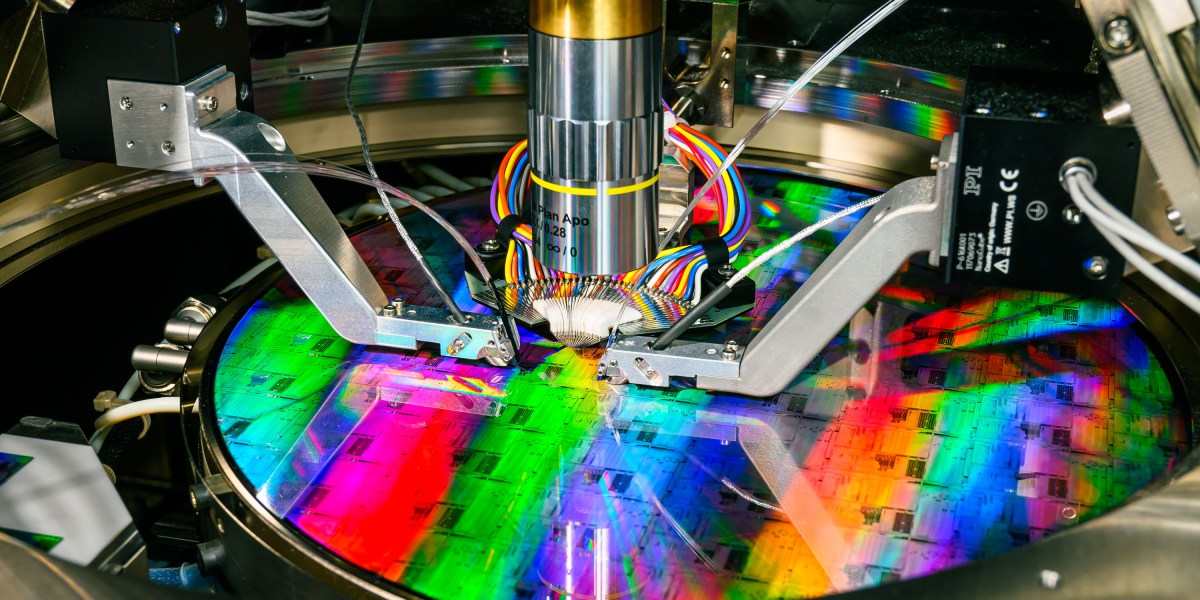
PsiQuantum is working on creating a large-scale quantum computer that uses photons—particles of light—as qubits. The system's architecture, which resembles a modern data center in scale, is designed to address the critical scalability and decoherence challenges faced by traditional superconducting quantum systems.

What Happened
PsiQuantum is designing a quantum computing machine that utilizes thousands of optical switches and beam splitters. The project aims to create an infrastructure capable of performing computations that would take modern supercomputers millions of years by using photonic technologies in specialized data centers.
Context
Unlike classical approaches based on superconducting qubits, photonic computing uses light, which potentially minimizes noise and simplifies scaling the system to industrial sizes. Current developments are focused on transitioning from laboratory prototypes to the creation of full-scale industrial infrastructure.
Why It Matters for the Industry
The shift toward photonic architectures could radically change the economics of Deep Tech and pave the way for specialized APIs for ultra-complex optimization and molecular modeling. This stimulates investment in the creation of quantum data centers and the formation of new standards for interacting with photonic systems.
Why It Matters for Users
For end users and the scientific community, this signifies a transition from theoretical experiments to real-world devices capable of significantly accelerating new material discovery and drug development. In the long term, the emergence of the first commercial cloud APIs for solving highly specialized scientific tasks is expected.
What Is Not Yet Known / Limitations
At the current stage, the project remains research-oriented and does not provide available APIs or ready-made solutions for production inference. There is technical uncertainty regarding the speed of the transition from demonstration models to full industrial standards and integration into existing enterprise stacks.
Sources
Author
Look at AI, Editorial Team