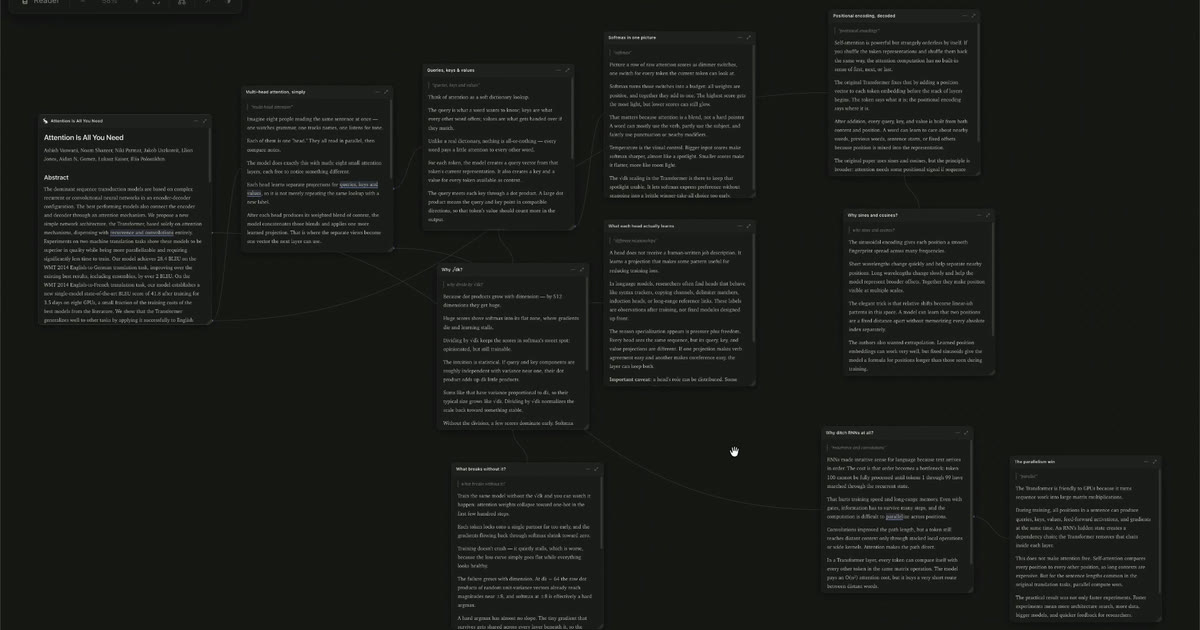
The open-source project Rabbithole offers a new way to interact with AI agents, replacing traditional vertical chats with an interactive infinite canvas powered by the Model Context Protocol (MCP).
What Happened
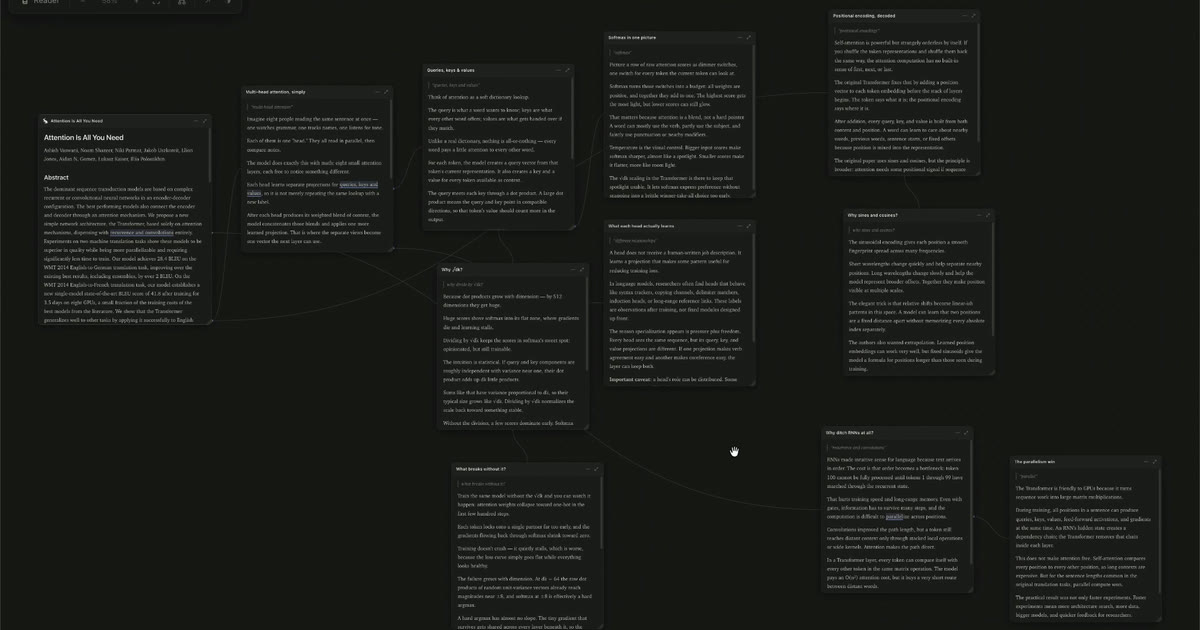
A tool called Rabbithole has been developed that transforms any text or document into a visual structure. Using responses from AI agents, such as Claude Code or Codex, it creates branching document structures that form a visual research map. All progress and dialogue history are saved locally in JSON format in the ~/.rabbithole directory.
Context
Modern LLM interaction interfaces are limited by a linear chat format, which makes deep research difficult and leads to loss of context when discussing multiple related topics. The Model Context Protocol (MCP) provides a standardized way to extend agent capabilities, allowing them to be integrated into more complex environments.
Why It Matters for the Industry
Rabbithole demonstrates the practical potential of using MCP to transform linear interfaces into non-linear knowledge graphs. This sets a direction for the development of deep research tools and the visualization of reasoning processes (reasoning trees), where the 'canvas' could become the default paradigm instead of the text window.
Why It Matters for Users
Researchers and developers gain a tool for structuring complex tasks, allowing them to visualize an agent's 'reasoning path' and dive deep into the details of each topic without losing the main thread of conversation. Local data storage ensures the privacy of the research process.
What Is Not Yet Known / Limitations
At this stage, the tool is more of a research prototype than a production-ready solution. It is noted that there are no mechanisms for centralized management or capabilities for team collaboration.
Sources
Author
Look at AI, Editorial Team