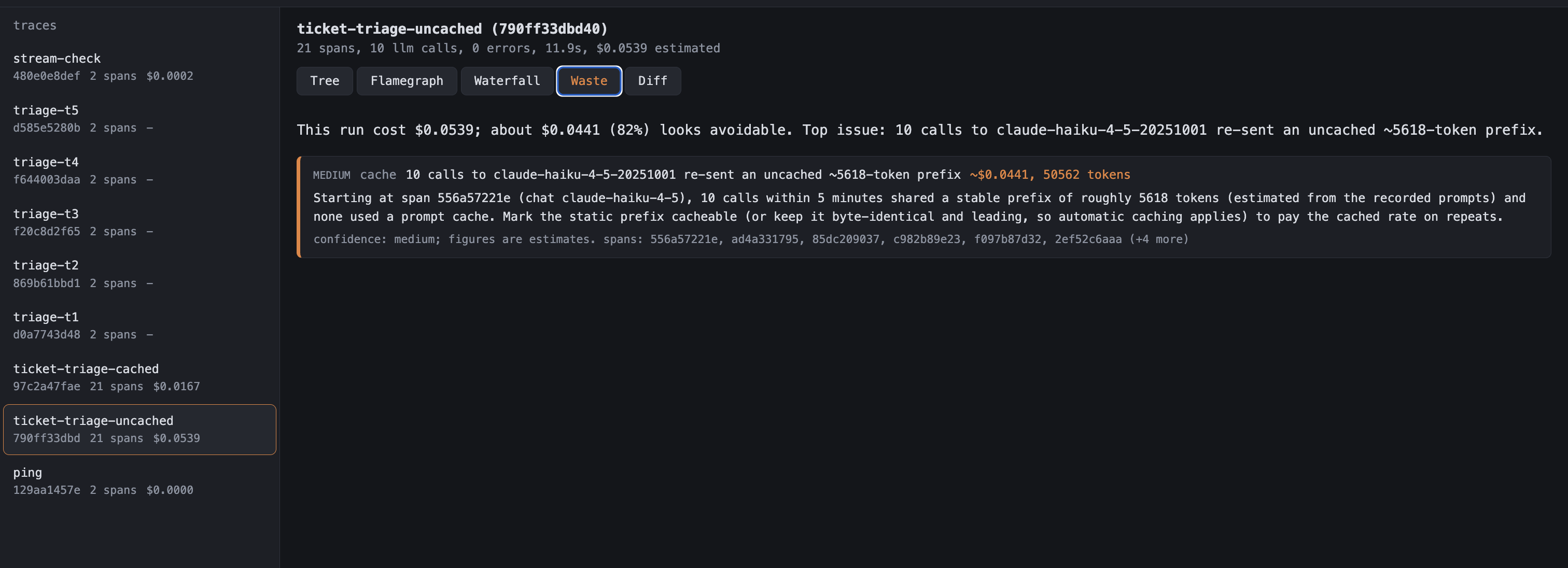
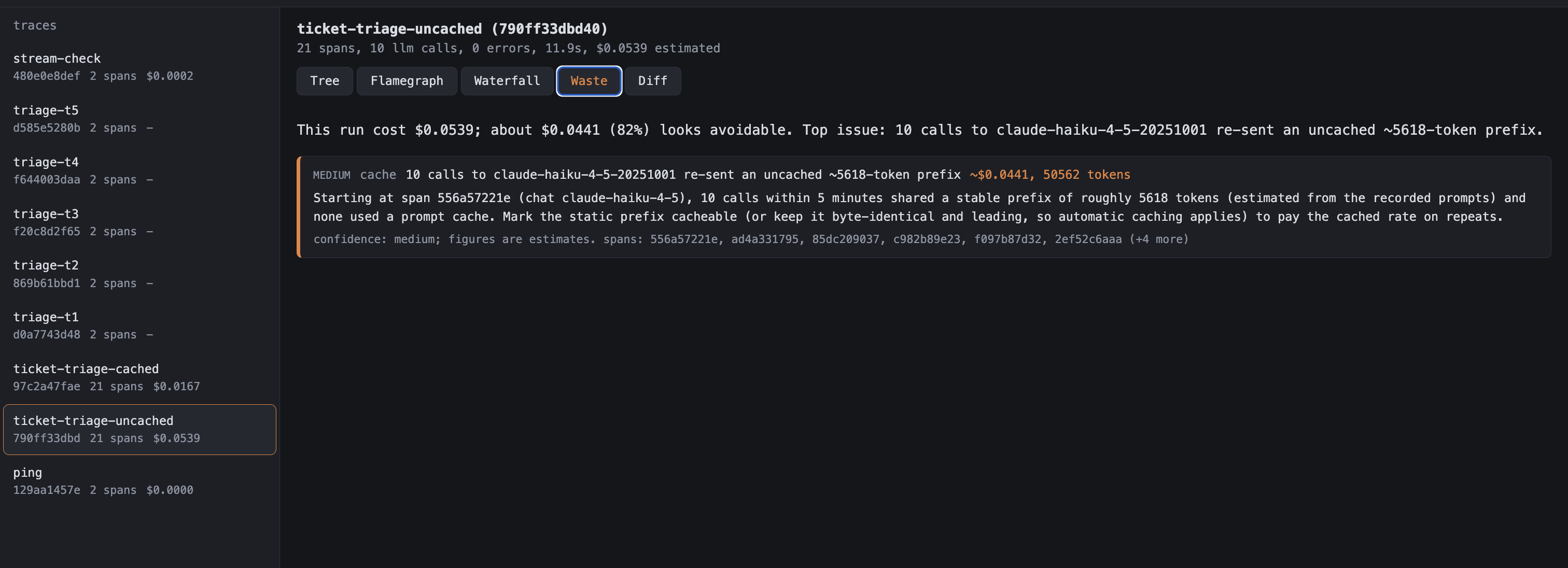
Traceburn has been released—a tool for local profiling and tracking the efficiency of AI agents. It allows for identifying redundant token expenditures; in one test, it discovered an opportunity to reduce costs by 69% through caching optimization.
What Happened
Developers have introduced Traceburn, a tool that supports the OpenAI and Anthropic Python SDKs. It provides visualizations in the form of flamegraphs (for both time and cost) and generates reports on inefficient budget usage. The program operates on a local-first and zero-telemetry principle, allowing for audits without transmitting data to third-party services.
Context
When developing complex agentic systems, API costs can grow uncontrollably due to bloated contexts or redundant requests. Traditional debugging methods often fail to provide a clear picture of which portion of the budget is spent on excessive calls, and using cloud-based profilers can create security risks for sensitive data.
Why It Matters for the Industry
The emergence of efficiency-driven development tools simplifies the control of LLM costs in production. This contributes to the creation of MLOps standards, where automated cost profiling before deployment could become a mandatory stage in CI/CD cycles.
Why It Matters for Users
Agent developers can immediately integrate Traceburn into their local debugging cycle to find areas where money is being "burned" on repetitive requests. This allows for the optimization of prompt architecture and cache usage, directly improving the unit economics of applications.
Sources
Author
Look at AI, Editorial Team