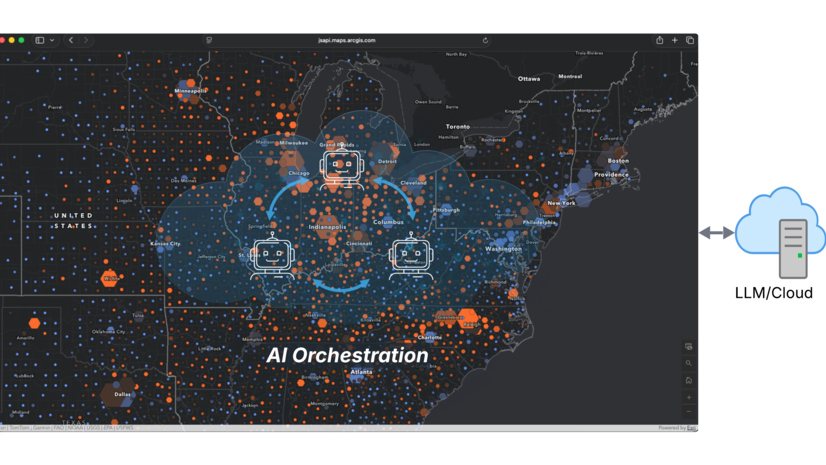
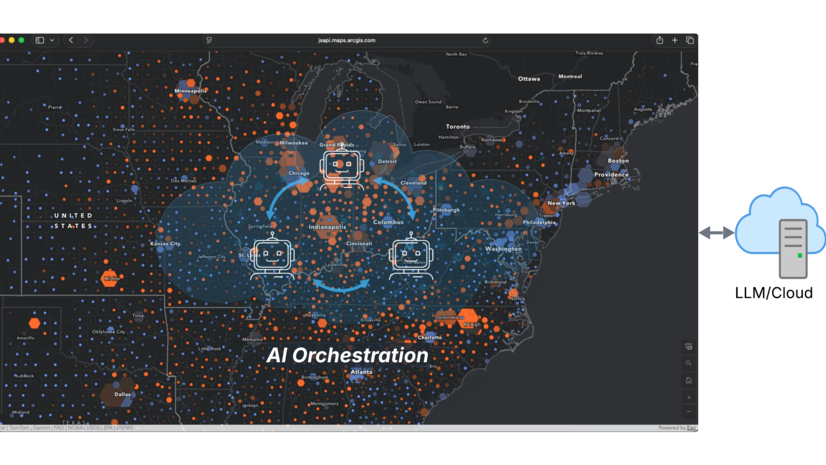
Esri is proposing a transition to a new architecture where AI orchestration is moved from servers directly into the user's browser. This approach allows AI agents to operate in real-time, interacting directly with the interface and the state of web applications.
What Happened
Esri introduced the concept of client-side orchestration, which involves executing AI management logic on the client side. Within this architecture—for example, in the ArcGIS Maps SDK for JavaScript v5.0—agents gain direct access to the current state of the map, layers, and UI context. To optimize prompts, the use of Vector Search directly in the browser is proposed, allowing only the most relevant metadata to be passed to the LLM.
Context
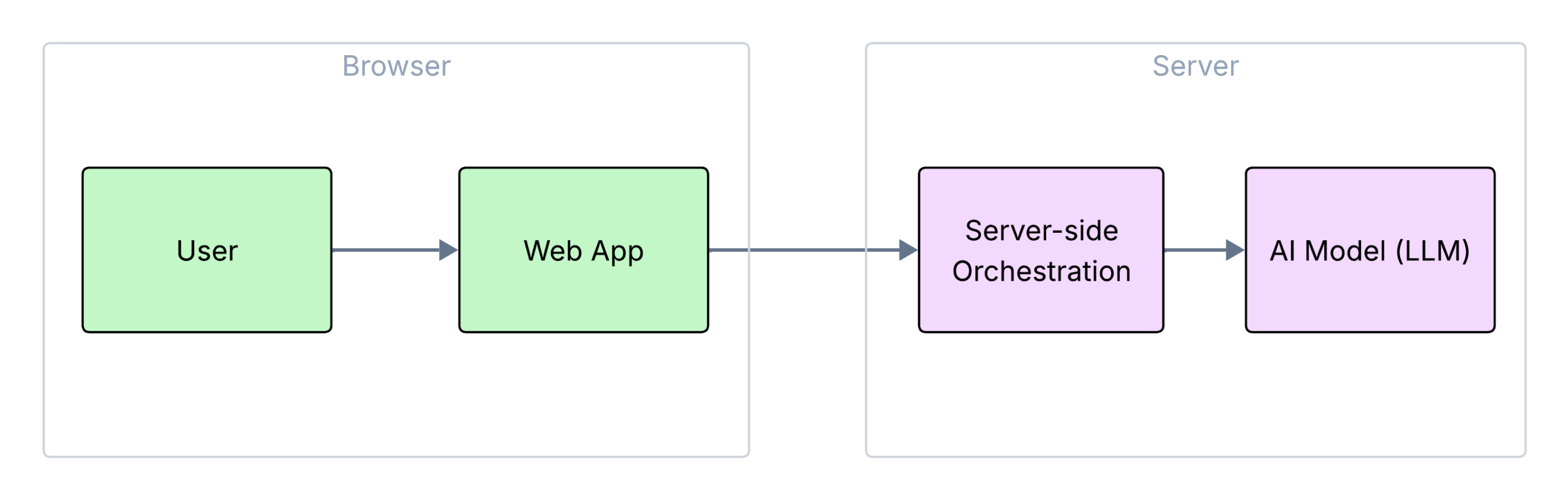
Traditional architecture implies that all orchestration logic and agent decision-making are concentrated on the backend. This requires constant synchronization of the interface state with the server, which increases the number of network requests and creates latency. Moving computations to the client side is part of a global shift from 'Heavy Backend' models to hybrid architectures, where a significant portion of logic is executed at the Edge or directly in the browser.
Why It Matters for the Industry
For the industry, this means reduced load on server infrastructure and decreased latency. The emergence of new design patterns, such as 'Agentic UI,' transforms the browser from a passive data display tool into an active execution environment. In the long term, standardization of interaction protocols between browser agents and application state managers is expected.
Why It Matters for Users
Developers of complex web interfaces gain the ability to create more responsive and efficient AI tools without offloading all logic to expensive server computations. This allows for the construction of applications where an AI assistant can instantly react to user actions and interface changes, providing a seamless user experience.
What Is Not Yet Known / Limitations
There is a potential conflict between technical efficiency and security: moving logic from a protected backend to the browser may create risks for data security and the protection of intellectual property.
Sources
Author
Look at AI, Editorial Staff